China snubs Trump's AI chip offer, Lutnick rules out export control easing

Synopsis
Washington extended what Lutnick called an ‘olive branch’ — advanced H200 AI chips on offer to Beijing — and China did not take it. That rebuff, confirmed at the G20 Innovation Ministerial in North Carolina, is now being used to justify holding the line on export controls, even as enforcement grows harder and adversaries exploit indirect procurement routes.
Key Takeaways
US Commerce Secretary Howard Lutnick confirmed on 3 September that China has not accepted President Trump’s offer to sell advanced H200 AI chips and equivalent AMD chips.
Lutnick ruled out further relaxation of technology export controls, saying the offer was an ‘olive branch’ that ‘hasn’t been taken up.’ He described export control enforcement as ‘whack-a-mole,’ noting adversaries exploit remote access and multiple intermediaries to obtain restricted computing power.
White House science advisor Michael Kratsios said the Trump administration aims to share US chips, models, and applications with allies and partners.
Lutnick warned countries that fail to adopt AI risk falling behind those that move quickly.
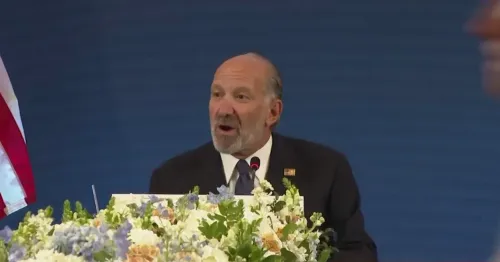
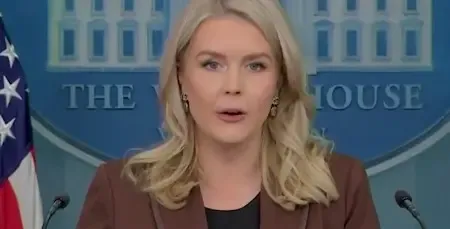
US Commerce Secretary Howard Lutnick said on 3 September that China has not accepted President Donald Trump's offer to sell it advanced American artificial intelligence chips, and argued that further relaxation of technology export controls is therefore unnecessary. Lutnick made the remarks at a joint press conference with White House science advisor Michael Kratsios following the G20 Innovation Ministerial in Chapel Hill, North Carolina.
The Offer China Did Not Take
Lutnick confirmed that Trump had extended an offer to sell H200 chips and equivalent video chips — including those from AMD and other manufacturers — to Beijing. However, China expressed reservations and did not purchase the chips. “President Trump made an offer to sell H200 chips and video chips to China, and they’re equivalent from AMD and others,” Lutnick said. “And the Chinese haven’t really taken it up.”
Asked whether easing export controls could be on the table during an anticipated meeting between Trump and Chinese President Xi Jinping, Lutnick was unequivocal. “I don’t think so,” he said, adding: “The president showed an olive branch, and it hasn’t been taken up, so I think we’re just gonna let it go.”
Export Control Enforcement: A Game of Whack-a-Mole
Lutnick acknowledged that enforcing technology export restrictions has grown significantly more complex, as companies and governments increasingly use remote access and multiple intermediaries to obtain restricted computing power. “So we play in export controls a bit of whack-a-mole,” he said, describing a layered process in which a data centre could be leased to one company, which then sub-leases access through other entities until the computing power ultimately reaches an adversary.
He said artificial intelligence could itself become a tool for American authorities to better monitor users of US data centres and tighten enforcement of technology restrictions. “The tools of AI will make this better and better and better,” Lutnick said. This comes amid longstanding US concerns that adversaries are exploiting indirect procurement channels to circumvent semiconductor export bans.
China’s Presence at G20 Meeting
Lutnick also dismissed suggestions that the attendance of a Chinese vice-minister at the G20 Innovation Ministerial had raised security concerns, given longstanding US allegations of intellectual property theft by Chinese entities. “No, the president invited them, and I think it went quite well,” he said.
America’s AI Expansion Push
Both Lutnick and Kratsios used the occasion to emphasise Washington’s intent to expand the global footprint of American AI technology. Kratsios said the Trump administration wanted to share US chips, models, and applications with partners, friends, and allies. Lutnick added that individual countries would choose between frontier proprietary systems and open-weight models based on their own requirements and economic calculations. “That will be decided country by country,” he said.
He warned that nations slow to adopt AI risk being left behind. “If you don’t do that, then you’ll be left behind,” Lutnick said. “So you’ll see whoever doesn’t embrace it a year or two years from today will just be chasing those who didn’t.” The United States has used export controls to restrict China’s access to advanced semiconductors and chip-manufacturing equipment, citing risks to Beijing’s military and surveillance capabilities. Whether the stalled chip offer reshapes that calculus ahead of a potential Trump-Xi summit remains to be seen.
Point of View
But it obscures a harder question: if the chips were genuinely available, why did Beijing decline? The answer likely lies in China’s parallel drive for semiconductor self-sufficiency — making the US offer less an olive branch and more a test of dependency that Beijing chose not to pass. Meanwhile, Lutnick’s ‘whack-a-mole’ admission is the more significant disclosure: it signals that existing export controls are leaking, and that the enforcement architecture has not kept pace with the sophistication of evasion. AI-assisted monitoring sounds promising, but the same AI capabilities are available to those being monitored.
NationPress
3 Sept 2026
Frequently Asked Questions
What AI chips did the US offer to sell China?
President Trump offered to sell China H200 chips and equivalent video chips from manufacturers including AMD . Beijing expressed concerns about the offer and did not purchase the chips, according to Commerce Secretary Lutnick.
Why did Lutnick say further export control easing is unnecessary?
Lutnick argued that because China did not accept the chip offer, relaxing export controls further would not accomplish its intended purpose. He described the offer as an ‘olive branch’ that had not been taken up.
What did Lutnick mean by ‘whack-a-mole’ in export controls?
Lutnick used the phrase to describe the difficulty of enforcing technology export restrictions, as companies and governments use remote access and chains of intermediaries to route restricted computing power to adversaries. He said AI tools could help authorities better monitor US data centre users.
Will export controls come up in a Trump-Xi meeting?
Lutnick said he did not believe easing technology export controls would be on the agenda for an expected meeting between President Trump and Chinese President Xi Jinping. He gave a direct ‘I don’t think so’ when asked about the possibility.
What is the US strategy for spreading AI technology globally?
White House science advisor Michael Kratsios said the Trump administration wants to share US chips, models, and applications with allies, partners, and friends. Lutnick added that individual countries would choose between proprietary frontier systems and open-weight models based on their own needs and economic calculations.