AI lag poses bigger risk to nations than AI itself, warns Palantir CEO Karp
Synopsis
Palantir CEO Alex Karp flipped the AI risk debate on its head: the real danger for countries isn't what AI might do, it's being shut out of the race entirely. With compute, data sovereignty, and electricity all in play, his warning to governments is stark — build the full stack or fall behind permanently.
Key Takeaways
Palantir CEO Alex Karp warned on 3 September that falling behind in AI is a greater national risk than the technology's adverse consequences.
Karp outlined a full AI sovereignty stack: compute access, data ownership, model control, training capability, and competitive positioning.
He flagged electricity supply as a critical bottleneck, citing France 's nuclear strategy as a model for powering AI infrastructure.
Karp rejected AI 'doom messaging', calling it politically damaging, while acknowledging AI is 'not 100 per cent good'.
He argued the US leads in AI production, while Japan , South Korea , and China may face fewer political barriers to adoption than European nations.
Palantir Technologies , founded in 2003 , develops AI and data software for governments, defence bodies, and businesses.
Palantir Technologies chief executive Alex Karp warned on 3 September that falling behind in the artificial intelligence race presents a graver threat to countries than the technology's own potential harms, as governments worldwide race to secure computing capacity, electricity supply, and sovereign control over their data.
The Full AI Stack Nations Must Build
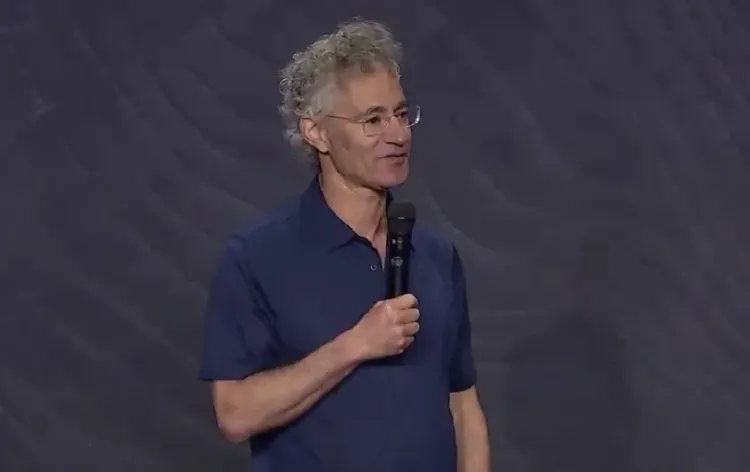
Speaking at a fireside chat alongside US Commerce Secretary Howard Lutnick in Chapel Hill, North Carolina, Karp laid out what he called the complete infrastructure stack countries need to remain competitive. 'You need access to compute, you need access to your own data,' he said. 'So the stack is compute data, ability to manage data, ability to control the models, ability to train the models, and ability to compete against certain competitors and adversaries.'
Karp noted that nations could pursue computing capacity through multiple routes, including partnerships with chipmakers such as Nvidia. He described Nvidia chief executive Jensen Huang as 'the world's best' in the field, adding that Palantir itself was exploring sovereign computing structures as an alternative pathway.
The Electricity Problem No Leader Can Ignore
Karp stressed that scaling AI infrastructure would demand substantially more electricity than most governments have planned for. 'You are gonna need a lot of electricity. How are you gonna get it?' he said, pointing to France's sustained reliance on nuclear power as a model for national energy strategy. He argued that national leaders would have to publicly account for how they intended to power data centres and related infrastructure.
This comes amid a broader global trend: technology companies and governments are already examining nuclear, renewable, and other firm-power sources to meet the surging energy appetite of AI data centres, which require continuous electricity for servers and cooling systems.
Rejecting Both Doom and Blind Optimism
Karp acknowledged that AI carries real costs and disruption, and said he did not consider the technology to be entirely beneficial. However, he argued that refusing adoption would compound the risk. 'I don't think the AI revolution is 100 per cent good,' he said. 'And with all these technologies, but you, but, but then being left behind is probably the biggest danger now.'
He also pushed back against what he characterised as exaggerated doom narratives, arguing they had frightened the public and created political obstacles to adoption. 'I don't believe in the doom message,' Karp said, adding that such warnings contained 'elements of truth' but had been amplified to the point of causing 'significant political problems.' He did not name the company he was referring to.
Who Leads in Production, Who Leads in Adoption
Karp drew a sharp distinction between building AI and persuading societies to use it. The United States, he argued, holds a commanding advantage in production. 'We have an enormous advantage of production,' he said. 'The dissemination of AI and getting people to adopt without political insanity, that's where we are.'
By contrast, he suggested that countries such as Japan, South Korea, and China may face fewer political barriers to adoption. European nations, he warned, risk serious disadvantage if regulation and public opposition slow deployment. 'The technology's not egalitarian,' Karp said. 'There's no getting around these issues, and so we have to figure out ways to bring people along and explain they'll participate.'
Founded in 2003 by Karp, Peter Thiel, and others, Palantir Technologies is headquartered in Denver and develops data integration and AI software used by government agencies, defence organisations, and commercial enterprises. As the AI sovereignty debate intensifies globally, Karp's remarks are likely to sharpen pressure on governments that have yet to define a coherent national AI infrastructure strategy.
Point of View
And should be read with that in mind. That said, the structural point is hard to dismiss: nations that lack sovereign compute, data control, and energy capacity will increasingly depend on foreign platforms for critical decisions. The more underreported dimension is the electricity constraint — AI's energy appetite is already straining grids in the US and Europe, and no government has yet produced a credible long-term power plan that accounts for AI-scale demand. Karp's Europe warning is the sharpest: regulatory caution may feel prudent domestically, but if it delays deployment by a decade, the productivity and security gap with faster-moving rivals could prove irreversible.
NationPress
18 Oct 2026
Frequently Asked Questions
What did Palantir CEO Alex Karp say about AI risk for countries?
Alex Karp warned that being left behind in the AI race poses a greater danger to countries than the technology's own potential harms. Speaking on 3 September in Chapel Hill, he argued that nations must build a full AI stack — covering compute, data sovereignty, model control, and energy — or risk permanent competitive disadvantage.
What is the 'AI sovereignty stack' Karp described?
Karp outlined a multi-layer infrastructure requirement: access to computing power, ownership and management of national data, the ability to control and train AI models, and the capacity to compete against foreign rivals and adversaries. He said all layers are necessary for a country to be genuinely competitive in AI.
Why did Karp highlight electricity as a critical issue for AI?
AI data centres require large, continuous amounts of electricity to run servers and cooling systems. Karp said national leaders must publicly explain how they plan to generate the power needed, pointing to France's nuclear energy strategy as one viable model. He warned that energy supply is a hard constraint no government can sidestep.
Which countries does Karp see as better placed for AI adoption?
Karp suggested Japan, South Korea, and China may face fewer political obstacles to AI adoption than Western nations. He warned that European countries risk serious disadvantage if regulation and public opposition slow deployment, while arguing the United States holds a strong lead in AI production.
What is Palantir Technologies and why is Karp's view significant?
Palantir Technologies, founded in 2003 and headquartered in Denver, develops data integration and AI software used by government agencies, defence organisations, and businesses. As a major supplier of AI infrastructure to sovereign clients, Karp's public warnings carry weight in policy circles — though they also align directly with Palantir's commercial interests.