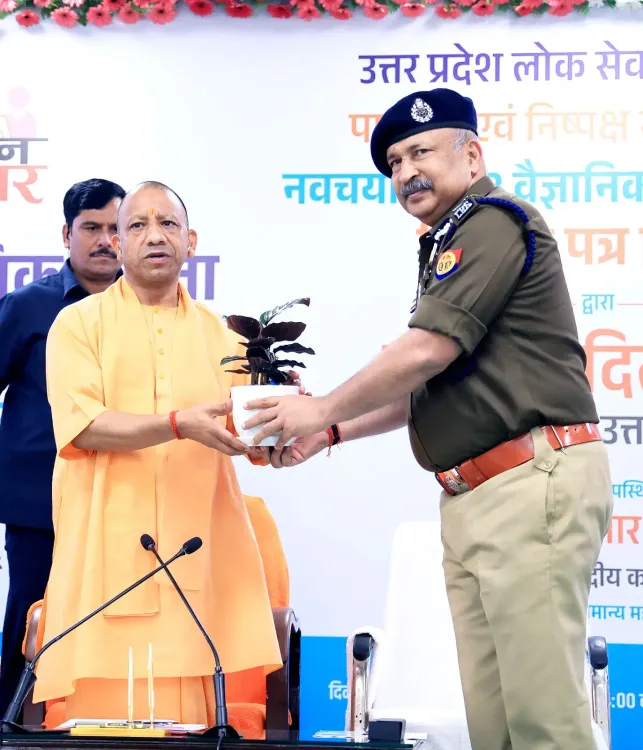
CM Yogi hands appointment letters to 28 forensic officers in Lucknow
Synopsis
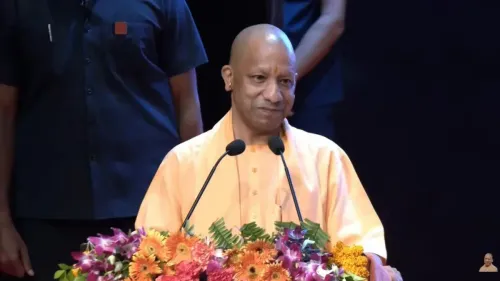
Uttar Pradesh CM Yogi Adityanath distributed appointment letters to 28 newly selected Scientific Officers in Lucknow on November 5, 2026, through UPPSC's merit-based recruitment, linking forensic science capacity directly to faster criminal justice delivery ahead of Diwali.
Key Takeaways
28 Scientific Officers received appointment letters from CM Yogi Adityanath in Lucknow on November 5, 2026 .
Recruitment was conducted by the Uttar Pradesh Public Service Commission (UPPSC) under a transparent, merit-based process.
CM Yogi described the recruits' primary role as ensuring 'accurate and timely examination of forensic evidence' to deliver justice to victims and punishment to criminals.
The appointments were timed just before Diwali , framed by the CM as a festive gift to the new officers.
The move aligns with UP's broader push since 2017 to expand forensic science laboratories and reduce irregularities in government hiring.
Further UPPSC batches for scientific roles and state data on investigation timelines will indicate the scale of this expansion going forward.
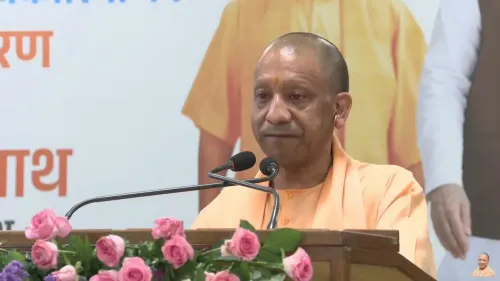
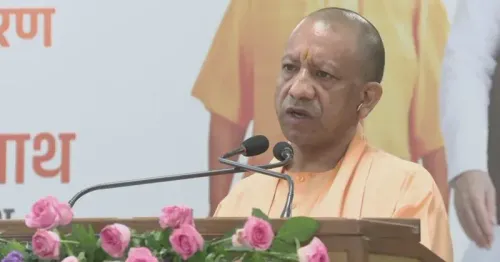
Just ahead of Diwali, Uttar Pradesh Chief Minister Yogi Adityanath handed appointment letters to 28 newly selected Scientific Officers in Lucknow on Thursday, November 5, 2026 — a recruitment drive he framed not as a routine HR exercise but as a direct investment in the state's criminal justice machinery.
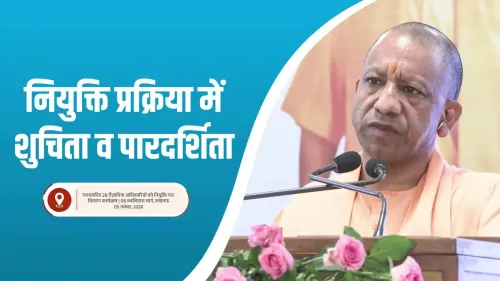
Posting on X, the Chief Minister wrote in Hindi: 'पारदर्शी एवं निष्पक्ष भर्ती प्रक्रिया के अंतर्गत आज लखनऊ में उत्तर प्रदेश लोक सेवा आयोग द्वारा नवचयनित 28 वैज्ञानिक अधिकारियों को नियुक्ति-पत्र प्रदान किया।' ('Under a transparent and impartial recruitment process, appointment letters were today given to 28 newly selected Scientific Officers by the Uttar Pradesh Public Service Commission in Lucknow.') He added that these scientists would play 'a crucial role in delivering justice to victims and punishment to criminals through accurate and timely examination of forensic evidence.'
UPPSC's transparent hiring process under the spotlight
The appointments were carried out by the Uttar Pradesh Public Service Commission (UPPSC), the state's constitutional recruitment body, through its competitive examination route. Since 2017, the Yogi government has consistently cited UPPSC-led hiring as its answer to the irregularities and paper-leak scandals that had long plagued public recruitment in the state. Scientific and technical posts, which require domain expertise, have been a particular focus of this merit-first push.
The timing — days before Diwali — was deliberate. 'पावन पर्व दीपावली से पूर्व नियुक्ति-पत्र प्राप्त करने वाले सभी वैज्ञानिक अधिकारियों को हार्दिक बधाई एवं शुभकामनाएं,' the CM wrote ('Heartfelt congratulations and best wishes to all the Scientific Officers receiving their appointment letters before the auspicious festival of Diwali'). The festive framing was a signal: government jobs delivered as a gift, not a promise deferred.
Forensic science as a conviction-rate lever
The bigger story here is what these 28 officers are actually expected to do. Uttar Pradesh has been systematically expanding its network of forensic science laboratories, betting that faster and more reliable evidence processing translates directly into higher conviction rates. A forensic report delayed by months can collapse a prosecution; one delivered in time can seal it. That cause-and-effect logic sits at the heart of the state's investment in scientific manpower.
The Chief Minister's remarks made this explicit — the new recruits were told their work would be the difference between a victim getting justice and a criminal walking free. Putting that weight on appointment-day remarks is a governance statement: forensic science is not support staff, it is front-line infrastructure.
What comes next for UP's forensic expansion
Watchers of Uttar Pradesh's law-and-order agenda will now track whether additional batches of forensic and scientific officer recruitments follow through the UPPSC pipeline, and whether the state begins publishing data on evidence-processing timelines or conviction statistics that can be tied to this expansion. The 28 appointments in Lucknow today are a data point — the trend line is what will tell the full story.
UP has staked its governance brand on the idea that transparent hiring produces better public institutions. These 28 scientists now carry a piece of that bet into the laboratory.
Point of View
Merit-driven hiring is the foundation of a better-performing state apparatus. By explicitly linking forensic staffing to conviction rates, the government is trying to make a technical administrative decision legible as a law-and-order outcome — a framing that has strong political resonance in Uttar Pradesh, where public safety remains the dominant electoral concern. The Diwali timing amplifies the symbolism: jobs delivered before the festival project administrative efficiency as a form of governance warmth. The real test, however, will come when the state's forensic infrastructure is benchmarked against case clearance and conviction data.
NationPress
5 Nov 2026
Frequently Asked Questions
Who are the 28 Scientific Officers appointed by CM Yogi in Lucknow?
They are newly selected Scientific Officers recruited through the Uttar Pradesh Public Service Commission's transparent competitive examination process, handed their appointment letters by CM Yogi Adityanath in Lucknow on November 5, 2026.
What will these 28 forensic Scientific Officers do in Uttar Pradesh?
They will examine forensic evidence in criminal cases accurately and within set timelines, playing a direct role in helping courts deliver justice to victims and convictions against accused individuals.
What is the UPPSC and why does it matter for UP recruitments?
The Uttar Pradesh Public Service Commission is the state's constitutional body for government recruitment through competitive exams; the Yogi government has used it since 2017 to enforce merit-based, transparent hiring and reduce past irregularities.
Why is Uttar Pradesh expanding its forensic science workforce?
The state has been building out forensic laboratories and staffing them with trained scientific personnel to speed up evidence processing, which is seen as a key lever for improving conviction rates in criminal cases.
What was the significance of distributing appointment letters before Diwali?
CM Yogi explicitly noted the festive timing, offering congratulations to the new recruits for receiving their letters 'before the auspicious festival of Diwali' — signalling the government's intent to demonstrate administrative delivery alongside the celebration.