CM Yogi Hails Shri Ram as India's Soul at Deepotsav 2026
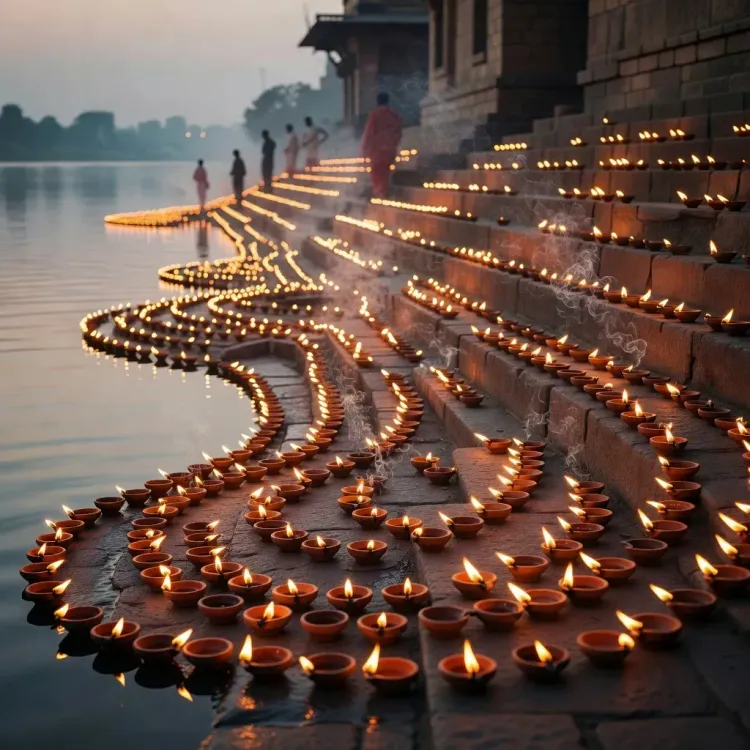
Synopsis
The Chief Minister's Office of Uttar Pradesh shared CM Yogi Adityanath's five-line declaration calling Shri Ram the consciousness, culture, values, life-force, and self-respect of India, timed to Deepotsav 2026 in Ayodhya — the festival the UP government has built into a cultural landmark since 2017.
Key Takeaways
CM Yogi Adityanath declared Shri Ram the consciousness, culture, values, life-force, and self-respect of India in a post on 7 November 2026 .
The statement was timed to Deepotsav 2026 , Ayodhya's annual festival of lights marking Lord Ram's return from exile.
The UP government has organised Deepotsav since 2017 , coinciding with Yogi Adityanath's first term as Chief Minister.
The hashtag #deepostav1dasak suggests the 2026 edition may mark a first-decade milestone for the festival.
Ayodhya has seen successive infrastructure upgrades alongside Deepotsav, reinforcing its role as Uttar Pradesh's flagship cultural and religious destination.
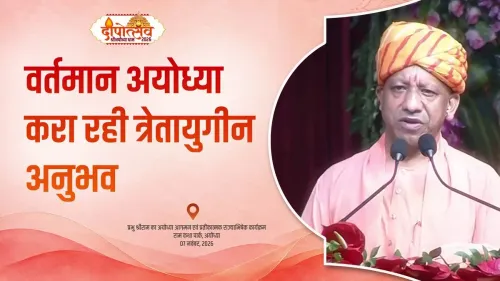
At the heart of one of India's most luminous annual celebrations, Chief Minister Yogi Adityanath distilled a civilisational argument into five sharp lines — and placed Lord Ram at the very centre of Indian identity. The Chief Minister's Office of Uttar Pradesh posted the declaration on 7 November 2026, as Ayodhya prepared to host yet another edition of the grand Deepotsav festival.
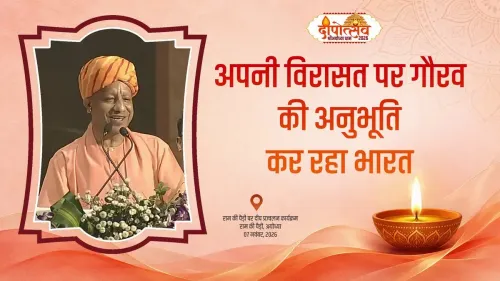
The post, shared in Hindi, reads: 'Shri Ram bharat ki chetna hain. Shri Ram bharat ki sanskriti hain. Shri Ram bharat ke sanskar hain. Shri Ram bharat ke pran hain. Shri Ram bharat ka aatmsamman hain.' — 'Shri Ram is the consciousness of India. Shri Ram is the culture of India. Shri Ram is the values of India. Shri Ram is the life-force of India. Shri Ram is the self-respect of India.' The statement carries the hashtags #Deepotsav2026 and #deepotsav2026ayodhyapuri, anchoring it firmly to this year's celebrations.
Deepotsav's nine-year journey to a landmark edition
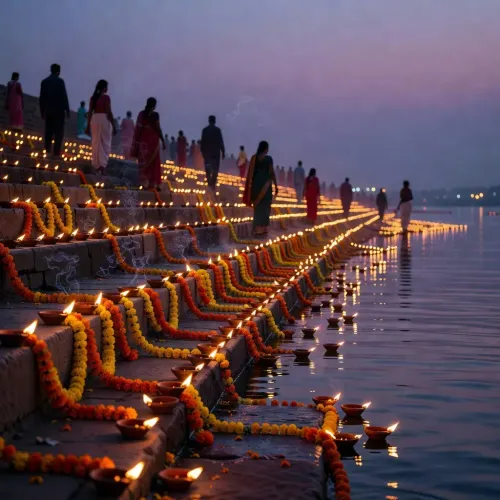
The Uttar Pradesh government first organised Deepotsav in Ayodhya in 2017, the same year Yogi Adityanath assumed office as Chief Minister. The festival — staged on the banks of the Saryu River to mark Lord Ram's return from exile — has grown with each passing year, drawing pilgrims, tourists, and international attention. The hashtag #deepostav1dasak suggests this edition may carry a 'first decade' significance, though specific details of the 2026 programme have not been independently confirmed.
Successive editions have coincided with infrastructure upgrades across Ayodhya: widened ghats, improved road connectivity, and the landmark opening of the Ram Mandir — all woven into the state government's larger vision of positioning the city as a premier cultural and religious destination. Visitor footfall has tracked upward with each edition, reinforcing the festival's dual function as a spiritual event and a tourism driver.
Ram as civilisational anchor — the message behind the metre
The five-line formulation is not incidental. By sequencing chetna (consciousness), sanskriti (culture), sanskar (values), pran (life-force), and aatmsamman (self-respect), CM Yogi builds from the interior to the existential — from what a civilisation thinks, to what it ultimately stands for. It is a rhetorical structure designed to resonate as much in a village temple as in a prime-time debate.
The state government has consistently used Deepotsav as the moment to amplify this cultural messaging, and the 2026 edition — arriving nearly two years after the consecration of the Ram Mandir — lands in a charged symbolic landscape. Ayodhya is no longer just a pilgrimage point; under the current administration it has become the state's most visible argument about culture, continuity, and identity.
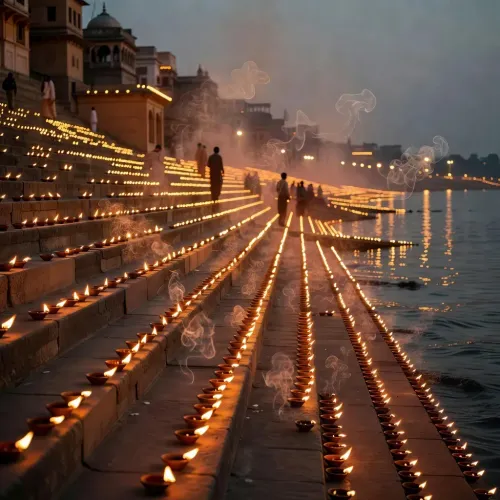
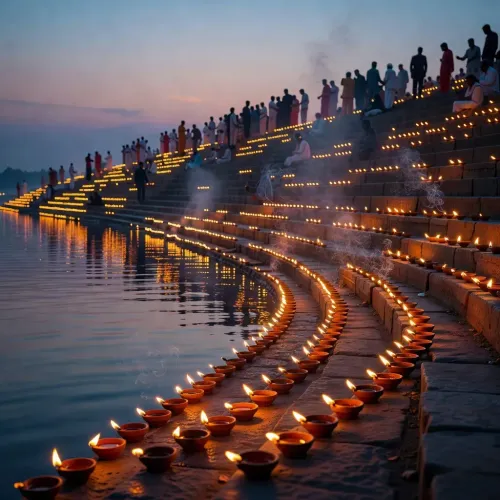
When the diyas are lit along the Saryu this weekend, they will illuminate more than a riverbank — they will mark a decade of a government betting its legacy on one city's transformation.
Point of View
Using Ayodhya as both stage and argument. By framing Shri Ram not merely as a deity but as India's 'consciousness' and 'self-respect,' the CM elevates a religious symbol into a political-cultural proposition with appeal well beyond Uttar Pradesh. The timing — ahead of a potentially landmark tenth Deepotsav — signals that the administration views the festival not as routine ceremony but as an annual referendum on that proposition. For opposition parties, the challenge remains finding a counter-narrative that resonates with an electorate for whom Ram and Ayodhya carry deep personal meaning.
NationPress
8 Nov 2026
Frequently Asked Questions
What is Deepotsav and where is it held?
Deepotsav is an annual festival of lights held in Ayodhya, Uttar Pradesh , celebrating Lord Ram's return from exile. The Uttar Pradesh government has organised it officially since 2017 , staging it on the banks of the Saryu River with thousands of oil lamps.
What did CM Yogi Adityanath say about Shri Ram at Deepotsav 2026?
CM Yogi declared that 'Shri Ram is the consciousness, culture, values, life-force, and self-respect of India' — a five-part formulation shared by the Chief Minister's Office of Uttar Pradesh on 7 November 2026 under the hashtag #Deepotsav2026 .
When did the UP government start organising Deepotsav?
The Uttar Pradesh government first organised Deepotsav in Ayodhya in 2017 , the year Yogi Adityanath became Chief Minister, and has continued annually since then.
What does the hashtag deepostav1dasak mean?
The hashtag #deepostav1dasak appears to reference a 'first decade' milestone for the Deepotsav festival, suggesting the 2026 edition marks roughly ten years of the UP government-organised event, though official details have not been confirmed.
How has Ayodhya changed under the Deepotsav era?
Since 2017 , Ayodhya has undergone significant infrastructure upgrades — including improved ghats, road connectivity, and the opening of the Ram Mandir — positioning it as Uttar Pradesh's premier cultural and religious tourism destination alongside the annual Deepotsav festival.