CM Yogi Hikes Fair Price Shop Margins, Launches PDS Feedback Tool
Synopsis
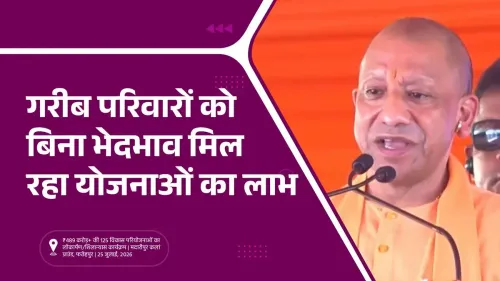
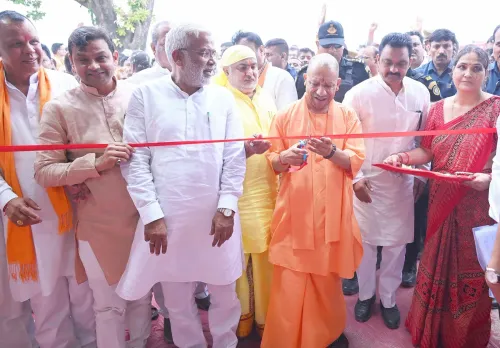
Uttar Pradesh Chief Minister Yogi Adityanath announced a 39 percent commission hike for over 78,000 fair price shop dealers — from ₹90 to ₹125 per quintal — and launched an e-POS-based feedback system for door-step PDS delivery, before heading to Gorakhpur to honour winners of the state-level Nag Panchami wrestling competition.
Key Takeaways
Fair price shop dealer commission in UP raised from ₹90 to ₹125 per quintal , benefiting more than 78,000 dealers .
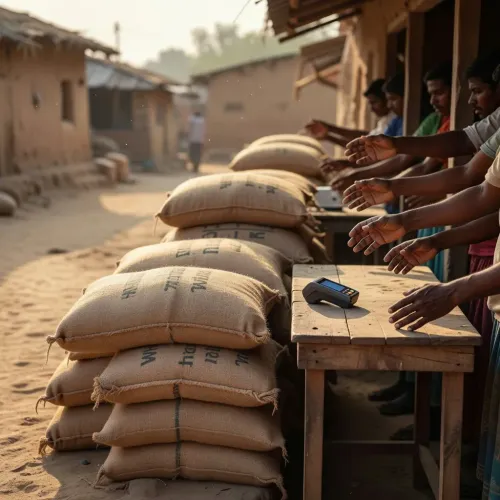
An e-POS-based feedback system launched under the single-stage door-step delivery model to improve PDS transparency and accountability.
Both reforms build on earlier UP pilots using electronic point-of-sale devices at ration shops to reduce leakages.
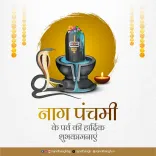
CM Adityanath will travel to Gorakhpur to honour winners of the state-level traditional men's wrestling competition on Nag Panchami .
The day's agenda is framed explicitly around combining welfare delivery ( lok-kalyan ) with cultural tradition ( lok-parampara ).
A welfare upgrade and a wrestling championship on the same day — that is the signature of Uttar Pradesh Chief Minister Yogi Adityanath's agenda for Monday, 17 August 2026, blending food-security reform with the revival of a centuries-old sporting tradition. From Lucknow, he announced a commission hike for fair price shop dealers and the launch of a digital feedback system for the public distribution network; from Gorakhpur, a state-level wrestling prize-money competition on the occasion of Nag Panchami.
A bigger cut for 78,000 fair price dealers
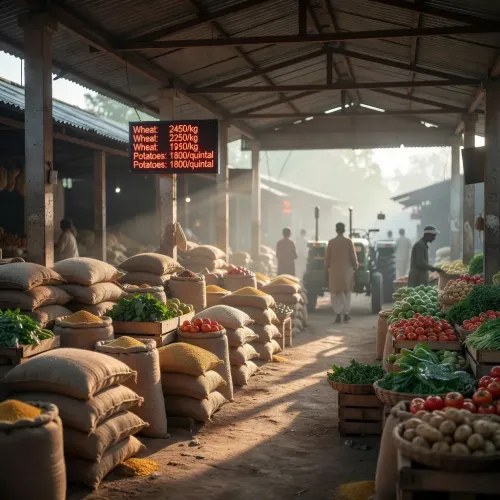
At the centre of the welfare announcement is a direct income boost for more than 78,000 fair price shop (FPS) dealers across Uttar Pradesh. Their per-quintal commission — the margin they earn for distributing subsidised grain — will be raised from ₹90 to ₹125, a hike of nearly 39 percent. These dealers are the last-mile link in the Public Distribution System (PDS), the national programme that channels subsidised foodgrains — including entitlements under the Antyodaya Anna Yojana — to eligible households. A better commission is intended to keep that link financially viable and reduce incentives for diversion.
The Antyodaya Anna Yojana, launched in 2000 and later anchored in law by the National Food Security Act of 2013, targets the poorest of the poor with heavily subsidised grain allocations. Uttar Pradesh, with one of the country's largest PDS networks, has in recent years piloted e-POS (electronic point-of-sale) devices at fair price shops to authenticate beneficiaries biometrically and curb leakages — a reform that the new announcement builds directly upon.
Digital feedback loop enters the ration system
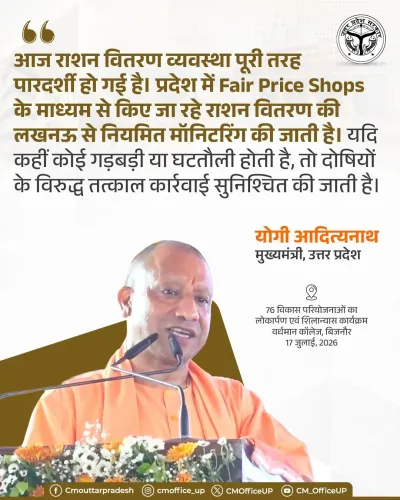
The second plank of the day's reform is the launch of an e-POS-based fair price dealer feedback system under the single-stage door-step delivery model. In plain terms, the system will allow dealers — and through them, beneficiaries — to flag problems, confirm deliveries, and generate an accountability trail at the point of distribution itself. Chief Minister Adityanath described the goal directly: making the PDS 'aur adhik pardarshi, jawabdeh evam janonamukh' — 'more transparent, accountable, and people-oriented.'
The move closes a long-standing gap in PDS oversight. Grain can be authenticated at the shop counter through e-POS, but feedback on whether door-step deliveries actually reached beneficiaries has historically depended on manual inspection. Embedding that feedback loop into the e-POS infrastructure — already present at thousands of shops — is a lower-cost route to real-time monitoring than building a parallel system.
Gorakhpur's wrestling arena and the politics of tradition
After the Lucknow events, the Chief Minister will travel to Gorakhpur — his political and spiritual base, home to the Gorakhnath Math — to preside over the state-level traditional prize-money men's wrestling competition held annually on Nag Panchami. The festival, one of the most widely observed in Uttar Pradesh, has long been associated with akharas (traditional wrestling pits) and community kushti bouts, particularly in the eastern districts of the state.
By personally honouring the winners, Adityanath is doing something deliberate: anchoring a welfare-reform day inside a cultural frame. His post opened with exactly that juxtaposition — 'Antyodaya se akhade tak, lok-kalyan se lok-parampara tak' — 'from Antyodaya to the wrestling pit, from public welfare to public tradition.' The phrasing is a political statement of intent as much as a schedule.
Uttar Pradesh under Adityanath has consistently paired scheme-delivery announcements with cultural and religious occasions, presenting development and heritage not as competing priorities but as a single governing philosophy. Whether the commission hike reaches all 78,000-plus dealers on schedule, and whether the e-POS feedback system achieves state-wide rollout, will be the harder tests of that philosophy in practice.
Point of View
The Gorakhpur wrestling event on Nag Panchami reinforces Adityanath's identity as a custodian of eastern UP's cultural heritage — a constituency that overlaps significantly with the BJP's rural base. The real test will be implementation speed: whether the revised commissions are operationalised across all districts promptly, and whether the feedback system generates actionable data rather than becoming a checkbox compliance tool.
NationPress
17 Aug 2026
Frequently Asked Questions
What is the new commission rate for fair price shop dealers in Uttar Pradesh?
The commission for fair price shop dealers in UP has been increased from ₹90 to ₹125 per quintal , a hike of nearly 39 percent, announced by Chief Minister Yogi Adityanath on 17 August 2026 .
What is the e-POS feedback system launched for UP's PDS?
The e-POS-based fair price dealer feedback system is a digital tool embedded in existing electronic point-of-sale devices at ration shops, designed to track and verify door-step deliveries under the single-stage delivery model, making the Public Distribution System more transparent and accountable.
How many fair price shop dealers are there in Uttar Pradesh?
According to CM Yogi Adityanath's announcement, Uttar Pradesh has more than 78,000 fair price shop (FPS) dealers who will benefit from the revised commission rate.
What is Nag Panchami wrestling competition in Gorakhpur?
The Nag Panchami traditional prize-money wrestling competition is a state-level men's kushti (wrestling) event held annually in Gorakhpur on the occasion of the Hindu festival Nag Panchami, celebrating UP's akhara (wrestling pit) heritage.
What is Antyodaya Anna Yojana and how does it relate to UP's PDS reform?
Antyodaya Anna Yojana , launched in 2000 and backed by the National Food Security Act of 2013 , provides heavily subsidised grain to the poorest households through the PDS network — the same network whose dealer commissions and delivery feedback systems UP is now upgrading.