CM Yogi hits out at 'one person' calling Uttarakhand natives infiltrators
Synopsis
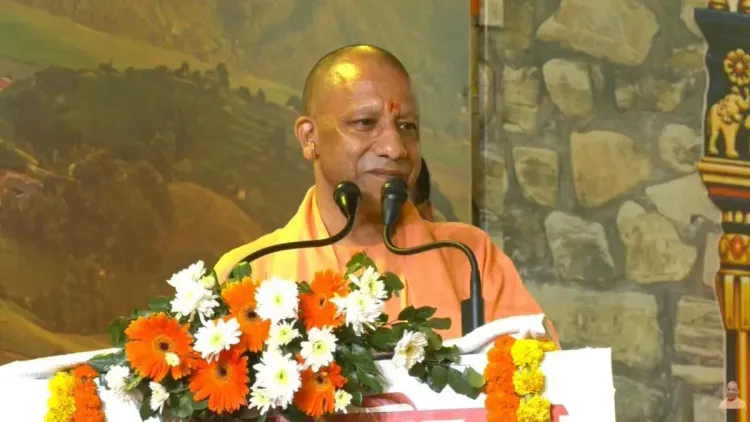
Uttar Pradesh Chief Minister Yogi Adityanath on 11 November 2026 posted on X condemning an unnamed individual for allegedly calling residents of Uttarakhand 'infiltrators', reigniting debates around regional identity, migration rhetoric, and political dignity in the hill state.
Key Takeaways
CM Yogi Adityanath posted on X on 11 November 2026 criticising an unnamed 'one person' for calling Uttarakhand residents infiltrators.
The Hindi term used — ghuspaithiye — typically refers to undocumented cross-border migrants; applying it to Uttarakhand residents is politically and culturally provocative.
Uttarakhand was carved out of Uttar Pradesh in 2000 , giving the two states deep historical and cultural ties.
Yogi Adityanath heads the Gorakhnath Math , which has long-standing spiritual ties to the Kumaon and Garhwal belts of Uttarakhand.
The identity of 'ek vyakti' ('one person') has not been officially confirmed; responses from Uttarakhand or the opposition are awaited.
A sharp political broadside landed on Wednesday, 11 November 2026, when Uttar Pradesh Chief Minister Yogi Adityanath publicly called out an unnamed individual for allegedly labelling the residents of neighbouring Uttarakhand as 'infiltrators' — a term that carries heavy connotations in India's ongoing debates around migration and identity.
In his post on X, CM Yogi wrote: 'ek vyakti' Uttarakhand vasiyon ko ghuspethiye keh raha hai... — loosely translated, 'one person is calling the people of Uttarakhand infiltrators...' The deliberate use of 'ek vyakti' ('one person') without naming the individual is a well-worn rhetorical device in Indian political discourse, designed to signal recognition among supporters while keeping the target identifiable without direct attribution.
Why 'infiltrator' is a loaded word in this context
The word 'ghuspaithiya' — infiltrator — sits at the intersection of national security language and demographic politics in India. In border-state debates, it has traditionally referred to undocumented cross-border migrants. Applying it to residents of Uttarakhand, a state carved out of Uttar Pradesh itself in 2000, inverts that framing in a way that is politically and culturally provocative. Uttarakhand's population is overwhelmingly indigenous to the Himalayan hill region; to characterise them as 'infiltrators' in any context strikes at questions of belonging, regional identity, and the dignity of a mountain state that has long asserted its distinct cultural character.
CM Yogi's standing in the Uttarakhand conversation
As Chief Minister of Uttar Pradesh and head of the Gorakhnath Math in Gorakhpur — a religious institution with deep historical ties to the Kumaon and Garhwal belts of Uttarakhand — Yogi Adityanath carries a particular moral authority when speaking on the dignity of hill communities. The Math's spiritual influence extends across the former undivided UP, giving his intervention a cultural dimension beyond the purely political. His intervention positions the UP government as a defender of Uttarakhand's people, even though the two are now separate states.
Who is 'one person'?
CM Yogi has not named the individual. The research available does not confirm the identity of 'ek vyakti' or the specific event that triggered the remark. That ambiguity is itself part of the political moment: it invites audiences to fill in the blank, amplifying the charge while insulating the speaker from a direct confrontation. Responses from Uttarakhand's government or the opposition will likely clarify the target — and the stakes — of this exchange in the hours ahead.
Until then, the question hangs in the air: who, exactly, called the people of Uttarakhand outsiders in their own land — and why?
Point of View
He invites his audience to arrive at the conclusion themselves, which is often more persuasive than a direct accusation. The charge also allows him to simultaneously defend Uttarakhand's residents — building goodwill in a neighbouring BJP-governed hill state — while framing an unnamed opponent as anti-people. Set against India's recurring debates over migration and regional identity in hill states, this episode fits a broader pattern in which the language of border-security discourse gets repurposed for domestic political contests. How the unnamed individual responds, and whether the identity is confirmed, will determine whether this remains a rhetorical jab or escalates into a full political confrontation.
NationPress
11 Nov 2026
Frequently Asked Questions
What did CM Yogi Adityanath say about Uttarakhand residents?
On 11 November 2026, CM Yogi posted on X criticising an unnamed individual for calling residents of Uttarakhand 'infiltrators', a remark he presented as an affront to the dignity of the hill state's people.
Who is the 'one person' CM Yogi referred to?
CM Yogi did not name the individual, using the phrase 'ek vyakti' (one person) instead. The identity has not been officially confirmed and responses from political figures are awaited.
Why is calling Uttarakhand residents 'infiltrators' controversial?
The term 'ghuspaithiya' (infiltrator) is typically used for undocumented cross-border migrants. Applying it to residents of Uttarakhand — a state with its own distinct indigenous hill communities — is considered deeply offensive and politically charged.
What is the relationship between Yogi Adityanath and Uttarakhand?
Yogi Adityanath heads the Gorakhnath Math in Gorakhpur, a religious institution with historical spiritual influence across both Uttar Pradesh and the Kumaon-Garhwal region of Uttarakhand, giving him a cultural connection to the hill state beyond politics.
When was Uttarakhand separated from Uttar Pradesh?
Uttarakhand was carved out of Uttar Pradesh as a separate state in 2000, though the two states retain deep historical, cultural, and administrative ties.