CM Dhami fires back at Akhilesh over 'ghuspaithiya' remark
Synopsis
Uttarakhand CM Pushkar Singh Dhami publicly rebuked Samajwadi Party chief Akhilesh Yadav on 24 October 2026 for reportedly calling Uttarakhand people 'infiltrators,' invoking the 1994 Rampur Tiraha firing under Mulayam Singh Yadav and demanding that Congress answer for its ally's statement.
Key Takeaways
CM Pushkar Singh Dhami posted a sharp rebuttal on 24 October 2026 against Akhilesh Yadav's reported 'ghuspaithiya' remark about Uttarakhand residents.
Dhami invoked the October 1994 Rampur Tiraha firing in Muzaffarnagar, when police under Mulayam Singh Yadav's UP government fired on Uttarakhand statehood agitators.
Uttarakhand was formed on 9 November 2000 after years of agitation that included violent crackdowns.
Dhami directly challenged Indian National Congress — allied with SP in UP — to clarify whether it endorses the remark.
The confrontation comes ahead of 2027 Uttarakhand assembly elections , raising the political stakes significantly.
No formal response from Congress or Samajwadi Party had been issued at the time of publication.
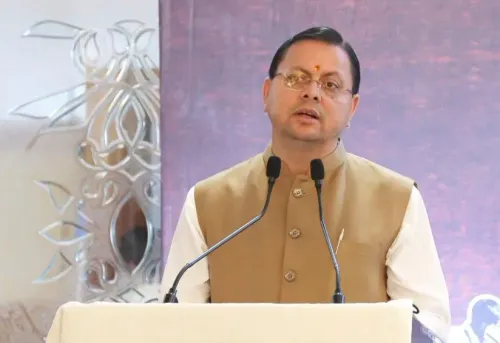
A single word has ignited a full-blown political firestorm between two neighbouring states. Uttarakhand Chief Minister Pushkar Singh Dhami on Saturday, 24 October 2026, issued a sharp public rebuke of Samajwadi Party president Akhilesh Yadav, calling his reported description of Uttarakhand residents as 'ghuspaithiya' (infiltrators) an insult to the state's identity, its people, and the blood spilled during its statehood struggle.
The word that drew first blood
In his post, Dhami declared: 'Uttarakhand devbhoomi bhi hai aur veerbhoomi bhi' — 'Uttarakhand is both sacred land and land of the brave.' He said the state has given the nation saints, soldiers, and individuals devoted to national service, and that calling its people infiltrators is an affront to its pride and its hard-won identity.
Dhami did not stop at the present. He reached back three decades to remind his audience of a defining trauma: when Akhilesh Yadav's father, Mulayam Singh Yadav, was Chief Minister of Uttar Pradesh in the 1990s, police opened fire on Uttarakhand statehood agitators at Rampur Tiraha in Muzaffarnagar. The implication was blunt — the son now insults the very people whose ancestors were shot under his father's watch.
Rampur Tiraha: the wound that never fully closed
The October 1994 firing at Rampur Tiraha remains one of the most painful chapters in Uttarakhand's collective memory. Agitators demanding a separate hill state were met with police action that killed several protesters. The event galvanised the movement and is still invoked as a symbol of Uttar Pradesh's political establishment treating hill communities as expendable.
Uttarakhand was eventually carved out of UP on 9 November 2000, after years of sustained agitation, political negotiation, and no small amount of sacrifice. For many residents, that history is not a history lesson — it is lived inheritance.
Congress pulled into the crossfire
Dhami's post escalated beyond a two-party clash by directly targeting Indian National Congress, which is currently allied with the Samajwadi Party in Uttar Pradesh. He posed two pointed questions to the party: does Congress endorse Akhilesh Yadav's remark? Is it acceptable to Congress that the people of Uttarakhand be labelled infiltrators?
'Congress owes the people of Devbhoomi an answer,' Dhami wrote — a framing designed to force the opposition into a corner before any formal response could be crafted. With assembly elections due in 2027 in Uttarakhand, the BJP's calculation appears clear: make every opposition statement about the state a test of whether that opposition respects Uttarakhand's identity at all.
What comes next for both parties
Congress and Samajwadi Party spokespeople have yet to issue a formal response. The BJP, which governs Uttarakhand, has historically used the statehood movement's memory as a powerful electoral asset — especially when UP-based party leaders make statements that can be cast as dismissive of hill communities. Whether Akhilesh Yadav clarifies, doubles down, or stays silent will shape the trajectory of this exchange. Either way, CM Dhami has ensured the remark does not quietly disappear — and that the families of 1994 are watching.
Point of View
And simultaneously put a national opposition ally (Congress) on the defensive by demanding it answer for a partner's statement. The 1994 Rampur Tiraha reference is not incidental — it is the emotional load-bearing pillar, tying Akhilesh directly to the most visceral wound in Uttarakhand's political memory without requiring a new controversy. With the 2027 assembly elections on the horizon, this exchange tests whether the INDIA bloc's alliance arithmetic in UP can survive the collateral damage its constituent parties cause in neighbouring BJP-governed states.
NationPress
24 Oct 2026
Frequently Asked Questions
What did Akhilesh Yadav say about Uttarakhand people?
According to CM Dhami's post, Akhilesh Yadav referred to the people of Uttarakhand as 'ghuspaithiya,' meaning infiltrators. The specific context of Akhilesh's original statement has not been independently detailed in available public record.
What happened at Rampur Tiraha in Muzaffarnagar in 1994?
In October 1994 , police opened fire on Uttarakhand statehood agitators at Rampur Tiraha in Muzaffarnagar during the government of Mulayam Singh Yadav in Uttar Pradesh, killing several protesters. The incident remains a deeply painful symbol of the Uttarakhand statehood movement.
When was Uttarakhand formed as a separate state?
Uttarakhand was carved out of Uttar Pradesh on 9 November 2000 , after years of sustained agitation by residents demanding a separate hill state.
Why did CM Dhami target Congress in his post about Akhilesh Yadav?
Congress is currently in a political alliance with the Samajwadi Party in Uttar Pradesh. Dhami asked whether Congress endorses Akhilesh Yadav's remark, seeking to force the national opposition party to either distance itself from its ally or own the statement.
What are the next Uttarakhand assembly elections?
The next Uttarakhand state assembly elections are expected in 2027 . Political analysts see the current exchange as an early front in the BJP's bid to consolidate regional identity sentiment ahead of that vote.