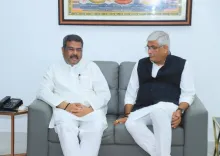
CM Yogi Inaugurates International Potato Center in Agra
Synopsis
The International Potato Center (CIP) has begun operations in Agra after the Uttar Pradesh government allocated land for the facility. Chief Minister Yogi Adityanath says the centre will deliver value addition, higher income, and prosperity to the state's potato farmers.
Key Takeaways
The International Potato Center (CIP) , a CGIAR body headquartered in Lima, Peru, has commenced operations in Agra, Uttar Pradesh .
The Uttar Pradesh government under CM Yogi Adityanath allocated land in Agra to facilitate the centre's establishment in India.
CM Yogi stated the centre will enable value addition of farmers' produce, increase their income, and bring prosperity to their lives.
The CIP complements India's existing Central Potato Research Institute (CPRI) , established in 1949 under ICAR.
Agra was selected due to its location within western Uttar Pradesh's established potato production belt.
Field trials, seed multiplication programmes, and farmer training are expected to follow in the coming crop seasons.
The Chief Minister's Office of Uttar Pradesh announced on Saturday, 25 July 2026 that the International Potato Center (CIP) has formally commenced operations in Agra, after the state government allocated land in the city to host the global agricultural research body's India facility.
Context
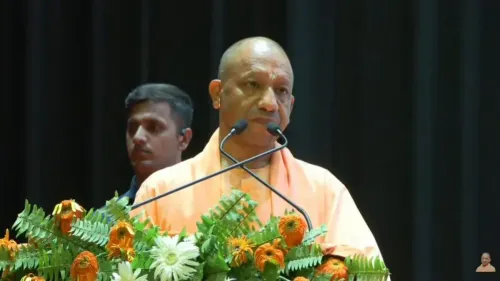
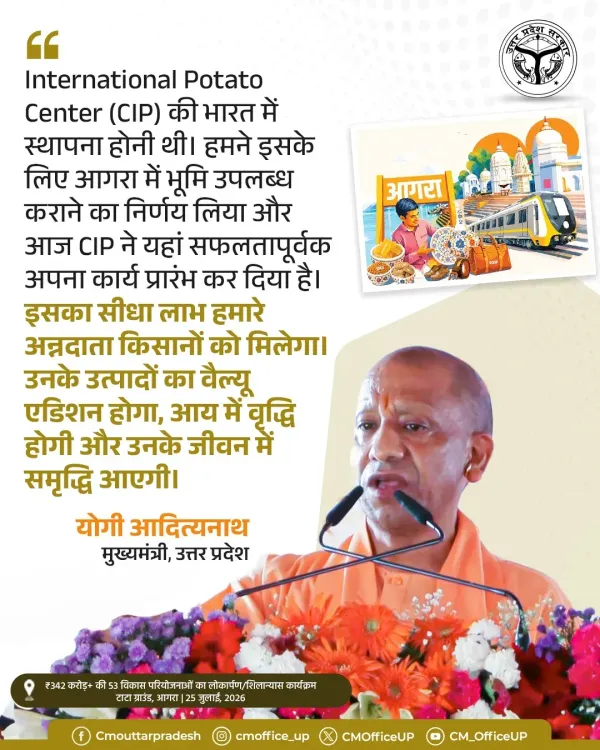
Chief Minister Yogi Adityanath stated: 'International Potato Center (CIP) ki Bharat mein sthapna honi thi' — 'The International Potato Center was to be established in India. We decided to provide land for this in Agra, and today CIP has successfully commenced its work here.' The announcement confirms that the state government played a proactive role in securing the facility by offering land, clearing the path for a global research institution to anchor itself in one of India's most agriculturally significant states.
The CIP, headquartered in Lima, Peru, is a CGIAR research organisation with a mandate covering potato and sweet potato breeding, seed systems, and agricultural value chains. Its presence in Agra — situated in western Uttar Pradesh's established potato production belt — positions the centre close to the farmers and supply chains it is designed to serve.
Policy Backdrop
India has long maintained dedicated potato research infrastructure through the Central Potato Research Institute (CPRI), established in 1949 under the Indian Council of Agricultural Research (ICAR). The CIP facility complements rather than duplicates this national architecture, bringing CGIAR's global seed-system expertise and international breeding networks into direct contact with state-level agricultural ecosystems.
Uttar Pradesh has pursued a series of international agricultural research partnerships in recent years as part of a broader push to modernise its farm sector, develop food processing clusters, and raise farmer incomes through technology transfer. Hosting a CGIAR centre follows a pattern seen in other Indian states that have leveraged such partnerships to fill gaps between national research mandates and on-ground farmer needs.
Stakeholders and Impact
CM Yogi emphasised three direct benefits for farmers: value addition to their produce, increase in income, and overall improvement in their quality of life. His statement — 'unke utpadon ka value addition hoga, aay mein vriddhi hogi aur unke jeevan mein samriddhi aayegi' — 'their products will see value addition, their income will rise, and prosperity will come to their lives' — frames the CIP's role explicitly in terms of farmer welfare rather than institutional prestige.
The primary beneficiaries are potato farmers across Uttar Pradesh, who stand to gain access to improved seed varieties, agronomic training, and linkages to value-chain programmes coordinated by the CIP. Agri-research institutions, state agriculture departments, and food processing enterprises in the region are secondary stakeholders who could leverage CIP's technical outputs.
What's Next
Attention will now turn to the rollout of CIP-coordinated field trials, seed multiplication programmes, and farmer training modules across Uttar Pradesh over the coming crop seasons. The effectiveness of the centre will ultimately be measured by how quickly its research outputs reach smallholder potato growers and translate into measurable income gains.
The establishment of the CIP facility in Agra signals a deepening of Uttar Pradesh's ambition to position itself as a hub for agricultural innovation in northern India — a trajectory that, if sustained, could reshape the state's farm economy over the next decade.
Point of View
Which has consistently framed agricultural modernisation as central to its governance pitch in Uttar Pradesh. By securing a globally recognised CGIAR centre, the state signals its capacity to attract international research investment — a soft-power move that also has hard electoral logic in a state where farmer welfare is a defining political issue. The explicit linkage drawn between an international research body and direct farmer income gains reflects a deliberate communication strategy: translating technical milestones into a language of rural prosperity. If the CIP's programmes deliver measurable results, this could become a template for UP's engagement with other CGIAR and international agri-research networks.
NationPress
25 Jul 2026
Frequently Asked Questions
What is the International Potato Center (CIP) and why is it in Agra?
The International Potato Center (CIP) is a CGIAR global agricultural research organisation headquartered in Lima, Peru, focused on potato and sweet potato research. It has opened its India facility in Agra because the Uttar Pradesh government allocated land there, and Agra is situated in a major potato-producing region of western UP.
How will the CIP center in Agra benefit farmers?
Chief Minister Yogi Adityanath has said the centre will enable value addition to farmers' produce, increase their income, and bring overall prosperity to their lives through improved seed systems, agronomic research, and value-chain development.
What did the Uttar Pradesh government do to set up CIP in Agra?
The Uttar Pradesh government decided to provide land in Agra for the International Potato Center's India facility, facilitating its establishment and enabling it to commence operations.
Is the CIP different from India's Central Potato Research Institute?
Yes. The Central Potato Research Institute (CPRI) was established in 1949 under ICAR as India's national potato research body. The CIP is an international CGIAR organisation; the two institutions are complementary rather than duplicative.
What will the CIP in Agra do next?
The centre is expected to roll out field trials, seed multiplication programmes, and farmer training modules in Uttar Pradesh over the coming crop seasons, with a focus on improving potato productivity and value chains.