CM Yogi Orders Medicine Quality Fix, Faster Ambulances in UP
Synopsis
Chief Minister Yogi Adityanath has directed Uttar Pradesh hospitals to remove medicines with under three months of shelf life, expand Health ATM coverage, cut ambulance response times, clear ASHA worker dues, prioritise COVID-era NHM staff absorption, and convert the TB elimination drive into a community-wide movement involving schools and colleges.
Key Takeaways
Hospitals in Uttar Pradesh are directed to remove all medicines with fewer than three months of remaining shelf life.
Health ATM diagnostic kiosks are to be expanded to more areas across the state.
Ambulance response time must be further reduced; operator payments must be cleared without delay.
Pending dues of ASHA workers must not remain outstanding under any circumstances.
COVID-era NHM health workers are to be given priority absorption into regular positions.
The TB elimination campaign is to be turned into a community movement by involving schools, colleges, and voluntary organisations.
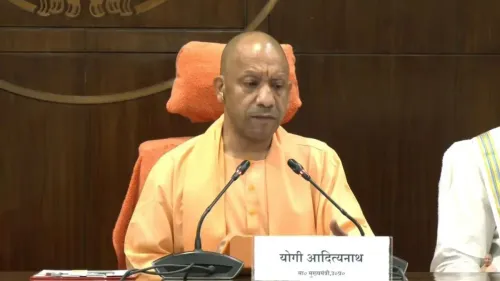
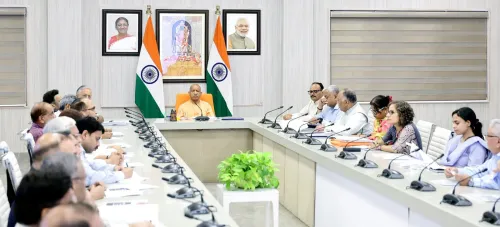
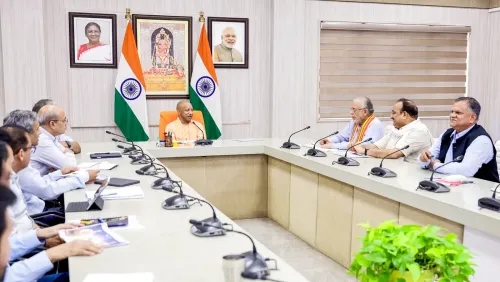
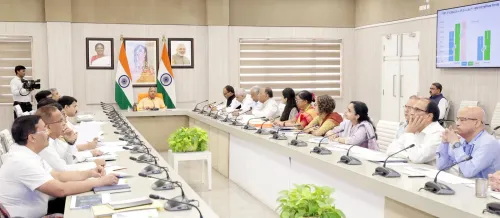
The Chief Minister's Office of Uttar Pradesh, on Tuesday, 26 May 2026, shared directives issued by Chief Minister Yogi Adityanath during a health sector review, covering medicine quality standards, ambulance response times, maternal and infant mortality reduction, and the absorption of COVID-era National Health Mission workers.
Context
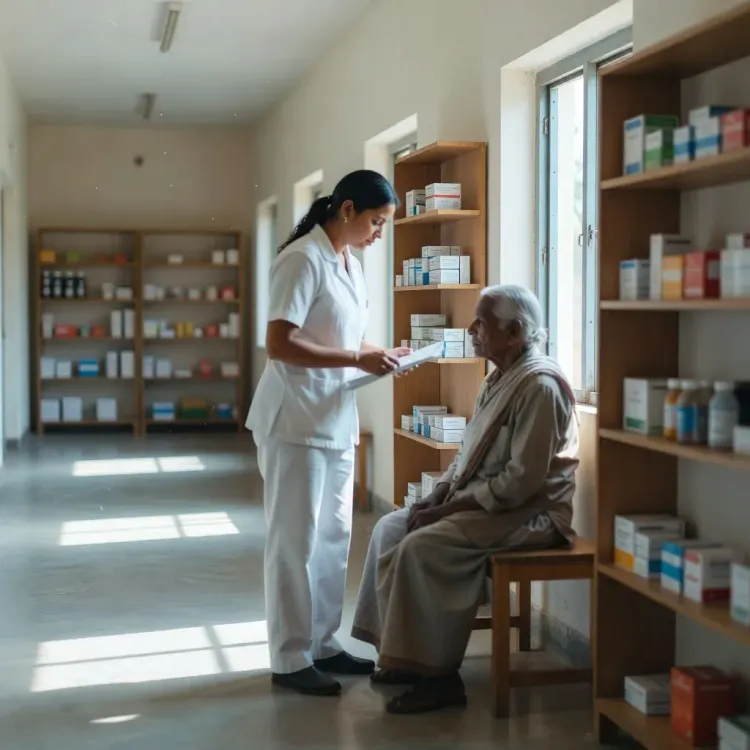
In the review meeting, CM Yogi directed that government hospitals must stock only quality medicines and that teen maah se kam expiry avadhi waali dawaaein [medicines with less than three months of remaining shelf life] must not be kept in any facility. He also called for expanding the Health ATM service — automated kiosks that allow patients to conduct basic diagnostic tests — to a wider number of areas across the state.
On emergency services, the Chief Minister stated that ambulance response time must be reduced further, noting that 'in an emergency, every minute matters.' He also directed that payments to ambulance operators be cleared on time without delays.
Policy Backdrop
The directives sit within the framework of the National Health Mission (NHM), launched in 2013 to strengthen rural and urban healthcare delivery across India. Uttar Pradesh, the country's most populous state, has been running targeted programmes to expand institutional deliveries and drive down its maternal mortality rate (MMR) and infant mortality rate (IMR).
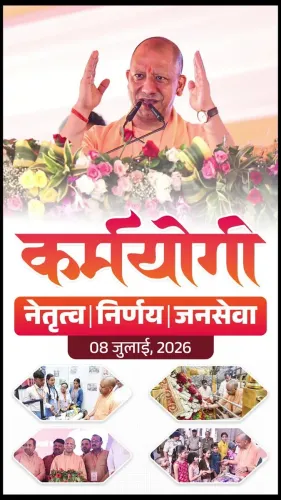
On tuberculosis, India adopted the National Strategic Plan for TB Elimination in 2017, targeting a disease-free status by 2025. CM Yogi's instruction to convert the TB elimination campaign into a jan andolan [people's movement] — by looping in schools, colleges, and voluntary organisations — aligns directly with that national goal, even as the original 2025 deadline has passed and efforts continue.
The post-COVID workforce question is also addressed: the Chief Minister directed that health workers who served under NHM during the COVID-19 period be given priority absorption into regular positions. He separately ordered that pending payments to ASHA workers — the frontline community health volunteers who anchor maternal and child health services — must not be allowed to remain outstanding under any circumstance.
Stakeholders and Impact
The directives touch multiple groups simultaneously. Government hospital patients stand to benefit from tighter medicine quality controls and faster ambulance reach. Pregnant women and newborns are the primary targets of the push to strengthen institutional and safe delivery systems to bring down MMR and IMR.
ASHA workers — who number in the hundreds of thousands across Uttar Pradesh — are directly addressed through the payment-clearance instruction, a recurring concern in the state's public health administration. COVID-era NHM contract workers awaiting regularisation are also acknowledged, with the Chief Minister calling for their 'appropriate adjustment on a priority basis.'
For the communicable disease front, the directive to intensify the communicable disease control campaign and bring educational institutions and civil society into the TB drive signals a shift toward community mobilisation rather than facility-only outreach.
What's Next
The Uttar Pradesh health department is expected to operationalise these directives through follow-up orders to district and divisional health officers. Progress on Health ATM coverage expansion and ambulance operator payment clearances will likely feature in subsequent departmental review meetings.
The integration of schools and colleges into the TB elimination campaign will require coordination between the health and education departments — a step that will be watched as a marker of how far the 'people's movement' framing translates into on-ground action.
Point of View
Which have been a recurring pressure point nationally. Framing TB elimination as a jan andolan is consistent with the state government's preference for mass-mobilisation language, though translating that into measurable outcomes will require sustained inter-departmental coordination. Taken together, the directives suggest the government is benchmarking itself against national MMR, IMR, and TB elimination targets ahead of what will be a closely watched state health performance cycle.
NationPress
10 Oct 2026
Frequently Asked Questions
What did CM Yogi say about medicines in UP government hospitals?
CM Yogi Adityanath directed that government hospitals in Uttar Pradesh must not stock medicines with fewer than three months of remaining shelf life, and that patients must receive quality medicines at all facilities.
What is the Health ATM service in Uttar Pradesh?
Health ATMs are automated kiosks installed at public health facilities that allow patients to conduct basic diagnostic tests on their own. CM Yogi has directed that this service be expanded to more areas across the state.
What did CM Yogi say about ASHA workers' payments?
The Chief Minister directed that pending payments to ASHA workers — the frontline community health volunteers under the National Health Mission — must not be allowed to remain outstanding under any circumstances.
How will UP tackle tuberculosis elimination under the new directives?
CM Yogi instructed officials to convert the TB elimination campaign into a people's movement by involving schools, colleges, and voluntary organisations, going beyond facility-based outreach to community-level mobilisation.
What was decided about COVID-era NHM health workers in UP?
CM Yogi directed that health workers who provided services under the National Health Mission during the COVID-19 period be given appropriate adjustment — effectively regularisation or absorption — on a priority basis.