CM Yogi Launches Phase 2 Tablet Drive for 25 Lakh UP Youth
Synopsis
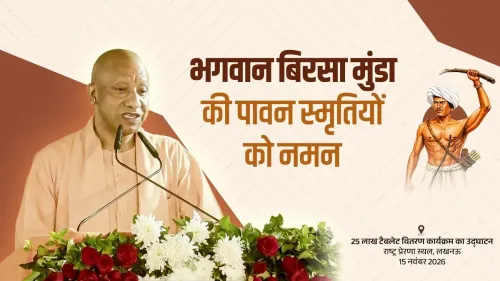
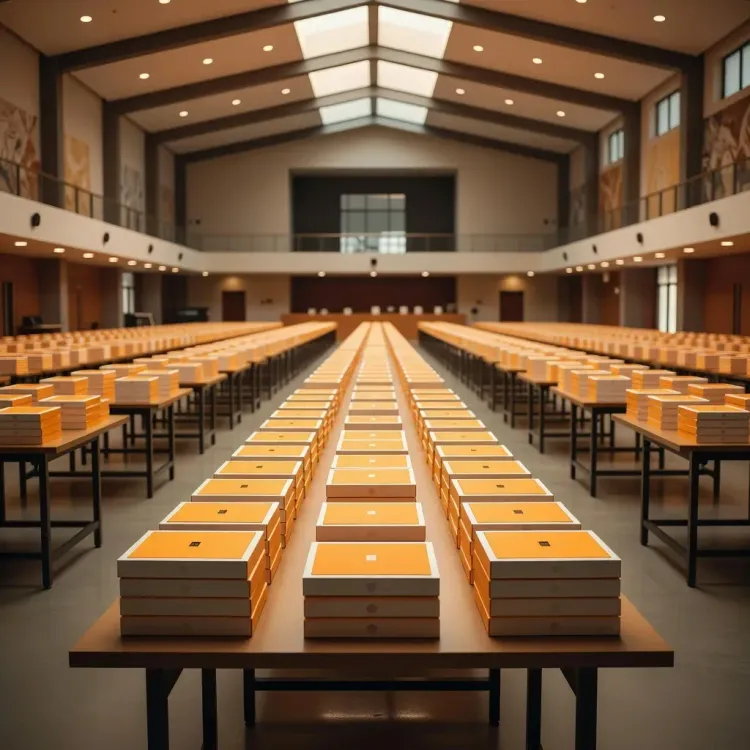
Chief Minister Yogi Adityanath launched Phase 2 of the Swami Vivekananda Yuva Sashaktikaran Yojana on 15 November 2026, beginning tablet distribution for 25 lakh UP students — building on the 60 lakh devices already delivered in Phase 1.
Key Takeaways
Phase 2 launched on 15 November 2026 : CM Yogi Adityanath formally began the second tablet distribution drive under the Swami Vivekananda Yuva Sashaktikaran Yojana.
25 lakh students are targeted in this new phase of the programme.
60 lakh devices — tablets and smartphones — were already distributed in Phase 1, bringing the scheme's cumulative target to 85 lakh .
The scheme is Uttar Pradesh's flagship digital-empowerment initiative for students and youth.
The programme aims to reduce the digital-access gap in India's most populous state , enabling students to access online learning and skill resources.
Eighty-five lakh young people. That is the scale Uttar Pradesh is now targeting under a single digital-empowerment scheme — and on Sunday, 15 November 2026, Chief Minister Yogi Adityanath formally launched the second phase of the Swami Vivekananda Yuva Sashaktikaran Yojana, kicking off tablet distribution for 25 lakh more students across the state.
From 60 Lakh to 85 Lakh: The Scale of the Drive
Speaking at the launch, CM Yogi Adityanath recalled that the scheme's first phase had already placed tablets and smartphones in the hands of 60 lakh students. 'I am pleased that today we are launching a tablet distribution campaign for 25 lakh more youth,' he said, framing the expansion as a direct continuation of the state government's commitment to bridging the digital divide in education.
The Swami Vivekananda Yuva Sashaktikaran Yojana — named after the 19th-century philosopher-monk whose vision of youth-led national renewal has long been invoked by Indian policymakers — is Uttar Pradesh's flagship programme for getting digital devices into the hands of students who would otherwise lack access to them.
Why Device Distribution Matters in India's Most Populous State
Uttar Pradesh is India's most populous state, home to hundreds of millions of people, with a vast and uneven educational landscape that spans urban colleges and remote rural schools. The gap between students who can afford personal devices and those who cannot has long translated directly into unequal access to digital learning resources, online skill programmes, and competitive examination preparation.
Across India, large states have increasingly turned to device-distribution schemes as a practical lever to reduce this gap — recognising that hardware access is the prerequisite before any digital curriculum or e-learning platform can reach a student. Uttar Pradesh's phased approach mirrors that broader pattern, but the numbers involved make it one of the largest such programmes in the country.
What the New Phase Sets in Motion
The second-phase rollout now puts the focus squarely on execution: reaching 25 lakh recipients, verifying enrolment, and ensuring devices are activated and usable. These are the pressure points where large-scale distribution programmes most often face friction — logistics, last-mile connectivity, and device quality. The state government's ability to move those tablets from warehouses to students' hands in a timely, transparent manner will define how the scheme is ultimately judged.
For the students waiting, the promise is tangible: a device that opens the door to online classrooms, digital textbooks, and a rapidly expanding ecosystem of competitive-exam preparation tools that now lives almost entirely on a screen.
Point of View
Multi-cycle policy commitment rather than a one-time pre-election gesture — a distinction that matters for how the programme is evaluated. Reaching 85 lakh cumulative recipients would make this one of the most ambitious student-device programmes in any Indian state, with potential ripple effects on digital literacy metrics and exam-preparation equity. However, the scheme's real policy test lies not in the launch event but in last-mile execution: device activation rates, connectivity availability in rural UP, and whether recipients actually integrate the hardware into their learning. If the rollout is smooth and verifiable, it strengthens the template for other high-population states watching UP's approach.
NationPress
15 Nov 2026
Frequently Asked Questions
What is the Swami Vivekananda Yuva Sashaktikaran Yojana?
It is a Uttar Pradesh government scheme that distributes free tablets and smartphones to students and youth to support digital learning and reduce the technology-access gap in education.
How many students will get tablets in Phase 2 of the UP scheme?
25 lakh students are targeted in the second phase, which was launched by CM Yogi Adityanath on 15 November 2026 .
How many devices were distributed in Phase 1 of the UP tablet scheme?
60 lakh tablets and smartphones were distributed to students in the first phase of the Swami Vivekananda Yuva Sashaktikaran Yojana.
Who launched the UP tablet distribution scheme Phase 2?
Chief Minister Yogi Adityanath launched the Phase 2 tablet distribution campaign on 15 November 2026 in Uttar Pradesh .
What is the total number of students covered under UP's tablet scheme across both phases?
Across both phases, the scheme targets 85 lakh students — 60 lakh in Phase 1 and 25 lakh in the newly launched Phase 2.