CM Yogi Opens ₹1,000 Cr Startup Fund to All Sectors, Not Just Tech

Synopsis
Chief Minister Yogi Adityanath has announced a ₹1,000 crore Fund-of-Funds for Uttar Pradesh startups, explicitly extending eligibility beyond tech to include ODOP and ODOC ventures, targeting young entrepreneurs and district-level artisans across all 75 districts.
Key Takeaways
The Uttar Pradesh government has created a ₹1,000 crore Fund-of-Funds to support startups across all sectors.
CM Yogi Adityanath explicitly stated that startups are not limited to digital devices or software technology.
Entrepreneurs can leverage the One District One Product (ODOP) and One District One Cuisine (ODOC) schemes to build and scale startups.
ODOP was launched in 2018 to promote district-specific products; ODOC extends this to traditional local cuisines.
The Fund-of-Funds model channels state capital through intermediary funds, maximising reach across UP's 75 districts .
Key stakeholders include young entrepreneurs, the MSME sector , and district-level artisans.
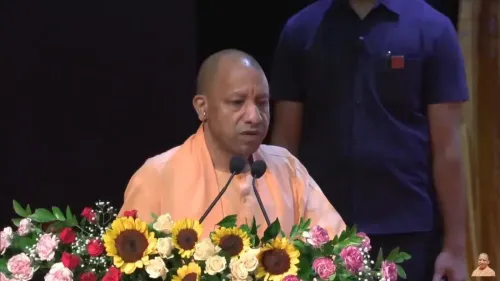
A thousand crores — and no sector left out. The Chief Minister's Office of Uttar Pradesh, amplifying a direct statement from Chief Minister Yogi Adityanath, made clear on Friday, 20 November 2026 that the state's startup ambitions stretch far beyond Silicon Valley templates — into kitchens, craft workshops, and village markets.
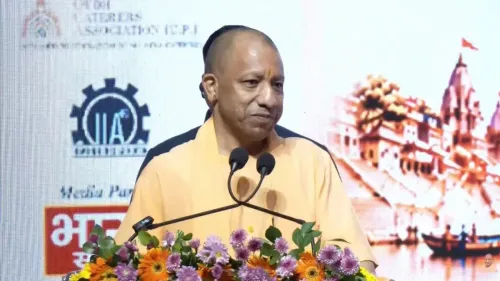
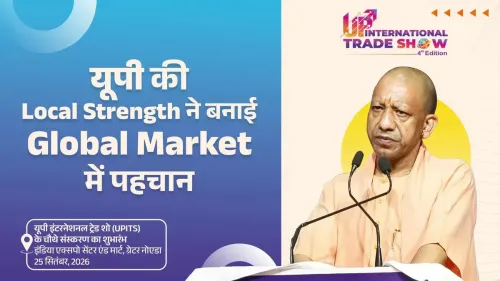
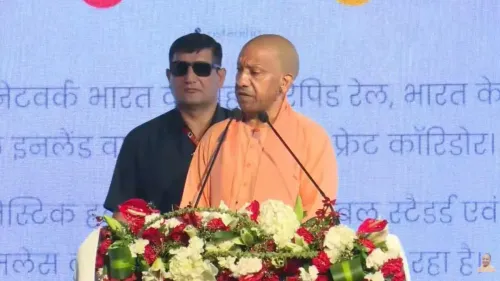
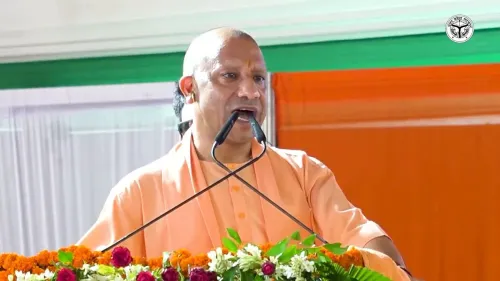
Speaking directly to young entrepreneurs, CM Yogi Adityanath said: 'If young people want to establish a startup, we have created a ₹1,000 crore Fund-of-Funds for this. You can establish your startup in any field. It is not necessary that a startup be only in Digital Devices or Software Technology. You can also scale it through One District One Product (ODOP) and One District One Cuisine (ODOC).'
The message is deliberate and pointed. Startup in the mainstream imagination still conjures coding boot camps and app stores — CM Yogi is explicitly dismantling that frame.
ODOP and ODOC: Traditional Strengths as Startup Launchpads
One District One Product, launched by the Uttar Pradesh government in 2018, was designed to identify and champion the signature local product of each of the state's 75 districts — from Lucknow's chikankari embroidery to Varanasi's Banarasi silk to Agra's leather goods. One District One Cuisine (ODOC) extends that principle to traditional food cultures, spotlighting hyper-local culinary identities that rarely make it to formal economic frameworks. What the CM is now doing is bridging these heritage schemes with venture capital architecture. A young artisan from Moradabad working in brassware, or a food entrepreneur reviving a district's signature dish, would theoretically draw from the same ₹1,000 crore pool as a software-as-a-service founder in Noida. That is a meaningful policy signal — and a direct pitch to UP's MSME sector, which employs millions across its districts.The Fund-of-Funds Structure and What It Signals
A Fund-of-Funds (FoF) model does not invest directly in individual startups. Instead, it provides capital to intermediary venture and seed funds, which then deploy that capital — allowing the state to multiply its reach, reduce direct selection risk, and leverage professional fund managers for due diligence. The Uttar Pradesh Startup Policy, first introduced in 2017 and updated subsequently, laid the regulatory groundwork for exactly this kind of financial architecture. By explicitly naming ODOP and ODOC as eligible channels, the government signals that the FoF's downstream funds should be sector-agnostic — an important qualifier in a state where the startup conversation has historically orbited around Noida and Lucknow's tech corridors.Who Stands to Gain
The beneficiaries in focus are young entrepreneurs, district-level artisans, and food micro-entrepreneurs — groups that have rarely seen venture capital as a realistic option. If implementation follows through, the scheme could diversify Uttar Pradesh's startup ecosystem beyond IT services and create employment anchored in local supply chains. The critical variables: how quickly funds are disbursed to intermediary managers, whether outreach reaches first-generation entrepreneurs in smaller districts, and how ODOP and ODOC units are formally integrated into the application pipeline. Those details remain to be operationalised. For now, the political and economic intent is unmistakable — Uttar Pradesh wants its next unicorn to be as likely to smell of saffron and silk as it is to run on servers.Point of View
The government is attempting to convert cultural and geographic heritage into a formal entrepreneurship pipeline, something few Indian states have attempted at this scale. This move also serves a political logic: it speaks directly to rural and semi-urban youth who see IT-sector pathways as inaccessible, potentially broadening the constituency for the state's economic narrative. Whether the fund's downstream intermediaries actually prioritise non-tech applicants will be the true test of this intent.
NationPress
20 Nov 2026
Frequently Asked Questions
What is the UP startup Fund-of-Funds announced by CM Yogi?
The Uttar Pradesh government has created a ₹1,000 crore Fund-of-Funds to provide capital support for startups across all sectors in the state, not limited to technology.
Can non-tech startups apply for the UP Fund-of-Funds?
Yes. CM Yogi Adityanath specifically stated that startups in any field are eligible, including those built around ODOP and ODOC schemes covering local products and traditional cuisines.
What is One District One Product (ODOP) in Uttar Pradesh?
One District One Product (ODOP) is a Uttar Pradesh scheme launched in 2018 to identify and promote the signature local product of each of the state's 75 districts, supporting manufacturing and exports.
What is One District One Cuisine (ODOC)?
One District One Cuisine (ODOC) is an extension of district-level promotion that focuses on traditional local cuisines, supporting food-based micro-enterprises and entrepreneurs across UP's districts.
How does a Fund-of-Funds work for startups?
A Fund-of-Funds does not invest directly in startups; instead, it channels capital to intermediary venture or seed funds, which then deploy the money — allowing the state to reach more startups while leveraging professional fund managers for selection.