CM Yogi Orders Integrated Trauma Network for UP

Synopsis
Chief Minister Yogi Adityanath has ordered an integrated trauma and emergency network across Uttar Pradesh to ensure Golden Hour treatment for accident victims, with AI-based referral, real-time ambulance and bed monitoring, and strengthened highway emergency response.
Key Takeaways
CM Yogi Adityanath has directed the creation of an Integrated Trauma and Emergency Network across Uttar Pradesh .
The network is designed to ensure accident victims receive treatment within the critical Golden Hour window.
An AI-based digital referral system will coordinate patient routing across medical colleges, district hospitals, trauma centres, and community health centres.
Real-time monitoring of ambulance availability, bed occupancy, and treatment facilities is a core component of the directive.
Emergency medical response on national highways and expressways will be specifically strengthened under the order.
The initiative extends the Ayushman Bharat framework and aligns with broader national efforts to reduce road trauma mortality in large states.
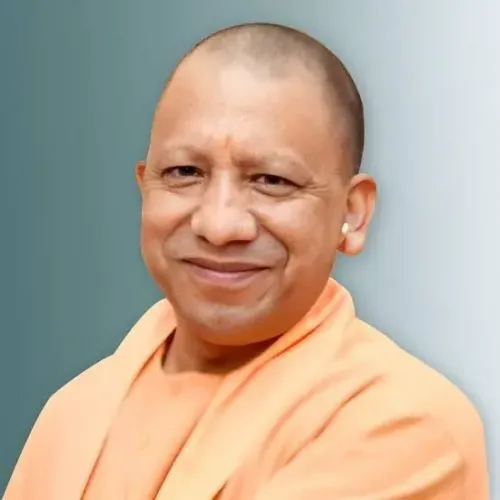
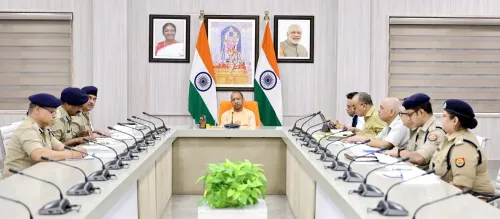
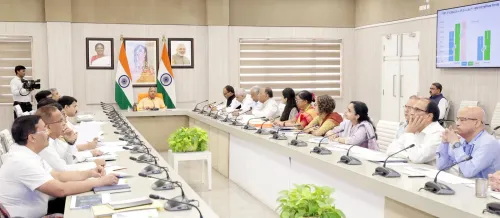
The Chief Minister's Office of Uttar Pradesh announced on Friday, 3 July 2026 that Chief Minister Yogi Adityanath has directed the development of a unified trauma and emergency network across the state, aimed at ensuring treatment for accident victims within the critical 'Golden Hour' window.
Context
The directive, shared via the official CMO account in a reply to @myogiadityanath, instructs authorities to build an Integrated Trauma and Emergency Network (Ekikrit Trauma evam Emergency Network) spanning the entire state. The order specifically targets the life-saving window known as the 'Golden Hour' — the first sixty minutes after a traumatic injury, during which prompt medical intervention dramatically improves survival outcomes.
The Chief Minister's instructions cover four pillars: effective coordination among medical colleges, district hospitals, trauma centres, and community health centres; development of an AI-based digital referral system; real-time monitoring of ambulance availability, bed occupancy, and treatment facilities; and strengthened emergency medical response on national highways and expressways.
Policy Backdrop
Uttar Pradesh has been expanding its medical college network and digitising health services over recent years to address persistently high trauma mortality rates. The new directive builds directly on the national Ayushman Bharat framework, launched in 2018, which sought to strengthen secondary and tertiary care including emergency services across India.
The Golden Hour principle has long been central to trauma care protocols globally, but implementation in large, geographically diverse states like Uttar Pradesh — with a population exceeding 24 crore — has historically been hampered by fragmented referral chains and uneven ambulance coverage. Similar integrated emergency networks have been piloted in other large Indian states with the goal of reducing road fatality rates.
National highways and expressways running through UP, including the Purvanchal Expressway and the Agra-Lucknow Expressway, have recorded significant accident volumes, making rapid trauma response a recurring policy priority for the state administration.
Stakeholders and Impact
The primary beneficiaries of the proposed network are road accident victims and patients facing other acute medical emergencies, particularly those in rural and semi-urban areas where the gap between incident and hospital admission is widest. Real-time monitoring of bed and ambulance availability is expected to reduce critical delays caused by patients being turned away from overloaded facilities.
The AI-based digital referral system would allow emergency responders and hospitals to instantly identify the nearest available trauma bed and route ambulances accordingly — a significant upgrade over current manual coordination. Community health centres, often the first point of contact in rural areas, are explicitly included in the coordination chain under the new directive.
What's Next
Attention will now turn to the phased rollout of the AI referral platform and the real-time monitoring dashboards across UP's 75 districts. The integration of highway emergency response — covering the state's expanding expressway grid — will be a key operational test of the directive's ambitions. Stakeholders in the health administration will be watching whether the coordination mandate translates into measurable reductions in trauma mortality across the state.
Point of View
Making accountability easier to enforce. The explicit inclusion of national highways and expressways reflects the political salience of road safety in a state that has aggressively invested in expressway infrastructure. If implemented at scale, the network could become a template for other high-population states grappling with the same fragmentation problem.
NationPress
3 Jul 2026
Frequently Asked Questions
What is the Golden Hour in medical emergencies?
The Golden Hour refers to the first sixty minutes after a traumatic injury, during which prompt medical treatment significantly increases a patient's chance of survival. CM Yogi's directive specifically targets this window to ensure accident victims in Uttar Pradesh receive care in time.
What is the Integrated Trauma and Emergency Network ordered by CM Yogi?
It is a proposed state-wide system in Uttar Pradesh that will link medical colleges, district hospitals, trauma centres, and community health centres through an AI-based digital referral platform and real-time monitoring of ambulances and bed availability.
How will AI be used in UP's new emergency health system?
An AI-based digital referral system will help identify the nearest available trauma bed and route ambulances in real time, reducing delays caused by manual coordination between hospitals and emergency responders.
Why is highway emergency response being strengthened in Uttar Pradesh?
National highways and expressways in UP, including major corridors like the Purvanchal and Agra-Lucknow expressways, record high accident volumes. CM Yogi's directive specifically calls for faster emergency medical response along these routes.
How does this directive relate to Ayushman Bharat?
The new UP trauma network builds on the Ayushman Bharat scheme launched in 2018, which aimed to strengthen emergency and secondary care across India. The state-level directive deepens that framework by adding AI referral and real-time coordination layers.