CM Yogi Orders Kisan Melas at Weekly Chaupals from June
Synopsis
Chief Minister Yogi Adityanath has directed that Kisan Melas be held alongside weekly Chaupals at all Uttar Pradesh development blocks from June 2026, and that Mandi Samitis be modernised and made transparent to strengthen agricultural marketing for farmers.
Key Takeaways
CM Yogi Adityanath has directed Kisan Melas to be organised with weekly Chaupals at all development blocks in Uttar Pradesh from June 2026 .
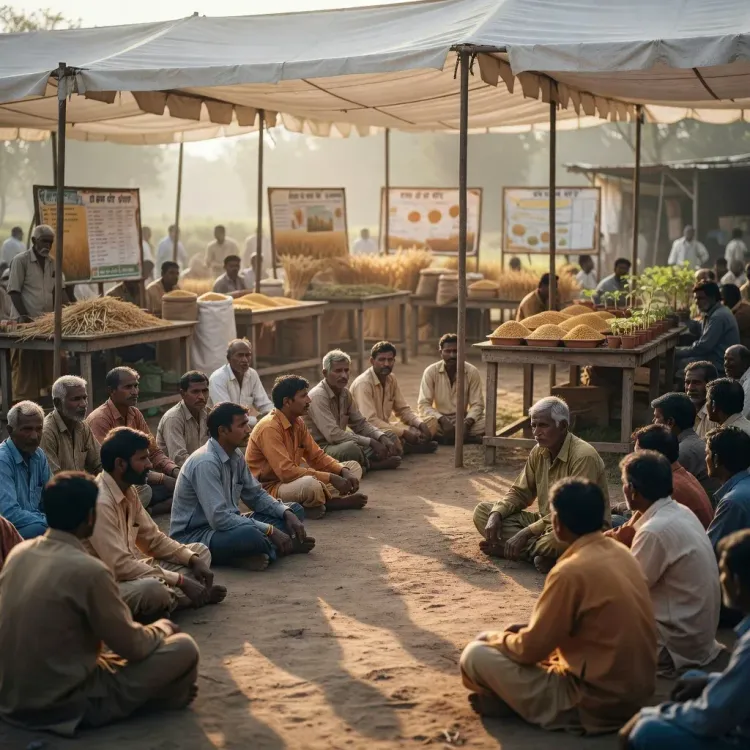
The aim is to provide farmers information on government schemes, modern technologies, and progressive farming at a single location.
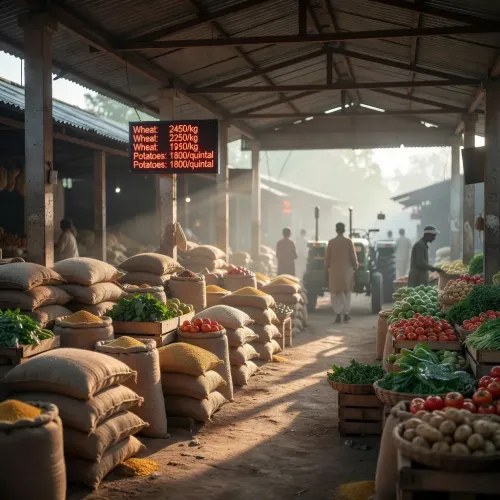
Mandi Samitis (Agricultural Produce Market Committees) are to be made modern, transparent, and farmer-friendly.
Agricultural marketing infrastructure across the state is to be further strengthened.
Uttar Pradesh has over 800 development blocks , making this a wide-scale rural outreach effort.
The initiative builds on the weekly Chaupal format institutionalised since 2017 and the state's earlier adoption of the e-NAM platform.
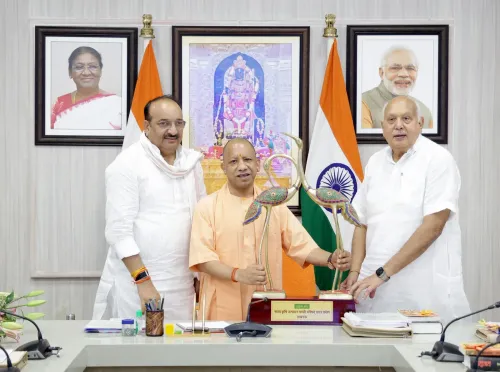
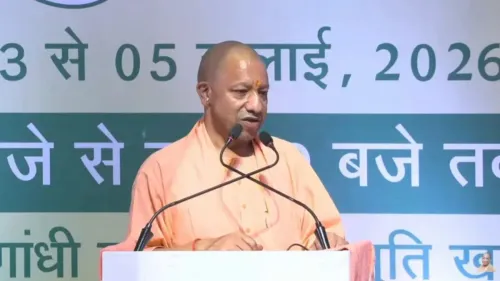
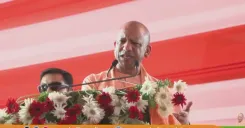
The Chief Minister's Office of Uttar Pradesh announced on Monday, 25 May 2026 that Chief Minister Yogi Adityanath has directed that Kisan Melas (farmer fairs) be organised alongside the weekly Chaupals held at all development blocks across the state, beginning June 2026. The directive also calls for mandi committees to be made modern, transparent, and farmer-friendly, with agricultural marketing infrastructure to be further strengthened.
Context
The post, shared by the official CMOfficeUP account, states: 'Mukhyamantri ji ne nirdesh diye ki aagami June maah se sabhi vikas khandon mein lagne wali saaptahik chaupalon ke saath Kisan Mele ka bhi aayojan kiya jaye' — ('The Chief Minister has directed that from the coming month of June, Kisan Melas be organised alongside the weekly Chaupals held in all development blocks'). The goal, as stated, is to make information on government schemes, modern technologies, and progressive farming available to farmers at a single location.
The second directive instructs that Mandi Samitis (Agricultural Produce Market Committees) be made modern, transparent, and well-facilitated in the interest of farmers, and that the agricultural marketing system be further strengthened.
Policy Backdrop
The weekly Chaupal format was institutionalised by the Uttar Pradesh government from 2017 onward as a block-level platform for grievance redressal and scheme dissemination in rural areas. The state also adopted the central e-NAM (electronic National Agriculture Market) platform in 2016-17 to link mandis electronically and improve price discovery for farmers.
By embedding Kisan Melas within the existing Chaupal structure, the government is seeking to layer agricultural extension services — covering seeds, fertilisers, credit, and technology — onto a mechanism already familiar to rural communities. This avoids creating a parallel infrastructure and instead builds on an established rural outreach channel.
Stakeholders and Impact
Uttar Pradesh has over 800 development blocks spread across its 75 districts, meaning the directive, if implemented uniformly from June, would affect a significant share of the state's farm households. Farmers would gain access to information on crop insurance, subsidised inputs, and market linkages at their nearest block headquarters rather than travelling to district centres.
Mandi Samitis and agricultural extension staff are the primary institutional actors tasked with execution. The push to modernise and make mandi operations transparent signals continued pressure on these committees to reduce intermediary costs and improve price realisation for producers.
What's Next
The immediate milestone to watch is the June 2026 rollout of the combined Chaupal-Kisan Mela format across all development blocks. Subsequent administrative orders on mandi digitisation, infrastructure spending, or vendor empanelment for the melas will indicate the depth of the initiative beyond the announcement.
If sustained, the convergence of weekly Chaupals with farmer fairs could serve as a template for other states looking to integrate extension services with market-access reforms — a policy combination that has gained traction in several BJP-governed states over the past decade.
Point of View
High-reach move that leverages an already-trusted rural institution rather than building new infrastructure. Pairing it with a push for mandi transparency suggests the government is trying to close the loop between farm-gate information and market-access reform simultaneously. For CM Yogi, who faces the task of sustaining rural support ahead of future electoral cycles, combining visible outreach with structural mandi upgrades is politically and administratively coherent. The real test will be whether block-level machinery — often stretched thin — can execute both mandates consistently from June onward.
NationPress
12 Oct 2026
Frequently Asked Questions
What is the Kisan Mela directive issued by CM Yogi in May 2026?
CM Yogi Adityanath has directed that Kisan Melas (farmer fairs) be organised alongside the weekly Chaupals at all development blocks in Uttar Pradesh starting June 2026, so farmers can access scheme information, modern agricultural technology, and progressive farming guidance at one location.
What are weekly Chaupals in Uttar Pradesh?
Weekly Chaupals are block-level public meetings institutionalised by the Uttar Pradesh government from 2017 onward, serving as a platform for grievance redressal and dissemination of government schemes in rural areas.
What changes are planned for Mandi Samitis in UP?
CM Yogi has directed that Mandi Samitis (Agricultural Produce Market Committees) be made modern, transparent, and well-facilitated in the interest of farmers, with the overall agricultural marketing system to be further strengthened.
How many development blocks are there in Uttar Pradesh?
Uttar Pradesh has over 800 development blocks spread across its 75 districts, meaning the Kisan Mela directive would have a wide reach across the state's rural population.
What is e-NAM and how does it relate to UP mandis?
e-NAM is the central government's electronic National Agriculture Market platform, which Uttar Pradesh adopted in 2016-17 to link mandis electronically and improve price discovery for farmers. The latest directive to modernise Mandi Samitis builds on this earlier reform.