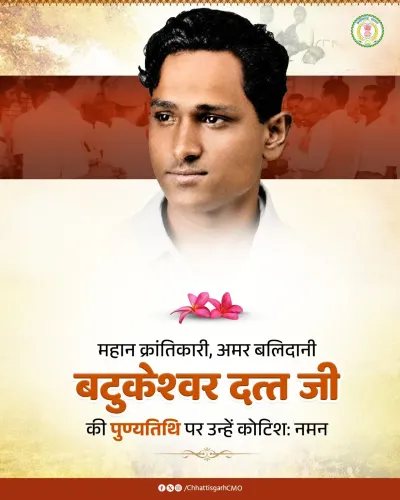
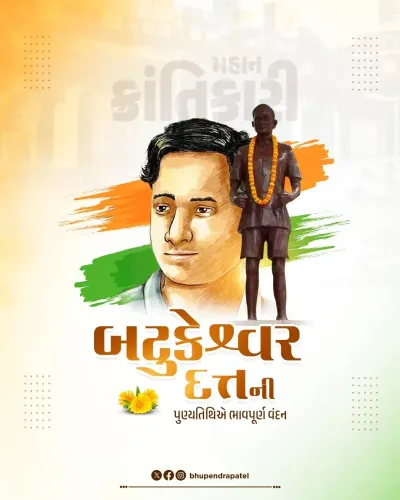
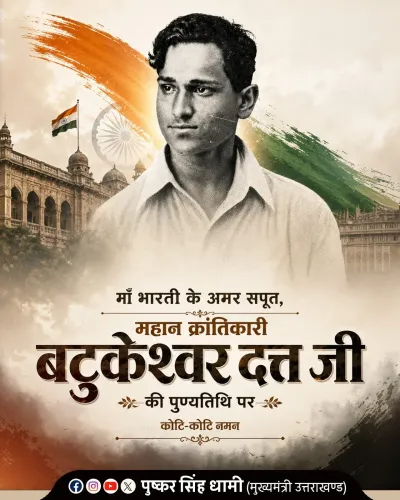
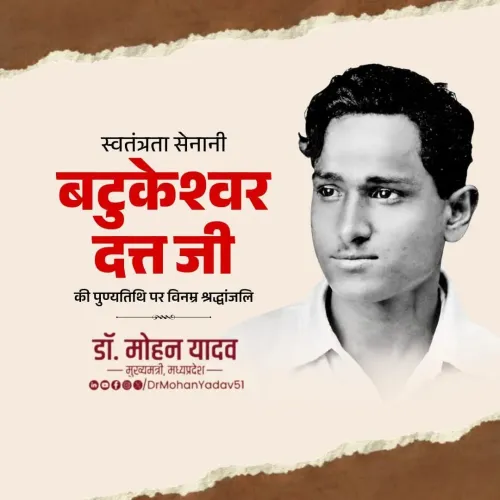
CM Yogi Pays Tribute to Freedom Fighter Batukeshwar Dutt
Synopsis
Uttar Pradesh Chief Minister Yogi Adityanath paid tribute to revolutionary freedom fighter Batukeshwar Dutt on his death anniversary on 20 July 2026, honouring his sacrifice alongside Bhagat Singh in the 1929 Central Assembly protest against British colonial legislation.
Key Takeaways
UP CM Yogi Adityanath posted a tribute to Batukeshwar Dutt on his death anniversary on 20 July 2026 .
Dutt and Bhagat Singh threw bombs in the Central Legislative Assembly on 8 April 1929 to protest the Public Safety Bill and Trade Disputes Bill.
Dutt was sentenced to transportation for life; Bhagat Singh was executed in 1931 after the Lahore Conspiracy Case.
BJP leaders routinely commemorate revolutionary figures associated with the Hindustan Socialist Republican Association (HSRA) as part of their cultural-nationalist narrative.
The tribute signals continued political emphasis on revolutionary freedom fighters in Uttar Pradesh 's public discourse.
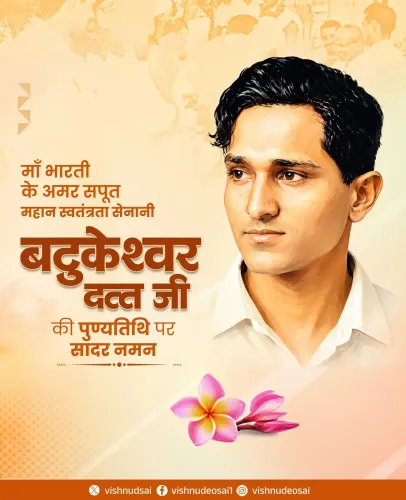
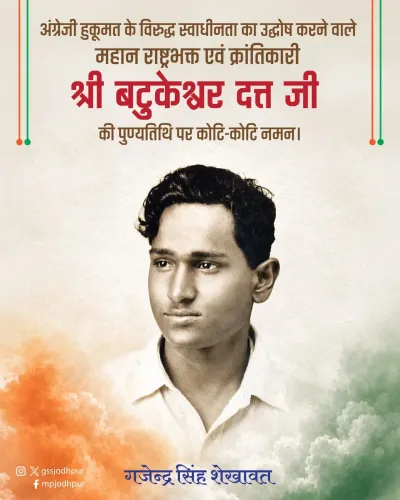
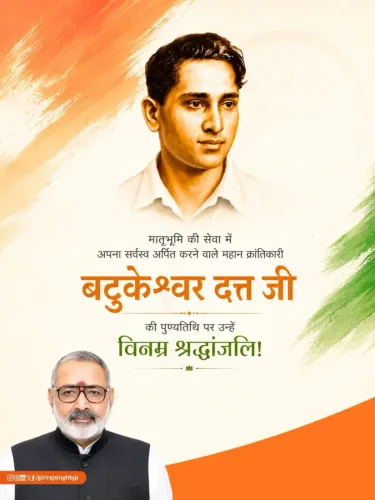
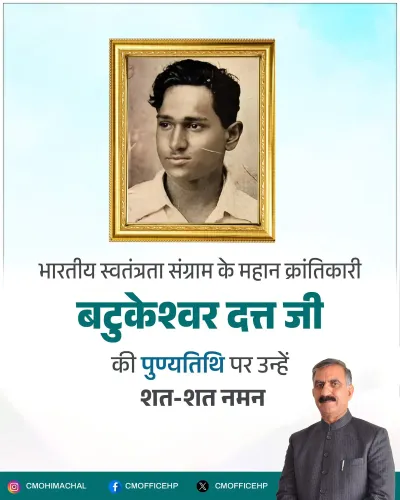
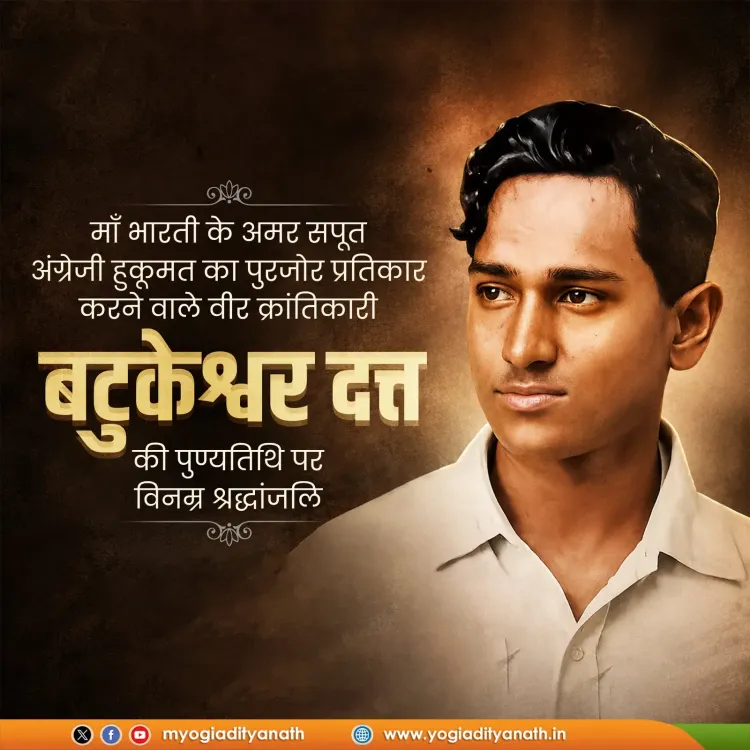
Uttar Pradesh Chief Minister Yogi Adityanath on Monday, 20 July 2026, paid homage to revolutionary freedom fighter Batukeshwar Dutt on his death anniversary, honouring his sacrifice in the struggle for India's independence. The Chief Minister posted a tribute on X, describing Dutt as an immortal symbol of patriotism whose dedication to the motherland remains an invaluable guide for national service.
In his post, CM Yogi wrote — 'राष्ट्रभक्ति के अमर प्रतीक एवं महान स्वतंत्रता सेनानी बटुकेश्वर दत्त की पुण्यतिथि पर विनम्र श्रद्धांजलि' — translated as: 'Humble tribute on the death anniversary of Batukeshwar Dutt, immortal symbol of patriotism and great freedom fighter.' He further noted that Dutt's 'incomparable dedication, struggle and sacrifice for the freedom of Mother India is an invaluable guide to national service.'
Context
Batukeshwar Dutt was a revolutionary who, alongside iconic nationalist Bhagat Singh, threw bombs inside the Central Legislative Assembly on 8 April 1929 to protest the Public Safety Bill and the Trade Disputes Bill — colonial-era legislation seen as suppressing Indian workers and political dissent. The act was deliberate and theatrical: the duo sought arrest, not escape, intending to use the courtroom as a platform to amplify their anti-colonial message.
Dutt was subsequently sentenced to transportation for life. He endured years of imprisonment and continued to be a quiet but resolute figure in the freedom movement. Unlike Bhagat Singh, who was executed in 1931 following the Lahore Conspiracy Case, Dutt survived to see independence but lived largely outside the spotlight of mainstream public memory.
Policy Backdrop
Since 1947, successive Indian governments and political parties have observed the death anniversaries of independence movement figures through official tributes. BJP leaders, including Chief Minister Yogi Adityanath, have made a consistent practice of commemorating revolutionary nationalists — particularly those associated with the Hindustan Socialist Republican Association (HSRA) — alongside figures from the Gandhian non-violence tradition.
This pattern of tribute reflects a broader political effort to shape public memory of the independence struggle, emphasising armed resistance as an equally legitimate strand of the freedom movement. Uttar Pradesh, India's most populous state governed by Yogi Adityanath since 2017, has been a prominent arena for such commemorative messaging, which aligns with the BJP's cultural-nationalist narrative.
Stakeholders and Impact
For Indian citizens and the country's youth, tributes of this nature serve to keep lesser-remembered revolutionary figures in public consciousness. Dutt's story — of sacrifice, imprisonment, and relative obscurity after independence — resonates particularly with those who argue that certain freedom fighters have not received their due recognition in official history.
Commemorative posts by sitting Chief Ministers carry institutional weight, often prompting state-level educational and cultural initiatives. The tribute from Lucknow signals the continued political salience of revolutionary nationalist memory in Uttar Pradesh's public discourse.
What's Next
Observers will watch whether this tribute is followed by concrete state-level commemorations, such as events around Independence Day on 15 August, new memorials, or curriculum modules on revolutionary freedom fighters in Uttar Pradesh schools. The BJP's sustained focus on figures like Dutt and Bhagat Singh suggests such announcements remain a possibility in the run-up to national commemorative dates.
Point of View
Sustained BJP effort to elevate revolutionary nationalists — particularly those linked to the HSRA — in India's official memory of the freedom struggle. By consistently honouring figures like Dutt and Bhagat Singh, the party positions itself as the custodian of a broader, more assertive strand of nationalist history that complements the dominant Gandhian narrative. For a Chief Minister who has made cultural nationalism central to his governance identity in Uttar Pradesh, such tributes carry both symbolic and political currency. The pattern points toward an expected intensification of commemorative activity as Independence Day approaches.
NationPress
21 Jul 2026
Frequently Asked Questions
Who was Batukeshwar Dutt?
Batukeshwar Dutt was an Indian revolutionary freedom fighter who, along with Bhagat Singh, threw bombs in the Central Legislative Assembly on 8 April 1929 to protest colonial legislation. He was sentenced to transportation for life and is remembered as an immortal symbol of patriotism.
Why did Batukeshwar Dutt and Bhagat Singh bomb the Central Assembly?
They bombed the Central Legislative Assembly on 8 April 1929 to protest the Public Safety Bill and the Trade Disputes Bill, which were seen as instruments of colonial suppression. Their intent was to court arrest and use the courtroom to publicise their anti-colonial message.
What happened to Batukeshwar Dutt after independence?
Batukeshwar Dutt survived to see Indian independence but lived largely outside the mainstream spotlight. He is widely regarded as a freedom fighter who did not receive the recognition commensurate with his sacrifice.
Why does CM Yogi Adityanath pay tribute to revolutionary freedom fighters?
CM Yogi Adityanath and the BJP regularly commemorate revolutionary nationalists like Dutt and Bhagat Singh as part of a broader effort to highlight armed resistance alongside Gandhian non-violence in the story of India's independence struggle.
What is the HSRA and what role did Batukeshwar Dutt play in it?
The Hindustan Socialist Republican Association (HSRA) was a revolutionary organisation that advocated armed resistance against British colonial rule. Batukeshwar Dutt was associated with the HSRA and participated in the 1929 Central Assembly action alongside Bhagat Singh.