CM Yogi invokes Maharshi Gautama's four pramanas
Synopsis
Uttar Pradesh CM Yogi Adityanath invoked Maharshi Gautama's four valid means of knowledge — pratyaksha, anumana, upamana, and shabda — from the classical Nyaya school of Indian philosophy in a Hindi post on 5 November 2026.
Key Takeaways
CM Yogi Adityanath posted a reflection on Maharshi Gautama's four pramanas on 5 November 2026 .
The four pramanas are pratyaksha (direct perception), anumana (inference), upamana (comparison), and shabda (verbal testimony).
Maharshi Gautama is credited with founding the Nyaya school and authoring the Nyaya Sutras , a classical Indian treatise on logic and epistemology.
Yogi Adityanath, as head of the Gorakhnath Math , periodically shares references to classical Indian philosophical traditions alongside governance communication.
The post carries no immediate policy or legislative announcement.
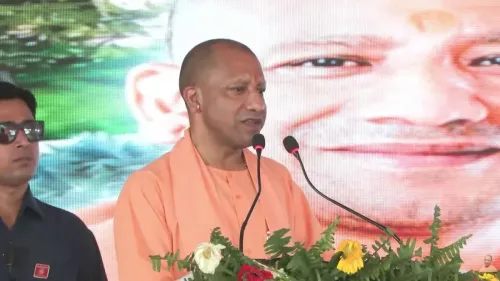
A BJP chief minister who also heads one of India's most storied monastic institutions does not often pause mid-week to quote ancient epistemology — but that is precisely what Uttar Pradesh Chief Minister Yogi Adityanath did on Thursday, 5 November 2026, sharing a reflection on the four pramanas (valid means of knowledge) outlined by Maharshi Gautama.
Posting in Hindi, CM Yogi wrote: 'Maharshi Gautama has spoken of four pramanas — pratyaksha (direct perception), anumana (inference), upamana (comparison), and shabda (verbal testimony).' The reference is to the foundational framework of the Nyaya school of Indian philosophy, one of the six classical astika (orthodox) systems of thought.
Maharshi Gautama and the Nyaya Sutras
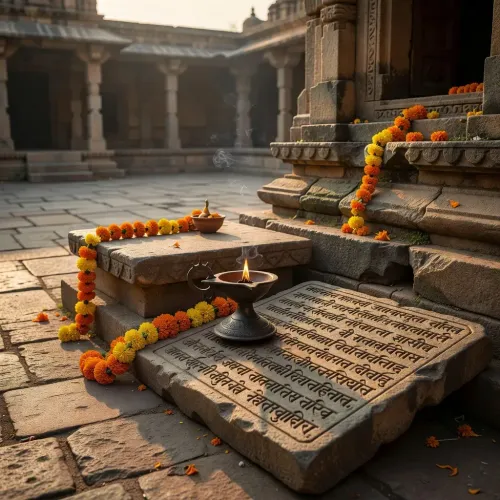
Maharshi Gautama — not to be confused with the Buddha — is credited with composing the Nyaya Sutras, a systematic treatise on logic and epistemology that remains a cornerstone of classical Indian intellectual tradition. His four pramanas ask a deceptively simple question: how do we know what we know? Pratyaksha anchors knowledge in sensory experience; anumana builds inference from that foundation; upamana extends understanding through analogy; and shabda — sometimes translated as 'testimony' — recognises the authority of a credible verbal source, including sacred scripture.
Together, the four form a rigorous framework that Indian philosophers debated, refined, and contested for well over two millennia.
Yogi Adityanath's recurring turn toward classical philosophy
As the head of the Gorakhnath Math in Gorakhpur, Yogi Adityanath occupies a role that is simultaneously political and spiritual. The Math traces its lineage to the medieval Nath tradition, and its current head has consistently woven references to classical Indian texts and thinkers into his public communication — a pattern that blurs the line between governance messaging and philosophical outreach.
The post carries no immediate policy signal, no event announcement, and no legislative hook. It is a standalone philosophical observation — the kind a mahant might deliver from a dais or a classroom. That a sitting chief minister chose this as his Thursday evening post says something, perhaps, about how he chooses to occupy his public platform beyond the daily churn of administration.
In a media landscape dominated by policy battles and political point-scoring, the quiet invocation of a 2,000-year-old epistemological framework is, at minimum, a register shift worth noting.
Point of View
This pattern positions him within a long lineage of philosopher-administrators, reinforcing cultural nationalism not through polemics but through quiet scholarly citation. The absence of any political or policy hook makes it one of the cleaner examples of this practice.
NationPress
5 Nov 2026
Frequently Asked Questions
What are the four pramanas mentioned by CM Yogi Adityanath?
The four pramanas are pratyaksha (direct perception), anumana (inference), upamana (comparison), and shabda (verbal testimony). They were outlined by Maharshi Gautama in the Nyaya Sutras as valid means of acquiring knowledge.
Who is Maharshi Gautama in Indian philosophy?
Maharshi Gautama is the ancient Indian philosopher credited with founding the Nyaya school of thought and composing the Nyaya Sutras, a foundational text on logic and epistemology in classical Indian tradition.
What is the Nyaya school of Indian philosophy?
The Nyaya school is one of the six classical orthodox (astika) systems of Indian philosophy. It focuses on logic, epistemology, and the valid means by which human beings can acquire accurate knowledge.
Why does Yogi Adityanath post about Indian philosophy?
As the head of the Gorakhnath Math in Gorakhpur, Yogi Adityanath occupies a spiritual role alongside his political one, and periodically shares reflections on classical Indian philosophical and cultural traditions on social media.
What is the Gorakhnath Math?
The Gorakhnath Math is a prominent Hindu monastery in Gorakhpur, Uttar Pradesh, associated with the medieval Nath tradition. Yogi Adityanath has been its head (mahant) alongside serving as Chief Minister of Uttar Pradesh.