CM Yogi Reviews Cancer Task Force, UPTEN Plans in Lucknow
Synopsis
Chief Minister Yogi Adityanath chaired a high-level meeting in Lucknow on 3 July 2026 to review UP's Cancer Task Force and UPTEN action plans, directing phased cancer centre rollouts at every division and district with a focus on prevention, screening, and early diagnosis.
Key Takeaways
CM Yogi Adityanath reviewed the UP State Cancer Task Force and UPTEN action plans in Lucknow on 3 July 2026 .
He directed that cancer treatment facilities be developed in every district of Uttar Pradesh in a phased manner.
Modern cancer centres are to be established at each divisional headquarters across the state.
Special priority was placed on cancer prevention, time-bound screening, early diagnosis, and quality treatment .
The Department of Medical Health and Family Welfare , Department of Medical Education , and domain specialists participated in the review.
The meeting also covered the UP Trauma and Emergency Network (UPTEN) , indicating a parallel push to strengthen emergency response statewide.
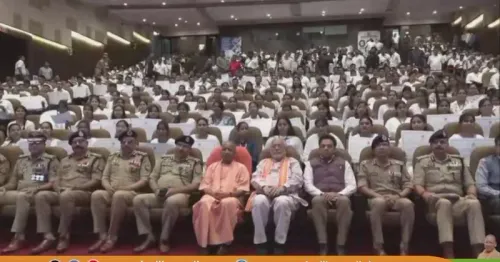
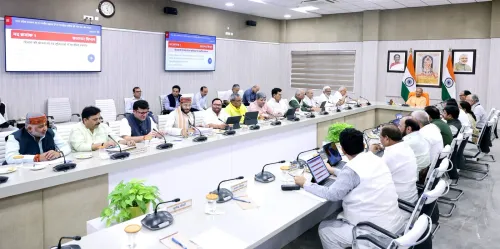
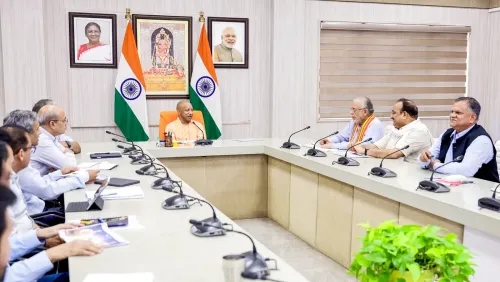
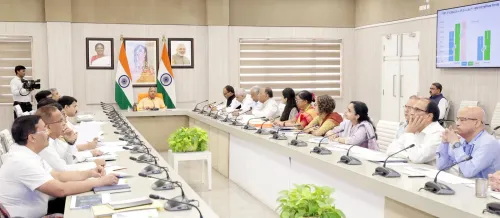
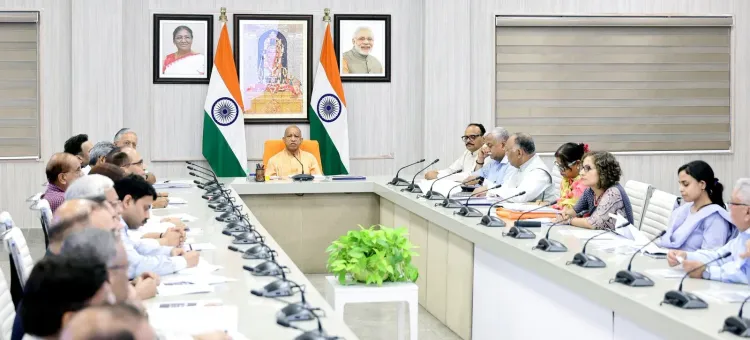
The Chief Minister's Office of Uttar Pradesh announced on Friday, 3 July 2026, that Chief Minister Yogi Adityanath chaired a high-level meeting in Lucknow to review the action plans of the Uttar Pradesh State Cancer Task Force and the Uttar Pradesh Trauma and Emergency Network (UPTEN), alongside senior officials from the Department of Medical Health and Family Welfare and the Department of Medical Education, as well as domain specialists.
Context
The Chief Minister directed that cancer treatment facilities be developed chरणबद्ध रूप से (in a phased manner) across every district of the state, and that modern cancer centres be established at each divisional headquarters. He also stressed that special attention must be given to cancer prevention, time-bound screening, early diagnosis, and quality treatment. The meeting signals a deliberate push to decentralise specialised oncology and emergency care away from the state capital and into district and divisional nodes.
Policy Backdrop
Uttar Pradesh's cancer-care ambitions sit within a longer national policy arc. The National Programme for Prevention and Control of Cancer, Diabetes, Cardiovascular Diseases and Stroke (NPCDCS), expanded in 2010 and later aligned with Ayushman Bharat in 2018, required states to integrate cancer screening into district health missions. Uttar Pradesh has since 2017 sanctioned new medical colleges and upgraded district hospitals to include oncology and trauma units, building an institutional base on which the current Task Force and UPTEN plans are layered. The emphasis on prevention and early screening also mirrors national non-communicable disease (NCD) control guidelines that most large states adopted after 2015.
Stakeholders and Impact
Cancer patients across Uttar Pradesh's 75 districts stand to benefit most directly if the phased rollout is executed, as the state's large rural population currently faces significant distances and out-of-pocket costs to access oncology care concentrated in Lucknow and a handful of other cities. District health administrations will bear the operational responsibility of implementing screening camps and referral pathways under the Task Force's framework. UPTEN's parallel review indicates that trauma and emergency response — critical for road-accident victims and acute cases — is also being integrated into the same decentralisation drive, potentially reducing preventable deaths in remote areas.
What's Next
The immediate focus will be on translating the Chief Minister's directives into concrete timelines: which divisions receive cancer centres first, how district-level screening infrastructure is funded, and how UPTEN's emergency network is staffed and equipped. State budget allocations and monitoring reports in the next financial year will be key indicators of implementation pace. A phased divisional rollout of cancer centres, if accompanied by adequate specialist manpower, could meaningfully shift Uttar Pradesh's NCD outcomes over the medium term.
Point of View
A model that addresses both equity and political optics ahead of future electoral cycles. Reviewing both the Cancer Task Force and UPTEN in a single sitting suggests the government is framing cancer and trauma together as its flagship non-communicable disease and emergency-care agenda. The directive's success will hinge on whether capital expenditure for divisional cancer centres is backed by recurring allocations for oncologists and equipment — historically the weak link in India's district-level health scale-ups. If implemented with fidelity, the initiative could reduce the catastrophic out-of-pocket expenditure that currently pushes many UP families into poverty when a cancer diagnosis strikes.
NationPress
3 Jul 2026
Frequently Asked Questions
What did CM Yogi Adityanath announce about cancer treatment in Uttar Pradesh?
On 3 July 2026, CM Yogi Adityanath directed that cancer treatment facilities be set up in a phased manner across every district of Uttar Pradesh, and that modern cancer centres be established at each divisional headquarters, with a focus on prevention, screening, and early diagnosis.
What is the UP State Cancer Task Force?
The Uttar Pradesh State Cancer Task Force is a state-level body tasked with coordinating cancer prevention, screening, and treatment strategies across Uttar Pradesh's districts and divisions.
What is UPTEN and what does it do?
UPTEN, or the Uttar Pradesh Trauma and Emergency Network, is a state scheme designed to strengthen trauma care and emergency medical response across all districts of Uttar Pradesh, reducing preventable deaths from accidents and acute conditions.
How many divisions does Uttar Pradesh have where cancer centres will be set up?
Uttar Pradesh has 18 administrative divisions, and the Chief Minister's directive calls for a modern cancer centre to be established at each divisional headquarters as part of the phased rollout.
How does UP's cancer plan connect to national health schemes?
Uttar Pradesh's cancer initiative builds on the National Programme for Prevention and Control of Cancer, Diabetes, Cardiovascular Diseases and Stroke (NPCDCS) and the Ayushman Bharat framework, both of which require states to integrate cancer screening and treatment into district health missions.