CM Yogi: UP Citizens Now Free From Identity Crisis
Synopsis
Chief Minister Yogi Adityanath declared on October 23, 2026 that Uttar Pradesh has resolved the identity verification challenge for its citizens and administration, attributing the achievement to PM Narendra Modi's Digital India vision and a decade of Aadhaar-linked governance reforms.
Key Takeaways
The Chief Minister's Office of Uttar Pradesh posted a statement from CM Yogi Adityanath on October 23, 2026 claiming the state's identity-verification problem is solved.
CM Yogi credited Prime Minister Narendra Modi's visionary leadership and the work done under it for the positive outcomes.
The claim directly addresses both citizen-side (accessing services) and administrative-side (processing entitlements) identity challenges.
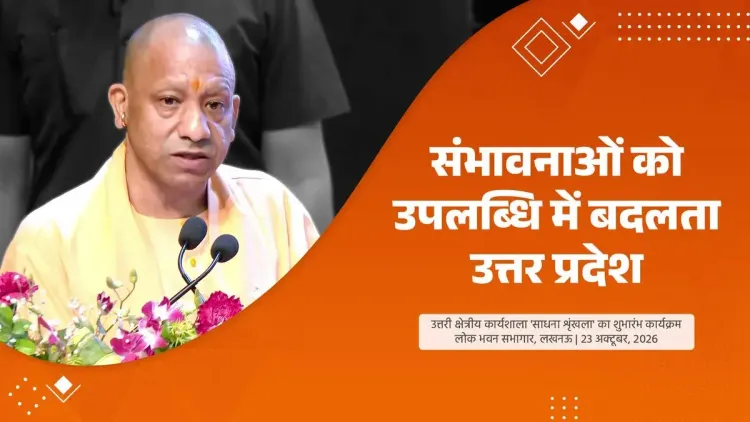
The post was accompanied by a video , suggesting documentary evidence was presented alongside the statement.
The achievement builds on the Digital India programme launched in 2015 and UP's state-level digitisation drive accelerated after 2017 .
Independent state-level audits of Aadhaar-linked scheme performance remain the key next step to verify the scale of the claim.
A state of 200 million-plus citizens has crossed a threshold, says the man running it. On Friday, October 23, 2026, the Chief Minister's Office of Uttar Pradesh posted a statement from Chief Minister Yogi Adityanath declaring that the identity-verification problem for both citizens and the state's administrative machinery is now, effectively, solved — crediting the results to the governance vision of Prime Minister Narendra Modi.
CM Yogi's post reads: 'Aadaraniya Pradhanmantri Shri Narendra Modi ji ki Visionary Leadership mein Uttar Pradesh ne jo karya kiye hain, unke sakaratmak parinaam aaj aapke samne hain. Ab Uttar Pradesh ke nagrikon aur prashasnik machinery ke samne pehchaan ki samasya nahin hai.' — translated: 'The positive results of the work done by Uttar Pradesh under the visionary leadership of respected Prime Minister Shri Narendra Modi are before you today. Now the citizens of Uttar Pradesh and the administrative machinery no longer face the problem of identity.'From 2015 Digital India to 2026 UP: A Nine-Year Arc
The lineage of this claim stretches back to 2015, when the Digital India programme formally tied Aadhaar-based authentication to the delivery of government services nationwide. Uttar Pradesh, India's most populous state, became one of the most consequential proving grounds for that framework — the sheer scale of beneficiaries meant that identity duplication and ghost entries had historically drained welfare schemes of their intended reach.
After Yogi Adityanath took office in 2017, the state accelerated alignment with national digitisation platforms. The direction was consistent: link citizen identity to service entitlement, eliminate duplication, and make the administrative interface legible on both sides — for the citizen presenting a claim and for the official processing it.
Why 'Pehchaan Ki Samasya' Matters at UP's Scale
The phrase 'pehchaan ki samasya' — 'the problem of identity' — is not incidental language. In a state where millions access subsidised food, housing assistance, and social-security transfers, the inability to verify who is who has historically meant both exclusion of genuine beneficiaries and leakage to ineligible ones. Solving that problem at scale is a governance achievement with direct fiscal and humanitarian stakes.
India's broader pattern has been clear: states that have woven Aadhaar-linked identity tightly into their service-delivery chain have reported measurable reductions in duplication. Uttar Pradesh's claim, as articulated by CM Yogi, is that it now stands among those states — and that the transformation is visible in outcomes, not just policy intent.
The statement was accompanied by a video, underlining that the assertion is being made with documentary evidence rather than assertion alone. Whether state-level audits will independently corroborate the scale of the achievement is the next question to watch — but the political signal is unambiguous: UP's government is presenting identity digitisation as a completed mission, not a work in progress.
Point of View
The statement reinforces the BJP's national-to-state governance narrative, presenting Digital India not as a central scheme but as a transformative force with measurable state-level outcomes. The emphasis on 'administrative machinery' alongside citizens is notable: it positions the bureaucracy, not just politicians, as a beneficiary of reform — a subtle bid for institutional buy-in. The credibility of the claim will ultimately rest on whether independent audits of UP's Aadhaar-linked delivery confirm the duplication reduction at the scale implied.
NationPress
23 Oct 2026
Frequently Asked Questions
What did CM Yogi Adityanath say about identity problems in Uttar Pradesh?
CM Yogi Adityanath stated on October 23, 2026 that citizens of Uttar Pradesh and its administrative machinery no longer face any problem of identity, attributing this to work done under PM Narendra Modi's leadership.
What is the Digital India programme and how does it relate to UP?
Digital India was launched in 2015 to expand Aadhaar-based authentication and e-governance across India. Uttar Pradesh aligned with this framework after 2017, integrating digital identity into citizen welfare delivery and administrative processes.
How has Aadhaar helped Uttar Pradesh solve identity issues?
Aadhaar-linked identity systems have helped reduce duplication of beneficiaries in welfare schemes, enabling accurate targeting of subsidies and social-security transfers in UP, India's most populous state.
What does 'pehchaan ki samasya' mean and why is it significant for UP?
'Pehchaan ki samasya' means 'the problem of identity.' In a state with hundreds of millions of citizens accessing government services, unverified identities historically led to both exclusion of genuine beneficiaries and leakage to ineligible ones.
When did Yogi Adityanath become Chief Minister of Uttar Pradesh?
Yogi Adityanath became Chief Minister of Uttar Pradesh in 2017 and has since overseen the state's alignment with national digital governance and Aadhaar-linked service delivery frameworks.