Jal Shakti Minister Paatil pays tribute to Kittur Rani Chennamma
Synopsis
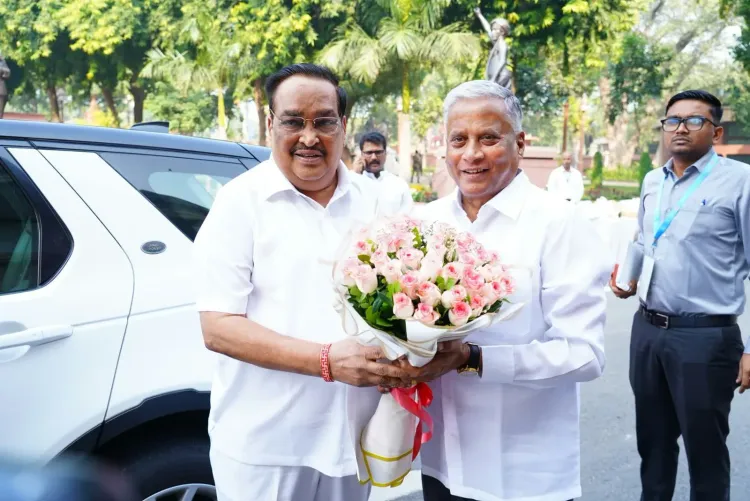
Union Jal Shakti Minister C. R. Paatil joined Lok Sabha Speaker Om Birla and MoS V. Somanna at Parliament's Prerna Sthal on 23 October 2026 to mark Kittur Rani Chennamma's 202nd Vijay Utsav with floral tributes at her statue.
Key Takeaways
Union Jal Shakti Minister C.
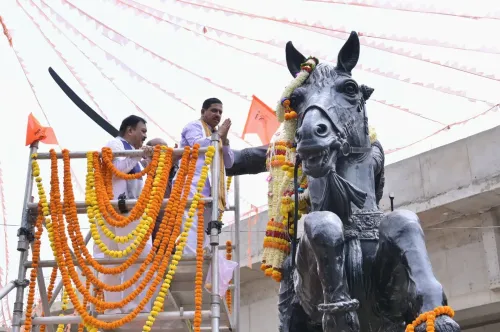
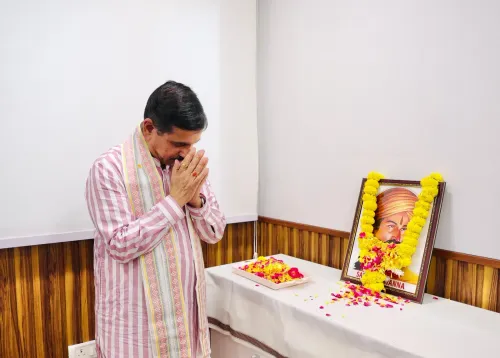
Paatil offered floral tributes at Kittur Rani Chennamma's statue at Prerna Sthal , Parliament House complex, on 23 October 2026 .
The event marked the 202nd Vijay Utsav of Kittur Rani Chennamma, commemorating her armed resistance against the British East India Company.
Lok Sabha Speaker Om Birla and Union Minister of State V.
Somanna were present at the ceremony.
Kittur Rani Chennamma led one of India's earliest anti-colonial uprisings in 1824 , decades before the 1857 revolt, in what is now Karnataka .
Paatil described her legacy as 'an endless source of inspiration for patriotism, sacrifice, and struggle' for all Indians.
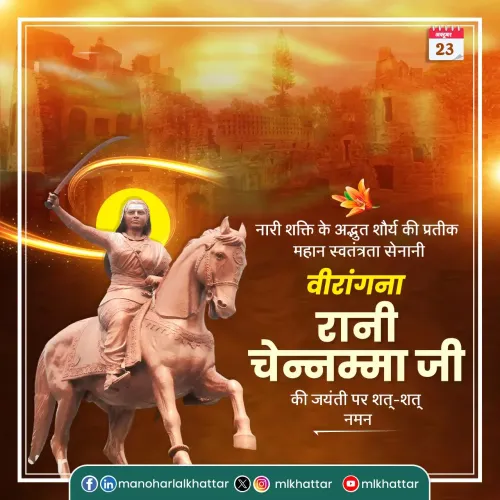
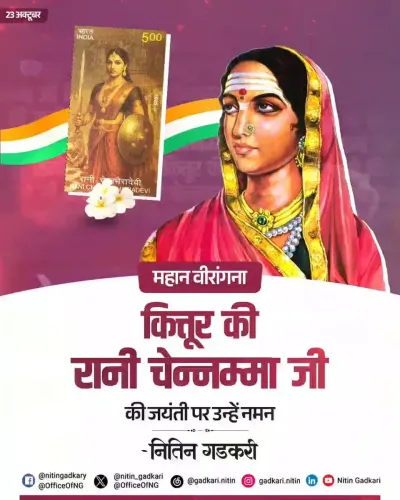
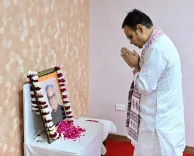
Nearly two centuries after she took up arms against the British East India Company, Kittur Rani Chennamma was honoured on Friday, 23 October 2026, as Union Jal Shakti Minister C. R. Paatil joined a commemorative event at Prerna Sthal inside the Parliament House complex and offered floral tributes at her statue on the occasion of her 202nd Vijay Utsav.
Paatil shared his participation on X, writing: 'Aaj Sansad Bhavan parisar sthit Prerna Sthal par Veerangana Kittur Rani Chennamma ji ke 202we Vijay Utsav ke avsar par aayojit karyakram mein sahbhagita kar unki pratima par pushpanjali arpit ki' — 'Today, at the programme organised at Prerna Sthal in the Parliament House complex on the occasion of Veerangana Kittur Rani Chennamma's 202nd Vijay Utsav, I participated and offered a floral tribute at her statue.' He described her life as 'an endless source of inspiration for patriotism, sacrifice, and struggle' for all Indians.
Who gathered at Prerna Sthal
Lok Sabha Speaker Om Birla presided over the ceremony alongside Union Minister of State V. Somanna and other dignitaries. The presence of the Speaker of the lower house underscored the parliamentary significance attached to the commemoration. Prerna Sthal, located within the Parliament complex, houses statues of select national leaders and freedom fighters and has become a focal point for such structured tributes.
Why Rani Chennamma's 1824 revolt still resonates
Kittur Rani Chennamma, queen of the princely state of Kittur in present-day Karnataka, launched one of India's earliest armed uprisings against British colonial authority in 1824 — more than three decades before the more widely chronicled revolt of 1857. Her forces famously defeated a British East India Company contingent and killed the Company's Collector, St John Thackeray, in battle. Though she was eventually captured and died in captivity in 1829, her defiance has endured as a symbol of early resistance to colonial rule, particularly in Karnataka.
Indian parliamentarians and ministers routinely mark the anniversaries of such pre-1857 resistance figures at Prerna Sthal, part of a broader government effort to amplify the stories of regional leaders who challenged colonial authority. Rani Chennamma's legacy holds particular resonance in Karnataka, where she is revered as a forerunner of the independence movement.
Two hundred and two years on, the queen of Kittur remains a touchstone — proof that resistance to empire did not begin in 1857, and that its roots ran deep across every corner of the subcontinent.
Point of View
Signalling that this is deliberate historical framing, not mere protocol. For the BJP, amplifying the stories of warrior queens like Chennamma also carries cultural resonance in southern states where the party has historically sought deeper roots. The 202nd anniversary is politically unremarkable in itself, but the consistency of such observances builds a long-term narrative architecture around colonial resistance.
NationPress
23 Oct 2026
Frequently Asked Questions
Who was Kittur Rani Chennamma?
Kittur Rani Chennamma was the queen of the princely state of Kittur in present-day Karnataka who led one of India's earliest armed uprisings against the British East India Company in 1824, more than three decades before the 1857 revolt. She was captured and died in captivity in 1829.
What is Vijay Utsav in the context of Rani Chennamma?
Vijay Utsav commemorates Rani Chennamma's military victory against British East India Company forces during her 1824 revolt, when her forces defeated a Company contingent. The 2026 observance marks the 202nd anniversary of that resistance.
What is Prerna Sthal in Parliament House?
Prerna Sthal is a memorial precinct within the Parliament House complex in New Delhi that houses statues of select national leaders and freedom fighters, serving as a venue for official commemorative events.
Who attended the Kittur Rani Chennamma event at Parliament on 23 October 2026?
Union Jal Shakti Minister C. R. Paatil, Lok Sabha Speaker Om Birla, and Union Minister of State V. Somanna were among the dignitaries present at the Vijay Utsav event at Prerna Sthal.
Why is Kittur Rani Chennamma important to Karnataka?
Rani Chennamma is revered in Karnataka as a forerunner of India's independence movement, having resisted British colonial authority in 1824 at a time when most rulers were capitulating to Company rule. She is celebrated as a symbol of courage, sacrifice, and regional identity.