CM Yogi: UP no longer BIMARU, now India's growth engine
Synopsis
Chief Minister Yogi Adityanath's office declared on 7 July 2026 that Uttar Pradesh has shed the BIMARU label and now stands as India's growth engine, citing an unparalleled blend of heritage and development driven by investor summits and structural reforms since 2017.
Key Takeaways
The Chief Minister's Office of Uttar Pradesh, quoting CM Yogi Adityanath , officially declared the state is no longer 'BIMARU' but India's growth engine on 7 July 2026 .
The 'BIMARU' label, coined in the 1980s, historically grouped Bihar, Madhya Pradesh, Rajasthan, and Uttar Pradesh as chronically underperforming states.
The Yogi Adityanath government has held two Global Investors Summits (2018 and 2022), with the 2022 edition recording investment intents exceeding Rs 10 lakh crore .
The One District One Product (ODOP) scheme, launched in 2018, promoted district-level manufacturing and was later adopted as a national model.
The state has pursued single-window clearance and land-bank mechanisms to reduce friction for investors alongside heritage tourism promotion.
Analysts are watching for the next UP Economic Survey and a possible third Global Investors Summit to validate the growth-engine claim with hard data.
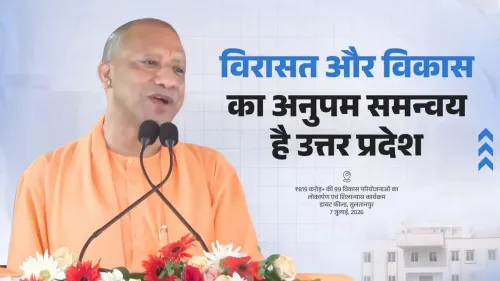
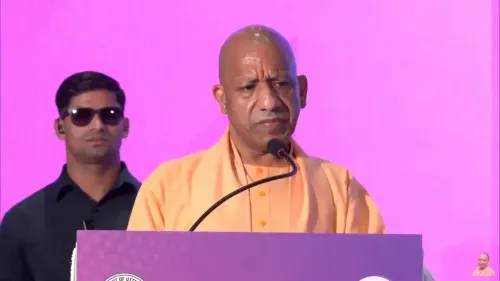
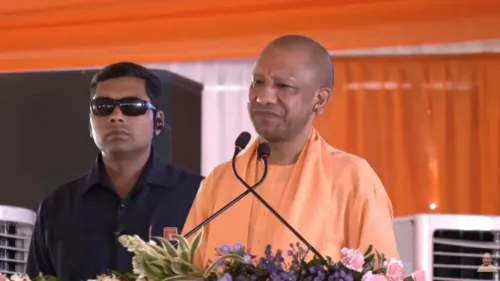
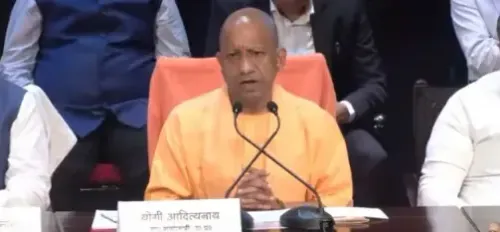
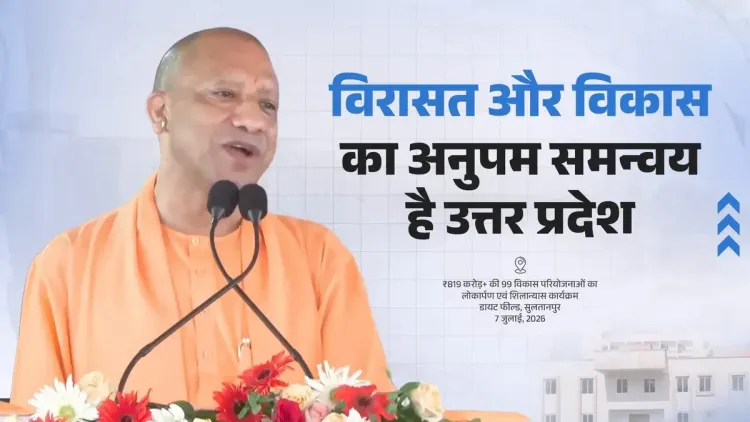
The Chief Minister's Office of Uttar Pradesh, citing Chief Minister Yogi Adityanath, declared on Tuesday, 7 July 2026 that the state has shed its decades-old 'BIMARU' tag and established itself as a dual symbol of heritage and development — and, more pointedly, as a growth engine of the Indian economy.
Posting on X, the CMO quoted the Chief Minister directly: 'उत्तर प्रदेश ने विरासत और विकास के अनुपम समन्वय के रूप में स्वयं को स्थापित किया है।' ('Uttar Pradesh has established itself as an unparalleled confluence of heritage and development. No longer BIMARU, UP has carved a new identity as the growth engine of India's economy.')
Context
The term 'BIMARU' — a Hindi acronym for Bihar, Madhya Pradesh, Rajasthan, and Uttar Pradesh — was coined by demographer Ashish Bose in the 1980s to describe states burdened by high fertility rates, low literacy, and chronic economic underperformance. For decades, Uttar Pradesh carried that label as a near-permanent descriptor, reflecting industrial stagnation and weak governance metrics. The CMO's post signals a deliberate effort to retire that framing at the highest political level.Policy Backdrop
The Yogi Adityanath government, in office since March 2017, has anchored its economic pitch on two pillars: law-and-order restoration to improve investor confidence, and a series of structural reforms to ease the cost of doing business. A first Global Investors Summit was held in 2018, marking the administration's opening bid to reverse industrial stagnation. A second summit in 2022 recorded investment intents exceeding Rs 10 lakh crore across sectors, a figure the state government has repeatedly cited as evidence of a turnaround. Complementing the summits, the state introduced a single-window clearance mechanism and a land-bank system to reduce friction for incoming manufacturers. The One District One Product (ODOP) scheme, launched in 2018, promoted district-level manufacturing clusters and export potential, and was subsequently adopted as a national model by the central government. Together, these measures form the policy spine behind the 'growth engine' assertion.Stakeholders and Impact
Investors, MSME units, and the state's youth workforce are the primary constituencies the government is addressing with this repositioning. Uttar Pradesh is India's most populous state, which means even marginal improvements in per-capita income or employment translate into large absolute numbers. The state's emphasis on heritage tourism — anchored around sites such as Ayodhya, Varanasi, and Mathura — has been presented alongside industrial policy as a twin revenue stream, making the 'heritage and development' framing in the CM's statement a deliberate policy signal rather than rhetorical flourish. The broader pattern mirrors efforts by Madhya Pradesh and Rajasthan — the other BIMARU constituents — to reposition themselves as investment destinations, suggesting a coordinated post-2014 strategy to rebalance India's regional economic map.What's Next
Policy watchers will track the release of the next Uttar Pradesh Economic Survey for hard data on GSDP growth and employment generation that can substantiate the 'growth engine' claim. Any announcement of a third Global Investors Summit would be the next concrete test of whether the investment intent recorded in 2022 has translated into ground-level realisation. The government's ability to move from narrative to verifiable metrics will determine whether the BIMARU-to-growth-engine story holds beyond political messaging.Point of View
Deploying the BIMARU contrast as a before-and-after frame to consolidate the Yogi administration's economic narrative ahead of any future electoral or investment cycle. Retiring a four-decade-old pejorative through a social media statement is symbolically potent, but the credibility of the claim will rest on whether investment intent from the 2022 summit has translated into jobs and GSDP growth that independent data can verify. The 'heritage and development' pairing is also a deliberate ideological signal, yoking cultural identity to economic aspiration in a formulation that has become a signature of the current state government. Uttar Pradesh's trajectory, if sustained, has genuine implications for India's regional economic balance — but the gap between political narrative and ground-level realisation remains the central question.
NationPress
7 Jul 2026
Frequently Asked Questions
What does BIMARU mean and why was UP called a BIMARU state?
'BIMARU' is an acronym coined by demographer Ashish Bose in the 1980s for Bihar, Madhya Pradesh, Rajasthan, and Uttar Pradesh — states marked by high fertility, low literacy, and weak economic output. UP was grouped in this category due to decades of industrial stagnation and poor governance indicators.
What has the Yogi Adityanath government done to change UP's economic image?
Since 2017, the government has held two Global Investors Summits (2018 and 2022), introduced single-window clearance for businesses, created a land-bank system, and launched the One District One Product scheme to promote district-level manufacturing and exports.
How much investment did UP attract at the 2022 Global Investors Summit?
The 2022 Global Investors Summit recorded investment intents exceeding Rs 10 lakh crore across multiple sectors, which the state government has cited as a key indicator of its economic turnaround.
What is the One District One Product scheme in Uttar Pradesh?
Launched in 2018, the One District One Product (ODOP) scheme identifies a signature product for each district in UP to promote local manufacturing and exports. It was later adopted as a national programme by the central government.
Is Uttar Pradesh now among India's top-performing economies?
The Yogi Adityanath government and the CMO have positioned UP as India's 'growth engine,' citing rising investment intents and structural reforms. However, independent verification through the state's economic survey and realisation of committed investments will be the true measure of this claim.