CM Yogi: UP's Digital Libraries Now Reach 57,600 Villages
Synopsis
CM Yogi Adityanath highlights how Uttar Pradesh has scaled gram panchayat digital libraries from 76 locations to 57,600 villages, with a spotlight on a new facility in Bahraich's Khasaha Mohammadpur equipped with computers, Wi-Fi, smart TV, and National Book Trust literature.
Key Takeaways
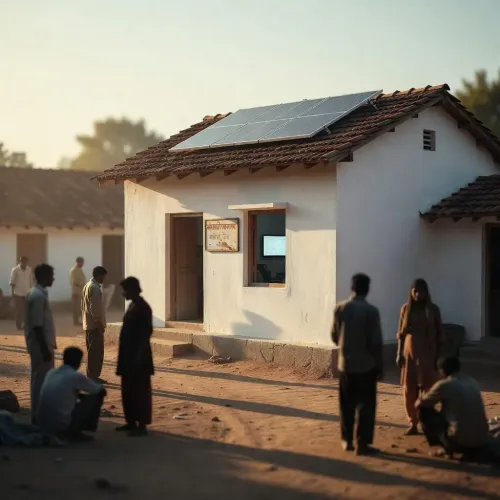
A digital library with computers, high-speed internet, Wi-Fi, smart TV, CCTV, and National Book Trust books has opened inside the gram panchayat secretariat in Khasaha Mohammadpur, Tejwapur Block, Bahraich .
UP's digital library network has expanded from roughly 76 state- and district-level locations before 2017 to 57,600 gram panchayats today.
More than 32,000 schools in the state now have smart classrooms; over 15,000 schools have ICT labs.
Approximately 60 lakh (6 million) young people have been provided smartphones or tablets for e-learning access.
CM Yogi contrasted this with 2012–16 , when 6.22 lakh children went without textbooks and 97 lakh children did not receive school uniforms despite available government funds.
Gram panchayat secretariats are being repositioned as dual administrative-and-knowledge centres across the state.
A child in a remote Uttar Pradesh village no longer has to board a bus to the nearest town just to access a competitive exam textbook. That quiet but consequential shift is now visible on the ground — and Uttar Pradesh Chief Minister Yogi Adityanath used his X account on Monday, 5 October 2026, to spotlight one vivid example: a fully equipped digital library inside a gram panchayat secretariat in Khasaha Mohammadpur, Tejwapur Block, Bahraich district.
The post, written in Hindi, opens with a declaration: 'Ab shahar ki doori nahin rokegi padhai' — 'The distance to the city will no longer stop education.' The library at Khasaha Mohammadpur brings together computers, a printer, high-speed internet, Wi-Fi, a smart TV, CCTV surveillance, competitive-exam books, and literature from the National Book Trust — all under one roof inside the village's administrative secretariat.
From 76 Locations to 57,600 Gram Panchayats
The numbers CM Yogi cited frame the scale of the ambition. Before 2017, e-library access in Uttar Pradesh was confined to roughly 76 state- and district-level locations. Today, the post claims, digital libraries have reached all 57,600 gram panchayats across the state — a near-universal rollout that, if sustained, would represent one of the largest grassroots digital-education expansions in the country.
The Chief Minister also cited parallel infrastructure: more than 32,000 schools now equipped with smart classrooms, over 15,000 schools running ICT labs, and approximately 60 lakh (6 million) young people provided with smartphones or tablets to extend digital learning beyond school walls.
The Contrast With 2012–16 That the Post Draws
The post does not let the achievement stand alone — it sharpens it against a pointed comparison. CM Yogi states that between 2012 and 2016, despite adequate government funds, 6.22 lakh children did not receive textbooks and 97 lakh children were denied school uniforms — a direct, numbers-backed contrast with the previous Samajwadi Party government's tenure in the state. The framing is deliberate: resource availability is not enough; delivery to the last child is the real test.
Gram Panchayat Secretariats as Knowledge Hubs
Perhaps the most structurally interesting aspect of the initiative is institutional rather than technological. Gram panchayat secretariats — buildings traditionally associated with land records, certificates, and local administration — are being repositioned as dual-purpose centres: administrative services in one corner, a knowledge-and-technology hub in the other. The post describes this as a 'new role' for these buildings, and it signals a broader philosophy: push public infrastructure to multitask rather than build separate silos.
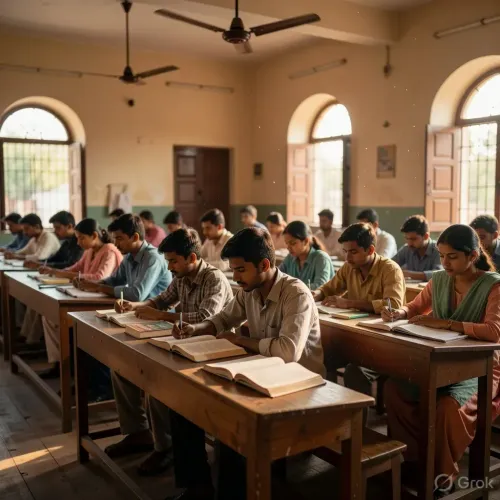
For families in Khasaha Mohammadpur and villages like it, the practical arithmetic is simple. Every rupee and every hour previously spent commuting to a city library or coaching centre can now be redirected to actual study time. Parents, CM Yogi notes, no longer need to worry about sending children far from home for access to modern educational resources.
What the Library in Bahraich Tells a Bigger Story
Bahraich is a border district in north-western Uttar Pradesh, historically among the state's more educationally and economically underserved regions. That a high-speed, multi-facility digital library is now operational inside a gram panchayat secretariat there — not in Lucknow, not in Varanasi, but in Tejwapur Block — is precisely the kind of ground-level data point the post is built around. One village, one library, but a window onto a claimed state-wide transformation.
Uttar Pradesh's gram panchayat digital library initiative is converting village administrative offices into nodes of competitive-exam preparation and e-learning. The question now is whether the quality of connectivity, the regularity of maintenance, and the depth of curated content can keep pace with the reach. In education, infrastructure is only the beginning. The kicker is what students actually do with it — and early signs from Khasaha Mohammadpur suggest they are already showing up.
Point of View
Then anchor both against a damning baseline from a predecessor government. The 2012–16 textbook-and-uniform data is the sharpest arrow — it reframes the digital library not merely as a welfare delivery story but as a governance-competence contrast. For the BJP in UP, digital education infrastructure in gram panchayats also serves a longer-term political logic: it embeds the party's visibility in the very buildings where citizens interact with local government daily. The durability of the claim depends entirely on whether the 57,600-library figure reflects functional, maintained facilities or merely registered installations — a distinction that field reporting will eventually test.
NationPress
5 Oct 2026
Frequently Asked Questions
What is the UP gram panchayat digital library scheme?
The Uttar Pradesh government's gram panchayat digital library initiative sets up technology-enabled libraries — with computers, high-speed internet, Wi-Fi, smart TVs, and physical books — inside gram panchayat secretariat buildings across the state, aiming to bring competitive-exam preparation and e-learning resources to village-level students.
How many gram panchayats in UP have digital libraries now?
According to CM Yogi Adityanath's post on 5 October 2026, digital libraries have reached all 57,600 gram panchayats in Uttar Pradesh, up from roughly 76 locations before 2017.
Where is the Khasaha Mohammadpur digital library located?
The digital library highlighted by CM Yogi is in Khasaha Mohammadpur village, Tejwapur Block, Bahraich district , in northern Uttar Pradesh, and is housed inside the local gram panchayat secretariat.
How many UP schools have smart classrooms?
CM Yogi's post states that more than 32,000 schools in Uttar Pradesh now have smart classrooms, while over 15,000 schools are equipped with ICT labs.
What did CM Yogi say about education in UP between 2012 and 2016?
CM Yogi cited that between 2012 and 2016, despite adequate government funds, 6.22 lakh children did not receive textbooks and 97 lakh children were denied school uniforms — contrasting that period with the current administration's delivery record.