CM Yogi: Van Tangiya villages now revenue villages, tribes covered
Synopsis
Chief Minister Yogi Adityanath announced that Van Tangiya forest settlements in Uttar Pradesh have been recognised as revenue villages for the first time, and that communities including Musahar, Tharu, Gond, Chero, Buxa, Kol, and Sahariya are now being covered under state welfare schemes.
Key Takeaways
Van Tangiya villages in Uttar Pradesh have been granted revenue village status for the first time, enabling residents to access formal welfare entitlements.
The Musahar community , historically without institutional support, is being brought under all government welfare schemes, according to CM Yogi.
Six tribal groups — Tharu, Gond, Chero, Buxa, Kol, and Sahariya — have been specifically named as beneficiaries of the state's scheme-saturation drive.
The initiative is framed under the 'double engine government' model, citing coordination between the BJP-led state and central administrations.
The national legal foundation for such recognition is the Forest Rights Act, 2006 , which grants land and resource rights to forest-dwelling communities.
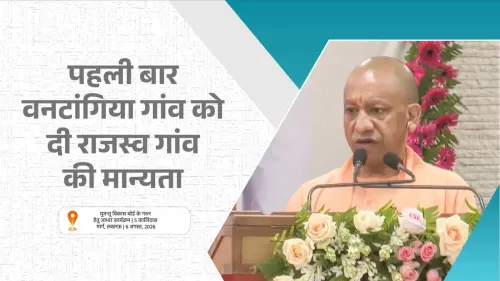
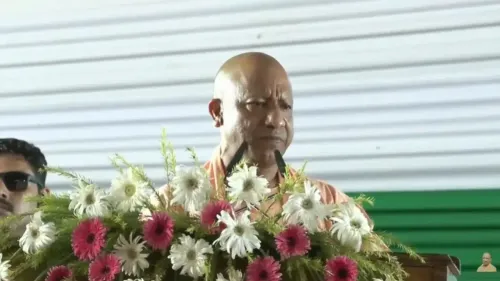
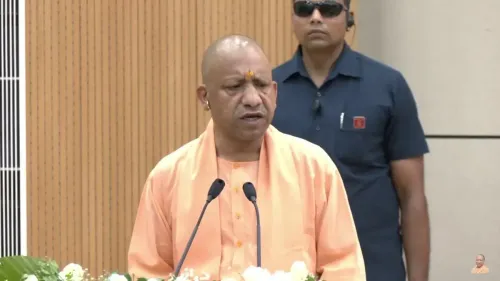
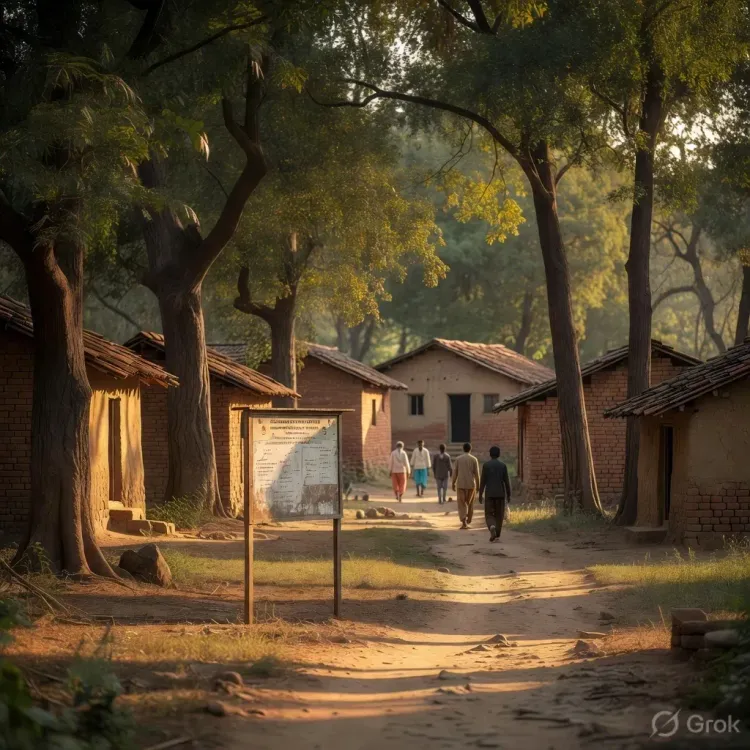
For decades, the Van Tangiya communities of Uttar Pradesh lived in forest settlements that the state did not officially recognise — no revenue record, no address, no formal claim to the welfare machinery of the republic. Chief Minister Yogi Adityanath, speaking on 6 August 2026, declared that those settlements have now been granted revenue village status for the first time, bringing their residents into the mainstream of governance.
Van Tangiya villages: from forest margins to the revenue map
The Van Tangiya communities are forest-dwelling groups whose settlements, historically established for plantation labour under British-era forestry programmes, remained outside the formal revenue system long after independence. Without revenue village status, residents could not access land records, government addresses, or the cascade of welfare entitlements tied to them. CM Yogi stated that this recognition has now been granted — a step that, if fully implemented, would unlock access to housing, ration cards, health coverage, and other state schemes for these communities. The broader national framework for such recognition was laid by the Scheduled Tribes and Other Traditional Forest Dwellers (Recognition of Forest Rights) Act, 2006, which established the legal basis for granting land and resource rights to forest-dwelling communities. State-level formalisation of revenue status builds on that foundation.Musahar, Tharu, Gond, Chero, Buxа, Kol, Sahariya: naming the excluded
The Chief Minister's statement went beyond Van Tangiya villages. He specifically named the Musahar community — among the most economically marginalised Dalit groups in Uttar Pradesh — and noted that they previously had no institutional patron. The government, he said, has now worked to bring them under all public welfare schemes. He also listed six tribal and community groups by name: Tharu, Gond, Chero, Buxa, Kol, and Sahariya — each with distinct cultural identities and geographies within the state. The framing was deliberate: these are communities that have historically fallen through the cracks of scheme delivery, and the 'double engine government' — the BJP's shorthand for aligned state and central administrations — has made their saturation a stated priority.The 'double engine' welfare push and what it means on the ground
The political logic of the 'double engine' framing is straightforward: with the same party governing in Lucknow and New Delhi, central and state schemes can be layered and delivered without bureaucratic friction. For tribal and forest-dwelling communities, that convergence matters — central schemes like PM Awas Yojana, Ayushman Bharat, and the Public Distribution System require state-level infrastructure and political will to reach the last mile. The pattern here fits a broader arc of BJP-led governments positioning inclusive tribal development as both a governance deliverable and a political signal — particularly ahead of assembly and general election cycles where Scheduled Caste and Scheduled Tribe voter blocs carry decisive weight in Uttar Pradesh. The test, as always, will be in the implementation data: whether scheme saturation in newly recognised Van Tangiya villages actually shows up in subsequent state budget allocations and assembly session reports. The announcement sets the benchmark — the numbers will tell the rest of the story.Point of View
The country's most electorally consequential state. By naming specific communities like Musahar and listing six tribal groups, CM Yogi is signalling granular outreach rather than generic inclusion. The 'double engine' framing also serves to credit both Lucknow and New Delhi simultaneously, reinforcing the political value of aligned governments. The real measure of success, however, will emerge from budget data and ground-level scheme-delivery reports — promises of saturation are only as strong as the implementation machinery behind them.
NationPress
6 Aug 2026
Frequently Asked Questions
What are Van Tangiya villages in Uttar Pradesh?
Van Tangiya villages are forest settlements in Uttar Pradesh, originally established during the British era for plantation labour. Their residents lived outside the formal revenue system for decades, limiting their access to government welfare schemes. CM Yogi Adityanath announced they have now been recognised as revenue villages for the first time.
Why does revenue village status matter for Van Tangiya communities?
Revenue village status gives settlements an official identity in government records, enabling residents to obtain land documents, ration cards, official addresses, and access to welfare schemes like PM Awas Yojana and Ayushman Bharat that require formal identification.
Which tribal communities did CM Yogi mention in his statement?
CM Yogi named six communities: Tharu, Gond, Chero, Buxa, Kol, and Sahariya, along with the Musahar community and Van Tangiya villagers, as groups now being covered under state welfare schemes.
What is the Forest Rights Act and how does it relate to this?
The Scheduled Tribes and Other Traditional Forest Dwellers (Recognition of Forest Rights) Act, 2006 is a central law that grants land and resource rights to forest-dwelling communities. State-level steps like granting revenue village status to Van Tangiya settlements build on this national legal framework.
What does 'double engine government' mean in the context of tribal welfare?
'Double engine government' is the BJP's term for having the same party in power at both the state (Uttar Pradesh) and central levels, allowing state and central welfare schemes to be coordinated and delivered more efficiently to communities like tribal groups and Musahars.