CM Yogi warns UP against 'forces that divide'
Synopsis
Uttar Pradesh Chief Minister Yogi Adityanath posted a terse Hindi warning on X — 'Stay alert to divisive forces' — a six-word phrase that distils the BJP's recurring unity-versus-division frame in UP politics, arriving amid active state-level political campaigning.
Key Takeaways
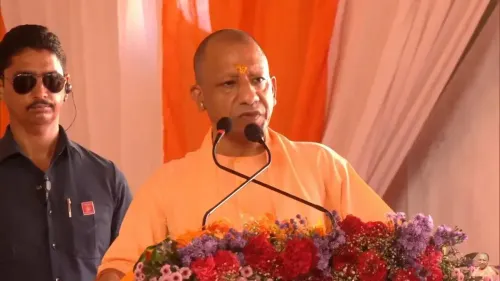
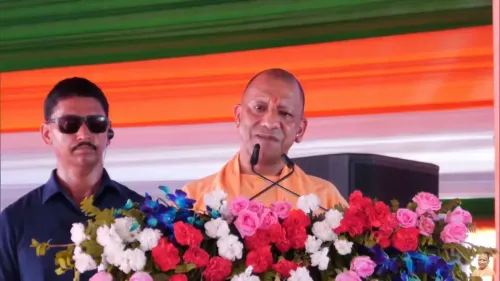
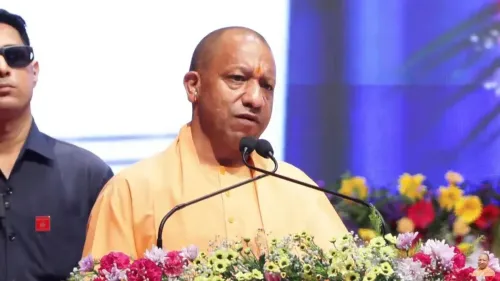
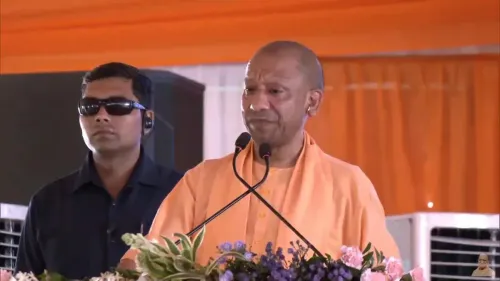
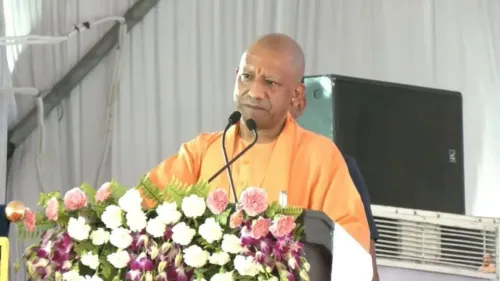
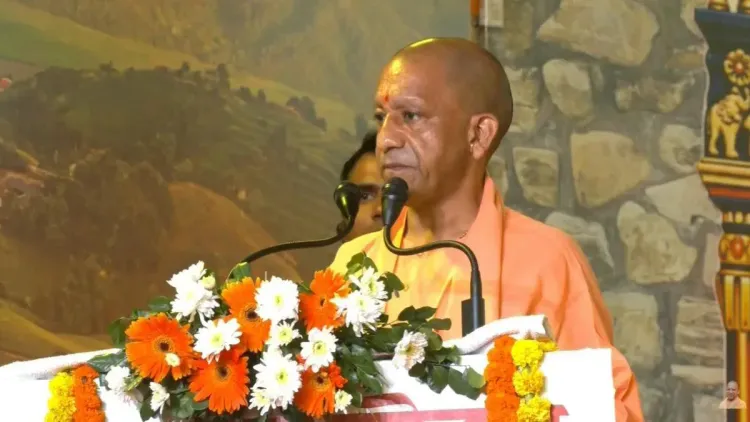
Yogi Adityanath posted a pointed six-word Hindi caution on 11 November 2026 : 'Baantne wali taakton se sawdhaan rehna' — 'Stay alert to the forces that divide.' The post was accompanied by a video but carried no additional explanatory text.
The phrase 'divisive forces' is a recurring element of BJP political communication in Uttar Pradesh , used to frame rival caste or communal mobilisation as a threat to social unity.
Adityanath has been Uttar Pradesh Chief Minister since 2017 and leads the Gorakhnath Math , giving his public statements both political and religious resonance in the state.
The BJP's national 'Sabka Saath, Sabka Vikas' framework since 2014 underpins this style of messaging, positioning the party as a defender of integration.
The specific trigger for the November 2026 post has not been officially identified, but it aligns with heightened state-level political activity in UP .
A six-word warning — sharp, unelaborated, and aimed squarely at the political moment — landed on Wednesday, 11 November 2026, when Uttar Pradesh Chief Minister Yogi Adityanath posted a pointed caution on X: 'Baantne wali taakton se sawdhaan rehna' — 'Stay alert to the forces that divide.'
A message stripped to its essence
The post, accompanied by a video but no explanatory text beyond the single Hindi phrase, is classic Yogi Adityanath communication: minimal words, maximum signal. Translated literally, it reads: 'Be careful of the forces that seek to divide.' The brevity is deliberate — the sentence does not name an adversary, but it does not need to. In Uttar Pradesh politics, 'baantne wali taakten' (divisive forces) has become a recognisable shorthand, deployed consistently by BJP leaders to frame rival political mobilisation — whether along caste, community, or regional lines — as a threat to social cohesion.
BJP's unity-versus-division playbook in UP
The Bharatiya Janata Party has built a durable rhetorical architecture around the idea of unity since its 2014 national campaign, anchored in the slogan 'Sabka Saath, Sabka Vikas' — 'Together with all, development for all.' In Uttar Pradesh, Adityanath has reinforced that frame with particular consistency since taking office in 2017, positioning the state government as a guarantor of law, order, and communal peace against what he characterises as forces intent on fracturing the social fabric.
The 'divisive forces' warning has surfaced repeatedly in his public addresses — ahead of assembly elections, during sensitive communal moments, and in the run-up to key parliamentary sessions. Each iteration follows the same grammar: the threat is unnamed, the audience is the voter, and the implied contrast is between BJP's integrative nationalism and an opposition cast as exploiting identity fault lines.
Why the timing matters
The post arrives in a period of active state-level political campaigning in Uttar Pradesh, India's most populous and electorally decisive state. While the specific trigger for Wednesday's post cannot be pinned to a single event, the cadence fits a pattern: Adityanath tends to sharpen social-cohesion messaging precisely when political temperatures rise and rival mobilisation intensifies. A video accompanies the post — its content could carry additional context — but the text itself is the headline the Chief Minister chose to lead with.
For voters, the signal is familiar. For rivals, the framing is a challenge: respond and confirm the frame, or stay silent and let it settle. That is the geometry of a well-worn political move — and in UP, it has rarely failed to cut through.
In a state where every sentence from the Chief Minister's office lands with electoral weight, six words is sometimes all it takes to set the terms of debate.
Point of View
Allowing every rival to hear their own name in the warning. The absence of a named adversary is a feature, not an omission. In Uttar Pradesh, where caste and community arithmetic are always in play, the 'divisive forces' label functions as a pre-emptive delegitimisation of opposition mobilisation before it fully takes shape. If political temperatures in the state continue to rise in the coming weeks, expect this six-word post to be the opening line of a much longer campaign argument.
NationPress
11 Nov 2026
Frequently Asked Questions
What did CM Yogi Adityanath post on X on 11 November 2026?
He posted a six-word Hindi warning — 'Baantne wali taakton se sawdhaan rehna' — meaning 'Stay alert to the forces that divide,' accompanied by a video.
What does 'baantne wali taakten' mean in UP politics?
'Baantne wali taakten' translates to 'divisive forces' and is a phrase routinely used by BJP leaders in Uttar Pradesh to describe political rivals accused of mobilising voters along caste or communal lines.
Why does Yogi Adityanath use the 'divisive forces' warning?
It is part of a consistent BJP rhetorical strategy since 2014 — framing the party as a defender of national unity and social cohesion while casting opposition politics as exploitative of identity fault lines.
Is there a specific event that triggered Yogi Adityanath's November 2026 post?
No specific trigger has been officially identified. The post aligns with a broader pattern of heightened BJP messaging during periods of active political campaigning in Uttar Pradesh.
How long has Yogi Adityanath been Chief Minister of Uttar Pradesh?
Yogi Adityanath has been Chief Minister of Uttar Pradesh since 2017, making him one of India's longest-serving current state chief ministers.