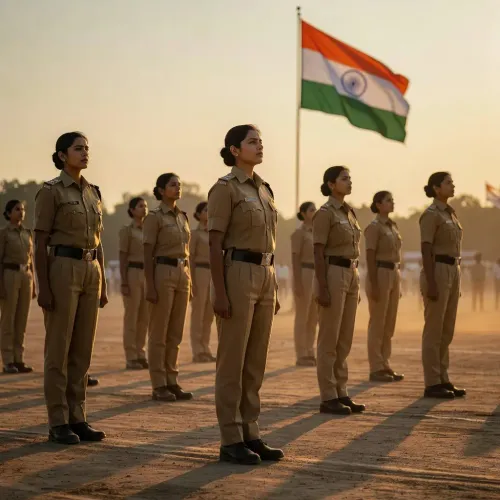
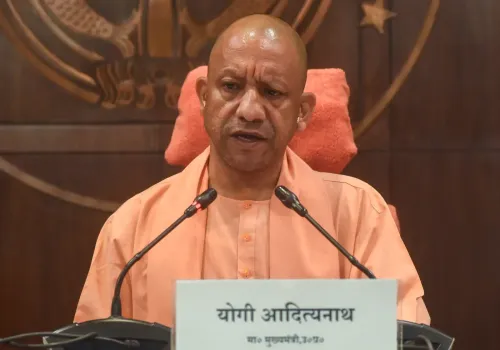
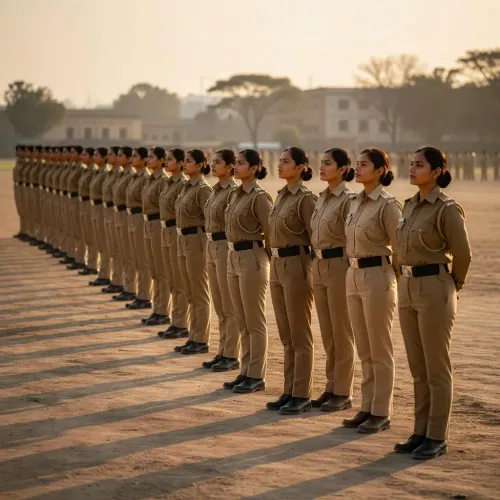
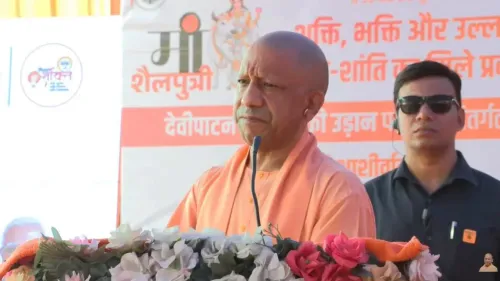
CM Yogi's Mission Shakti Takes Legal Literacy to UP's Girls' Schools
Synopsis
Uttar Pradesh's Mission Shakti campaign is running legal literacy sessions, police station visits, and leadership exposure programmes for girl students in council schools and Kasturba Gandhi residential schools, equipping them with helpline numbers, FIR knowledge, and POCSO awareness.
Key Takeaways
Girls in UP's parishadeey vidyalayas and KGBVs are being taught helplines 1098, 1090, 112 and 181 through street plays and awareness rallies.
Students are taken on visits to police stations to learn FIR registration, cyber crime reporting, and legal rights under the POCSO Act .
Meritorious students receive exposure visits and administrative responsibilities to build leadership skills.
Mission Shakti was launched in 2020 under Chief Minister Yogi Adityanath as a multi-departmental women's safety and empowerment campaign.
KGBVs serve girls from scheduled castes, minorities and other disadvantaged sections, making them a critical delivery channel for the outreach.
Thousands of girls enrolled in government schools and residential Kasturba Gandhi Balika Vidyalayas (KGBVs) across Uttar Pradesh are being trained to dial a helpline, file an FIR, and understand their rights under the POCSO Act — a quiet but sweeping expansion of the state's Mission Shakti campaign that the Chief Minister's Office of Uttar Pradesh detailed on Wednesday, 11 November 2026.
From helplines to police stations: what the programme actually does
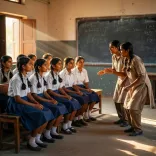
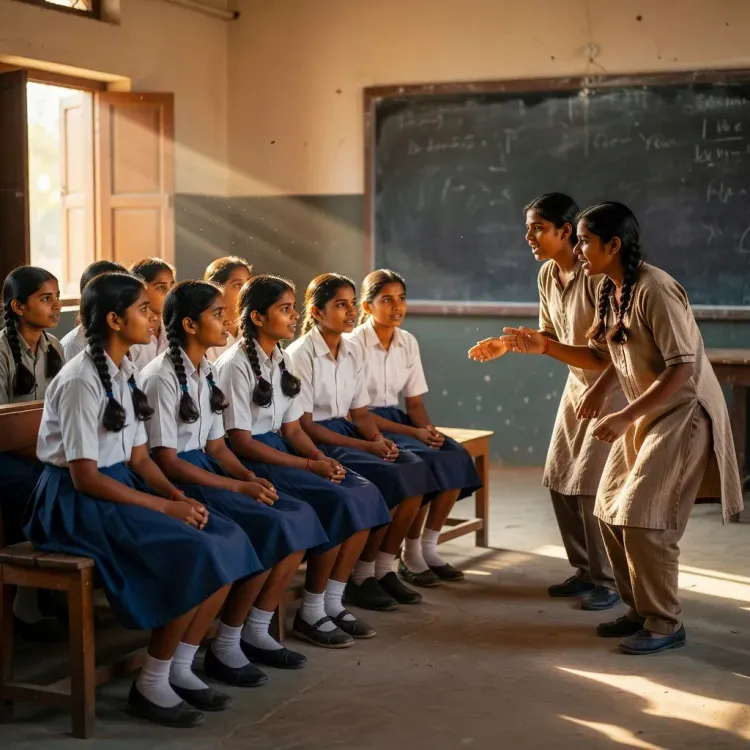
The CMO's post describes a multi-layered awareness drive running inside parishadeey vidyalayas (council schools) and KGBVs. Girl students are being taught the numbers that matter most in a crisis — 1098 (child helpline), 1090 (women's helpline), 112 (emergency) and 181 (women's helpline for domestic issues) — through street plays (nukkad natak), awareness rallies, and community participation sessions.
The programme goes further than awareness posters. Students are taken on visits to police stations, where they learn how an FIR is registered, what the POCSO Act means in practice, how cyber crimes are reported, and which government welfare schemes they are entitled to access. Legal literacy, once confined to law colleges, is now being delivered to adolescent girls in UP's smallest districts.
Merit plus exposure: building leadership inside Mission Shakti
Beyond safety training, the programme earmarks meritorious students for exposure visits and assigns them prashasanik dayitva — administrative responsibilities — designed to cultivate leadership skills. The logic: a girl who understands the machinery of the state is more likely to use it, and more likely to lead within it.
Mission Shakti was launched in 2020 as a multi-departmental campaign under Chief Minister Yogi Adityanath, weaving together the police, education and social welfare departments. KGBVs — centrally sponsored residential schools targeting girls from scheduled castes, minorities and other disadvantaged sections — provide the infrastructure that makes this outreach viable at scale in rural Uttar Pradesh.
Why school-based legal literacy carries weight in UP
The integration of criminal-justice education into school curricula addresses a persistent gap: studies on under-reporting of crimes against women consistently point to legal unawareness as a barrier. By anchoring the outreach inside KGBV hostels — where girls from marginalised communities live full-time — the programme reaches students who might otherwise have no contact with the formal justice system until they need it in the worst possible circumstances.
Uttar Pradesh has long faced scrutiny over women's safety indices, making the communication value of Mission Shakti significant for the Yogi Adityanath government. Whether school-level legal literacy translates into measurable changes in reporting rates is the question policymakers and advocates will be watching — and one the state's own Mission Shakti progress reports may eventually answer.
For now, the programme's most tangible output is straightforward: a girl in a KGBV dormitory in Ballia or Bahraich who knows that 1098 exists, knows she can call it, and knows someone is obligated to answer.
Point of View
Helplines and POCSO provisions directly inside KGBV hostels, the Yogi Adityanath government is converting central government school infrastructure into a last-mile delivery network for legal awareness. The leadership-exposure component adds a longer arc: today's informed student is tomorrow's informed voter, professional, and community advocate. The real test, however, remains outcomes — whether awareness translates into higher reporting rates and whether institutional follow-through matches the campaign's reach.
NationPress
11 Nov 2026
Frequently Asked Questions
What is Mission Shakti in Uttar Pradesh?
Mission Shakti is a flagship initiative launched by the Uttar Pradesh government in 2020 under Chief Minister Yogi Adityanath to promote women's safety, self-reliance and dignity through multi-departmental coordination involving police, education, and social welfare departments.
What helpline numbers are being taught to girl students under Mission Shakti?
Girl students in UP's council schools and KGBVs are being informed about helpline numbers 1098 (child helpline), 1090 (women's helpline), 112 (emergency services), and 181 (women's domestic issues helpline).
What are Kasturba Gandhi Balika Vidyalayas (KGBVs)?
KGBVs are centrally sponsored residential schools for girls from scheduled castes, minorities, and other disadvantaged sections, operated across states including Uttar Pradesh, providing free boarding and education.
What does the POCSO Act cover and why is it included in the awareness drive?
The Protection of Children from Sexual Offences (POCSO) Act, enacted in 2012, provides a legal framework to protect children from sexual abuse and harassment. It is included in UP's school awareness programme so girls understand their rights and the legal remedies available to them.
How does Mission Shakti develop leadership among girl students?
Under the programme, meritorious girl students are selected for exposure visits to government and administrative institutions and given administrative responsibilities, specifically designed to build their confidence and leadership capacity.