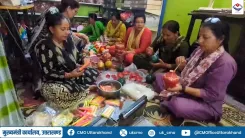
Uttarakhand's Nanda Gaura Yojana proving a lifeline for Chamoli's girls
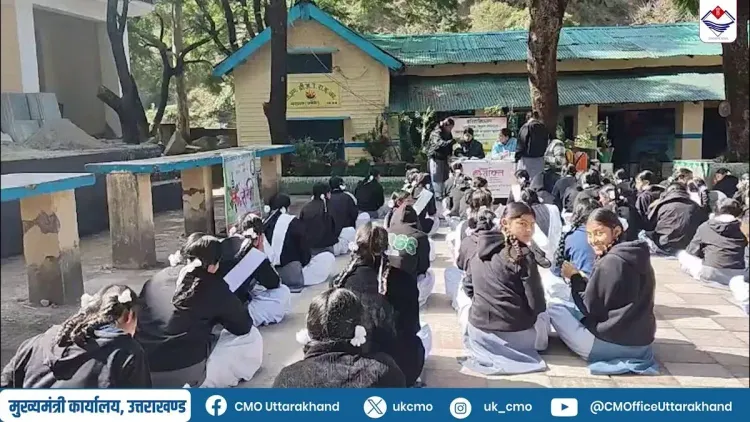
Synopsis
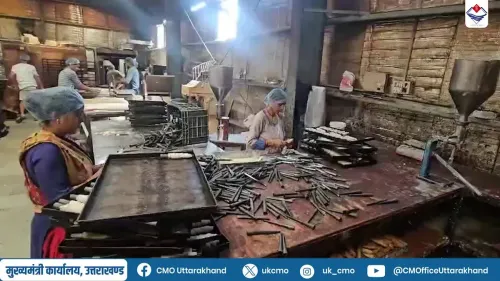
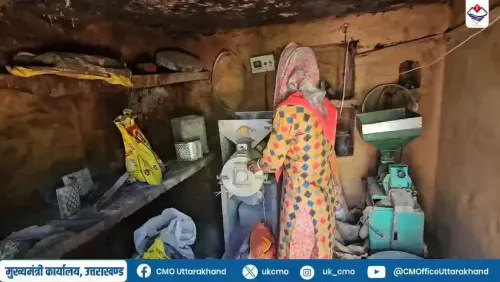
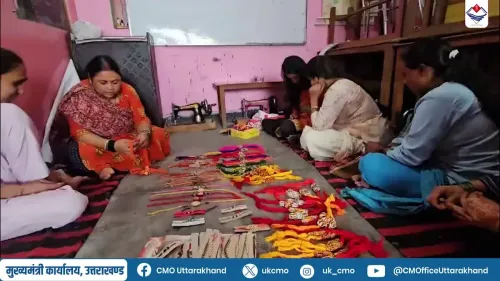
The Chief Minister's Office of Uttarakhand highlighted the Nanda Gaura Yojana on 11 November 2026, calling the state's girl-child welfare scheme a boon for girls in the remote Chamoli district, where access to education and financial support remains a persistent challenge.
Key Takeaways
The Chief Minister's Office of Uttarakhand posted on 11 November 2026 highlighting the Nanda Gaura Yojana as a 'boon' for girl children.
The scheme provides conditional financial assistance to girl children across key milestones from birth to higher education.
Chamoli district , a remote Garhwal Himalayan district, was specifically cited as a site of impact.
The Nanda Gaura Yojana supplements the central government's Beti Bachao Beti Padhao initiative launched in 2015 .
Uttarakhand's hill districts face particular last-mile delivery challenges that state-specific schemes aim to address.
In the high-altitude villages of Chamoli district, a state government scheme is quietly rewriting the life chances of girl children — and the Chief Minister's Office of Uttarakhand highlighted that impact on Wednesday, 11 November 2026, calling the Nanda Gaura Yojana nothing short of a blessing for the state's daughters.
The post, shared in Hindi, reads: 'Rajya sarkar ki Nanda Gaura Yojana balikaon ke liye sabit ho rahi vardaan.' — 'The state government's Nanda Gaura Yojana is proving to be a boon for girl children.' The focus on Chamoli is pointed: a mountainous, remote district where access to education and financial support has historically been among the most uneven in Uttarakhand.
What the Nanda Gaura Yojana does for girls
The Nanda Gaura Yojana is Uttarakhand's flagship conditional cash transfer scheme for girl children, designed to provide financial assistance tied to key life milestones — from birth and immunisation through to higher education. The logic is straightforward: reduce the economic pressure on families that has historically pushed them away from investing in daughters.
The scheme fits into a broader national architecture built on the Beti Bachao Beti Padhao initiative launched by the central government in 2015, which aimed to arrest a declining child sex ratio and push girl-child enrolment in schools. Uttarakhand supplemented that framework with state-specific programmes, recognising that its hilly terrain and dispersed habitations require localised intervention well beyond what a national scheme alone can deliver.
Why Chamoli's geography makes the stakes higher
Chamoli, nestled deep in the Garhwal Himalayas, is emblematic of the access challenge across Uttarakhand's hill districts. Sparse road connectivity, seasonal migration, and limited institutional presence have long made it harder for welfare benefits to reach families who need them most. When the government singles out Chamoli as a site where Nanda Gaura is delivering, it signals that the administrative machinery is pushing the scheme's reach into exactly the pockets where it is hardest — and most necessary — to do so.
Across India, several states run similar girl-child incentive programmes. What distinguishes effective ones from paper schemes is last-mile delivery — whether the cash or the in-kind benefit actually reaches a first-generation learner in a remote village. The Chamoli mention, however brief, plants a flag on that specific challenge.
The road the scheme is trying to shorten
Gender gaps in education and economic participation in India's hill states are stubborn. Conditional cash transfers, when well-targeted and reliably disbursed, have a documented record of keeping girls in school and delaying early marriage across South Asia. If Nanda Gaura's implementation in Chamoli is bearing out that pattern, the story is not just one of a government scheme ticking boxes — it is one of compounding opportunity: a girl who stays in school is likelier to earn, to participate, and to send her own children to school.
The next telling moment will come at the district-level progress reviews and the state's budget cycle, where implementation data for Chamoli and other lagging districts will either validate the government's claim — or invite harder questions about coverage and delivery.
Point of View
However, lies in whether district-level disbursement data matches the optics; conditional cash transfer schemes in India have a persistent gap between enrolment and actual benefit receipt in hill terrain. If Chamoli's numbers hold up under scrutiny, Nanda Gaura could become a credible model for other remote Indian hill districts grappling with the same gender-access deficit.
NationPress
11 Nov 2026
Frequently Asked Questions
What is the Nanda Gaura Yojana in Uttarakhand?
The Nanda Gaura Yojana is Uttarakhand's state government scheme that provides conditional financial assistance to girl children at key milestones — including birth, immunisation, and education — to promote their welfare and reduce gender-based disadvantage.
Who benefits from the Nanda Gaura Yojana?
Girl children and their families in Uttarakhand are the primary beneficiaries, with a focus on remote and hilly districts like Chamoli where access to education and social services is most challenging.
How is Nanda Gaura Yojana different from Beti Bachao Beti Padhao?
Beti Bachao Beti Padhao is a central government scheme launched in 2015 to improve the child sex ratio nationally. The Nanda Gaura Yojana is Uttarakhand's own state-level programme that supplements the central scheme with targeted financial support for girls in the state.
Why is Chamoli highlighted under the Nanda Gaura Yojana?
Chamoli is a remote, high-altitude district in the Garhwal Himalayas with historically limited access to welfare services. The Uttarakhand government's focus on Chamoli underscores the scheme's push to reach the most underserved girl children in the state.
What is the current status of the Nanda Gaura Yojana?
As of November 2026, the Chief Minister's Office of Uttarakhand is actively promoting the scheme's impact in districts like Chamoli; detailed district-level implementation data is expected to emerge in forthcoming state budget reviews.