CMFRI study finds same-sex mating in Indian Squid for first time
Synopsis
For the first time, scientists have documented same-sex mating behaviour in a coastal squid species — the Indian squid found in the Arabian Sea off Kochi. The CMFRI study also found that nearly 40% of females carried sperm deposits, mating can begin just 98 days after hatching, and one female carried 385 sperm packets. The findings could fundamentally alter how India manages one of its most commercially important squid fisheries.
Key Takeaways
ICAR-CMFRI researchers in Kochi have documented same-sex mating behaviour in the Indian squid ( Uroteuthis duvaucelii ) for the first time.
Analysis of 232 female squids found nearly 40% carried spermatangia on their buccal membranes, indicating year-round mating with a peak in October .
One female was found carrying as many as 385 spermatangia , suggesting repeated mating with multiple males.
Statolith analysis indicates mating may begin as early as 98 days after hatching .
The study, published in the Journal of Natural History , was led by Dr Geetha Sasikumar and Dr K K Sajikumar of the Shell Fish Fisheries Division.
Researchers have called for further studies to inform sustainable fisheries management strategies for the species.
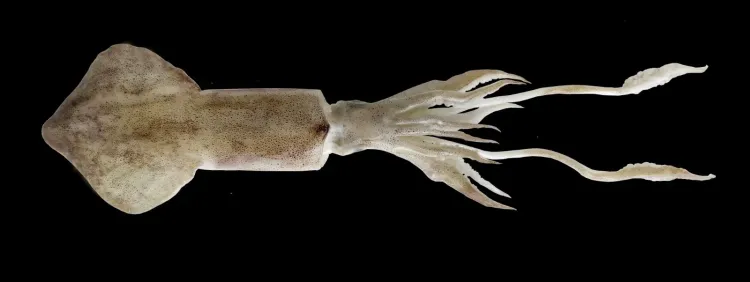
A landmark study by the ICAR-Central Marine Fisheries Research Institute (CMFRI) in Kochi has documented both heterosexual and homosexual mating behaviour in the Indian squid (Uroteuthis duvaucelii) for the first time, offering a significant new window into the reproductive biology of one of India's commercially vital marine species. The findings, published in the Journal of Natural History, are based on squid samples collected from waters off Kochi in the Arabian Sea.
Key Findings of the CMFRI Study
The research was led by Dr Geetha Sasikumar and Dr K K Sajikumar from the institute's Shell Fish Fisheries Division. An analysis of 232 female squids revealed that nearly 40 per cent carried spermatangia — sperm-containing structures attached to their buccal membranes, the fleshy tissue surrounding the mouth. The data indicates that mating activity occurs throughout the year, with peak reproductive activity recorded in October.
In one particularly striking case, researchers counted as many as 385 spermatangia around a single female squid's mouth region, suggesting repeated mating with multiple males ahead of egg laying.
First Documented Evidence of Same-Sex Behaviour in a Coastal Squid
The study's most striking discovery was the identification of spermatangia implanted on the buccal membrane of a male squid — the first documented evidence of same-sex sexual behaviour in the Indian squid. While similar behaviour had previously been reported in certain deep-sea squid species outside Indian waters, scientists had largely attributed it to low-visibility conditions in the deep ocean. This finding is the first such documented instance in a coastal squid species, making it scientifically significant beyond Indian marine biology alone.
Scientists believe such highly opportunistic mating interactions may be linked to dense spawning aggregations, where competition is intense and encounters between individuals are frequent.
Early Mating and Statolith Analysis
Using statolith analysis — a technique comparable to reading growth rings in fish — researchers estimated that Indian squid may begin mating as early as 98 days after hatching, a notably early onset that underscores the species' rapid maturation cycle. This technique allowed the team to reconstruct individual growth histories and correlate them with reproductive milestones.
Implications for Fisheries Management
The researchers stressed that a thorough understanding of the squid's mating system is essential for refining stock assessments and designing sustainable fisheries management strategies. This comes at a time when squid resources are growing in importance to India's marine economy, with demand from both domestic markets and export channels rising steadily.
The team has called for further behavioural and physiological studies to deepen understanding of the species' reproductive dynamics and ecological adaptations. The study adds a new layer of complexity to how marine biologists and fisheries managers must approach the conservation and harvesting of Uroteuthis duvaucelii going forward.
Point of View
Occurring year-round, and involving multiple partners — then current stock assessment models, which typically rely on simpler reproductive proxies, may be underestimating the species' resilience or vulnerability. The call for further physiological studies is warranted, but the more urgent question is whether fisheries policy will move quickly enough to incorporate these findings before harvest pressure intensifies.
NationPress
3 Oct 2026
Frequently Asked Questions
What did the CMFRI study on Indian squid find?
The ICAR-CMFRI study found that the Indian squid (Uroteuthis duvaucelii) exhibits both heterosexual and homosexual mating behaviour, with the same-sex finding being the first documented evidence of such behaviour in a coastal squid species. Nearly 40% of 232 female squids examined carried spermatangia, and mating was found to occur throughout the year.
What is the significance of same-sex mating behaviour in Indian squid?
It is the first time same-sex mating has been documented in a coastal squid species anywhere. While similar behaviour had been observed in deep-sea squid species and attributed to low-visibility environments, this finding in a shallow-water, commercially harvested species opens new questions about opportunistic mating in dense spawning aggregations.
How early do Indian squids begin mating?
Using statolith analysis — a technique similar to reading growth rings in fish — researchers estimated that Indian squid may begin mating as early as 98 days after hatching, indicating a rapid maturation cycle.
Why does this study matter for fisheries management?
Understanding the full complexity of the Indian squid's mating system is critical for accurate stock assessments and sustainable harvest strategies. As squid resources grow in importance to India's marine economy, outdated reproductive models could lead to mismanaged fisheries. The researchers have called for further studies to address this gap.
Where was the study conducted and where is it published?
The study was conducted by scientists at the ICAR-Central Marine Fisheries Research Institute in Kochi, using squid samples collected from waters off Kochi in the Arabian Sea. It has been published in the Journal of Natural History.