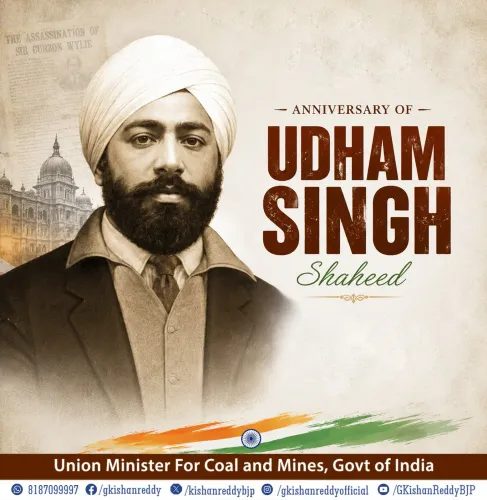
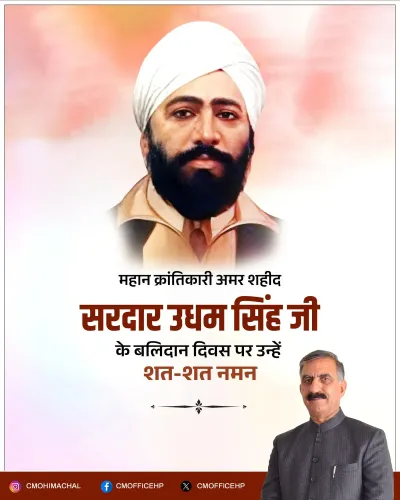
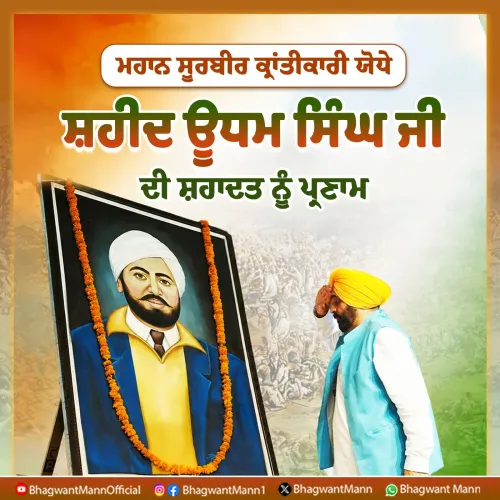
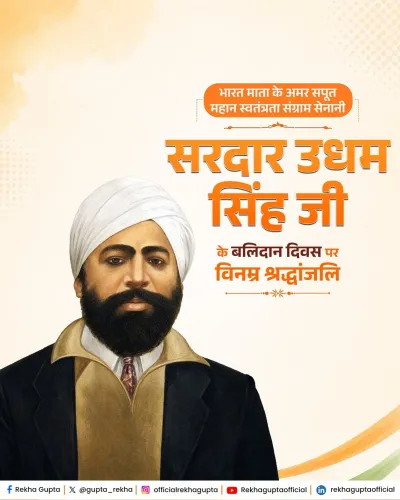
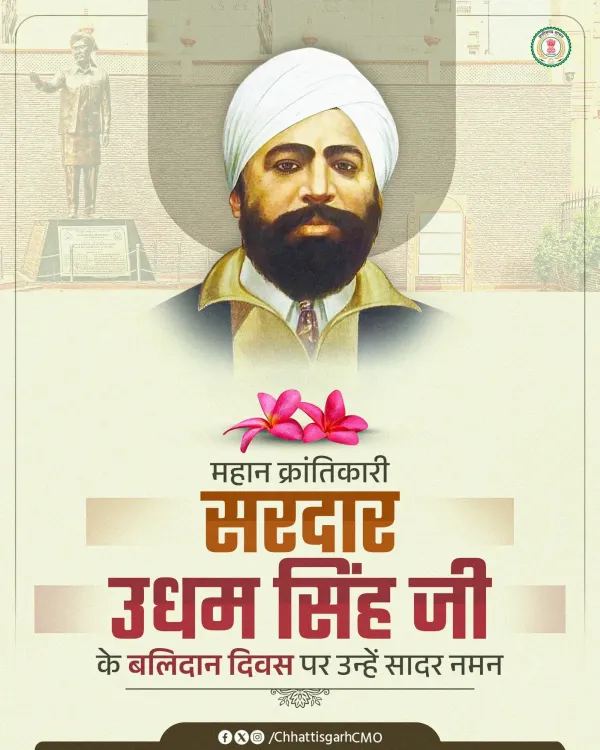
Chhattisgarh CMO pays tribute to Shaheed Udham Singh
Synopsis
The Chief Minister's Office of Chhattisgarh marked 31 July — the death anniversary of revolutionary Udham Singh — with a solemn tribute on X, honouring the man who avenged the Jallianwala Bagh massacre by assassinating Michael O'Dwyer in London in 1940.
Key Takeaways
Udham Singh was executed on 31 July 1940 at Pentonville Prison, London , after assassinating former Punjab Lieutenant Governor Michael O'Dwyer .
The assassination on 13 March 1940 was a direct act of retribution for the Jallianwala Bagh massacre of 13 April 1919 .
The Chief Minister's Office of Chhattisgarh offered an official tribute on X, calling him an 'immortal martyr' ( amar balidani ).
Udham Singh's remains were repatriated to India in 1974 and cremated with state honours in Sunam, Punjab .
Annual official commemorations on 31 July are a consistent feature of Indian state governments' public memory of anti-colonial revolutionaries.
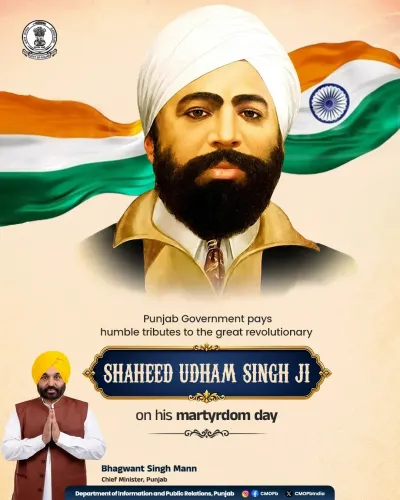
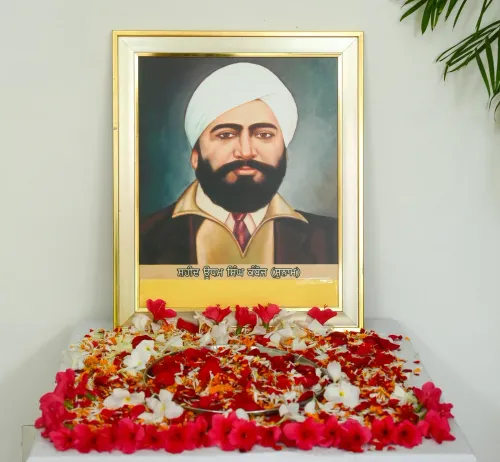
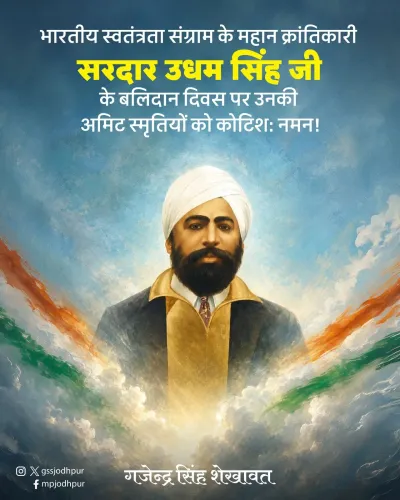
On the 31 July anniversary of his execution, the Chief Minister's Office of Chhattisgarh offered solemn homage to Udham Singh — the revolutionary who carried the memory of Jallianwala Bagh all the way to a London hall and refused to let the empire forget.
Posting on X, the CMO wrote: 'Amar balidani Shaheed Udham Singh ji ke balidaan diwas par unhein vinamra shraddhanjali' — 'Humble tribute to immortal martyr Shaheed Udham Singh on his day of sacrifice.'
Who was Udham Singh?
Udham Singh was present at Jallianwala Bagh, Amritsar, on 13 April 1919, when British colonial forces under the command of General Reginald Dyer opened fire on an unarmed crowd, killing hundreds. He spent the next two decades carrying that wound across continents. On 13 March 1940, in the hall of Caxton House, London, he shot and killed Michael O'Dwyer — the former Lieutenant Governor of Punjab who had approved Dyer's action — in a deliberate act of retribution. He made no attempt to flee.
Hanged at Pentonville Prison, London, on 31 July 1940, Udham Singh went to the gallows with the composure of a man who believed the ledger was settled. India reclaimed his remains in 1974, and he was cremated with full state honours in his native Sunam, Punjab.
A ritual of national memory
The Chhattisgarh CMO's post is part of a well-established pattern: Indian state governments mark the death anniversaries of independence-era revolutionaries with official social-media tributes, keeping anti-colonial memory alive in the public square. 31 July draws particular attention each year, with commemorations at sites linked to Udham Singh and at Jallianwala Bagh itself.
For a man who acted alone, in a foreign city, with no institutional backing, Udham Singh's reach across Indian political memory is remarkable. His story is a reminder that the independence movement was not only marches and negotiations — it was also individual fury, disciplined over decades, finally discharged.
Point of View
Invoking a revolutionary whose story blends sacrifice, individual agency, and justice deferred. As debates around colonial reparations and Jallianwala Bagh memory persist internationally, these annual rituals carry quiet diplomatic undertones. The consistency of such tributes across party lines also signals that Udham Singh has moved beyond partisan claim into shared national iconography.
NationPress
15 Sept 2026
Frequently Asked Questions
Why is 31 July observed as Udham Singh's martyrdom day?
31 July 1940 is the date on which Udham Singh was hanged at Pentonville Prison in London after being convicted of assassinating Michael O'Dwyer . Indian governments and citizens mark the day annually as his 'balidaan diwas' (day of sacrifice).
Who was Udham Singh and why did he kill Michael O'Dwyer?
Udham Singh was an Indian revolutionary who witnessed the Jallianwala Bagh massacre of 1919 . He assassinated Michael O'Dwyer — the former Lieutenant Governor of Punjab who had sanctioned General Dyer's order to fire on the crowd — in London on 13 March 1940 , as an act of retribution.
What happened to Udham Singh's remains after his execution?
Udham Singh's remains were repatriated to India in 1974 , more than three decades after his execution. He was cremated with full state honours in his hometown of Sunam, Punjab .
What is the connection between Udham Singh and Jallianwala Bagh?
Udham Singh is believed to have been present at Jallianwala Bagh, Amritsar , on 13 April 1919 , when British troops opened fire on an unarmed gathering, killing hundreds. The massacre became the defining motivation for his subsequent act of assassination in London.
Why did the Chhattisgarh CMO post a tribute to Udham Singh?
The Chief Minister's Office of Chhattisgarh posted the tribute on 31 July , Udham Singh's martyrdom anniversary, as part of a broader pattern in which Indian state governments use official social media to honour independence-era revolutionaries and reinforce national historical memory.