Jharkhand CMO hails Pinki Pahadia for taking wild honey to market
Synopsis
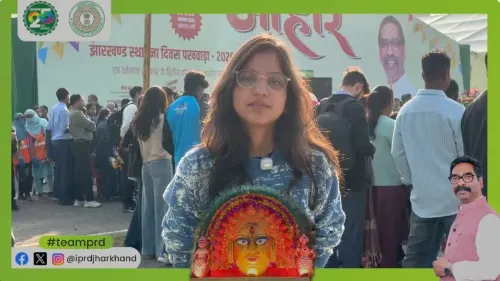
The Chief Minister's Office of Jharkhand on 27 November 2026 praised Pinki Pahadia, a Sabar Pahadia PVTG woman from East Singhbhum, for taking pure wild Boram honey from the forest to market, linking the moment to State Foundation Day 2026 and the government's second anniversary.
Key Takeaways
The Chief Minister's Office of Jharkhand on 27 November 2026 highlighted Pinki Pahadia of East Singhbhum.
It said the Sabar Pahadia PVTG woman brought pure wild honey, called Boram honey , from the forest to the market.
The post linked the moment to Jharkhand State Foundation Day-2026 and the government's second anniversary .
India identified 75 PVTGs in 1975 ; Jharkhand was formed on 15 November 2000 .
East Singhbhum has substantial forest cover and Sabar PVTG communities among Adivasi forest-produce collectors.
A jar of forest honey became the face of tribal pride on 27 November 2026, when the Chief Minister's Office of Jharkhand held up Pinki Pahadia of East Singhbhum's Sabar Pahadia community. The office said the PVTG woman had carried pure wild honey — Boram honey — from the jungle to the market. It tied that labour to Jharkhand State Foundation Day-2026 and the government's second anniversary.
The office called her bahan (sister) Pinki Pahadia of the adim janjati (primitive tribe) Sabar Pahadia, a PVTG of East Singhbhum, and said she had brought pure wild honey extracted from the forest to the market. On the 2026 statehood occasion and the government's second anniversary, it said, seeing the hard work and products of such tribal brothers and sisters fills one with pride.
Boram honey from East Singhbhum's forests
The spotlight is on East Singhbhum, a forested Jharkhand district with significant Sabar PVTG populations. The CMO framed the honey as wild and pure — taken from the jungle, then moved into the marketplace rather than left as a subsistence harvest.
Minor forest produce such as honey has long been a livelihood strand for Adivasi collectors. Jharkhand governments have periodically put a human name on that chain to show how forest gatherers meet buyers.
PVTGs on the statehood calendar
The Government of India identified 75 Particularly Vulnerable Tribal Groups in 1975 for communities marked by isolation, pre-agricultural technology, low literacy and declining populations. Dedicated central and state programmes followed. Jharkhand itself was formed on 15 November 2000 with an explicit policy focus on its large tribal population, and foundation-day messaging has often returned to that mandate.
National policy has also promoted market linkages for tribal forest products through cooperatives and marketing bodies. What the CMO chose to celebrate here is the last mile: a PVTG woman taking Boram honey to the bazaar, timed with the 2026 statehood moment and year two of the present government.
For a state whose political identity was built on Adivasi claims, one jar of wild honey is a pride story. The harder question is whether forest-to-market routes for PVTG produce become a pipeline, not a poster.
Point of View
And market access is the perennial gap. Celebrating one woman's Boram honey is therefore both tribute and political calendar — a second-anniversary snapshot of tribal development as the government wants it seen. The sharper test is whether marketing infrastructure and value-addition for PVTG produce expand beyond a single celebrated jar.
NationPress
28 Nov 2026
Frequently Asked Questions
Who is Pinki Pahadia according to the Jharkhand CMO?
The Chief Minister's Office of Jharkhand identified her as a woman from the Sabar Pahadia Particularly Vulnerable Tribal Group in East Singhbhum. It said she brought pure wild honey, called Boram honey, from the forest to the market.
What is Boram honey?
In the CMO post, Boram honey refers to pure wild honey extracted from the forest and taken to market by Pinki Pahadia. It is presented as a product of Adivasi labour in East Singhbhum.
What are PVTGs in India?
Particularly Vulnerable Tribal Groups are a Government of India category created in 1975 for the most isolated tribes with pre-agricultural technology, low literacy and declining populations. Dedicated development programmes target these communities, including Sabar groups in Jharkhand.
When is Jharkhand State Foundation Day?
Jharkhand observes State Foundation Day on 15 November, marking the state's creation from Bihar in 2000. The CMO linked its 27 November 2026 post to the 2026 foundation-day occasion and the government's second anniversary.
Why did the Jharkhand CMO highlight forest honey?
The office said seeing the hard work and products of tribal brothers and sisters fills it with pride on the state's foundation-day moment and the government's second anniversary. Forest produce such as honey is a known livelihood for PVTG collectors.