Jharkhand CMO highlights Ho artisan stall at Khelgaon
Synopsis
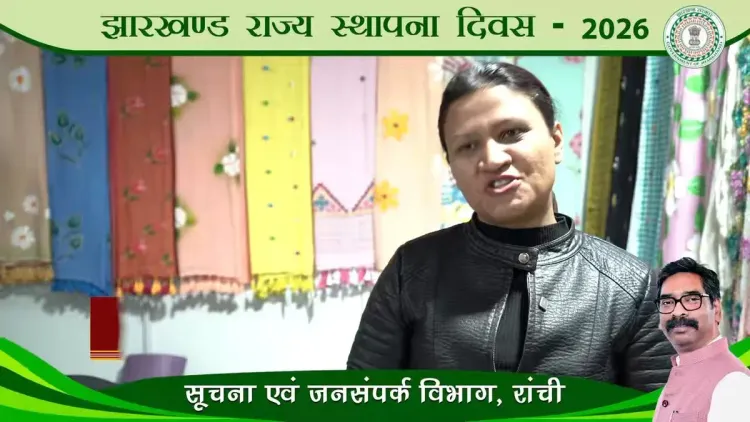
Jharkhand CMO has flagged Ho artisan Sandhya Singh Kuntia's stall at Khelgaon, Chaibasa, where Abua Disum, Johar and Rebirth glow T-shirts and hand-painted sarees draw the Sthapna Divas Pakhwada 2026 crowd.
Key Takeaways
The Chief Minister's Office of Jharkhand on 27 November 2026 highlighted Sandhya Singh Kuntia's stall at Khelgaon, Chaibasa.
Kuntia, from the Ho community, is showing glow-in-the-dark T-shirts carrying Abua Disum, Johar and Rebirth.
Hand-painted and embroidered sarees depicting Adivasi identity, culture and tradition are also on display.
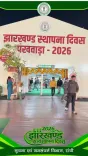
The stall is part of Sthapna Divas Pakhwada 2026, marking Jharkhand's formation on 15 November 2000.
Chaibasa is the headquarters of West Singhbhum, a district with a large Ho tribal population.
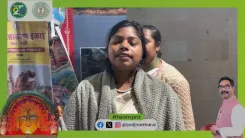
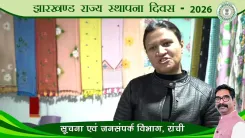
A Ho artisan from the forest-and-steel belt of West Singhbhum has become the face of Jharkhand's foundation fortnight. On 27 November 2026, the Chief Minister's Office of Jharkhand highlighted the stall of Sandhya Singh Kuntia at Khelgaon in Chaibasa, where glow-in-the-dark T-shirts and hand-painted sarees carrying tribal slogans have turned into the magnet of Sthapna Divas Pakhwada 2026.
The office said that under the pakhwada, the stall of Chaibasa's Sandhya Singh Kuntia of the Ho community is displaying pieces that reflect Adivasi identity, culture and tradition. Special glow-in-the-dark T-shirts — अबुआ दिसुम (Abua Disum), जोहार (Johar) and रिबर्थ (Rebirth) — along with hand-painted and embroidered sarees, have become the centre of attraction.
Abua Disum and Johar that glow after dark
Abua Disum — our land in Ho and Mundari speech — and Johar, the greeting that opens Adivasi public life in Jharkhand, are not merch first. They are identity markers, now printed on garments that light up after dusk at a sports-and-culture ground in Chaibasa. Rebirth sits beside them, an English word stitched into a tribal palette.
Sandhya Singh Kuntia is presenting that mix: contemporary T-shirt cuts with slogans rooted in Ho language, and sarees that are hand-painted and embroidered — slow work that still defines much of West Singhbhum's textile craft.
Khelgaon, Chaibasa and the Ho stall
Chaibasa, headquarters of West Singhbhum, sits in a district with a large Ho tribal population. Khelgaon there is used for state events and exhibitions. Placing a Ho artisan's stall at the centre of the official feed is a way of saying the foundation fortnight is not only speeches and sports — it is also cloth, slogan and craft.
November pakhwada as Jharkhand's craft stage
Jharkhand was created on 15 November 2000 with an explicit constitutional emphasis, under the Fifth Schedule, on protecting tribal culture and identity. Governments have routinely used the November fortnight to stage Adivasi crafts, textiles and language slogans as a public reminder of that origin.
For makers from the Ho community, a Khelgaon stall is a rare official window. What is not yet known is whether the 2026 fortnight will be followed by any move to scale such stalls into lasting markets or tourism circuits. The lights on the T-shirts will go out when the pakhwada ends. The claim they carry — that this land is Abua Disum — is meant to last longer.
Point of View
Not just a bureaucratic anniversary. By amplifying a Ho artisan from Chaibasa, the CMO is tying contemporary apparel — glow tees and slogan merch — to older claims of land and greeting, Abua Disum and Johar. That sits squarely in a Fifth Schedule state that treats tribal culture as the core of its political identity. The test after the pakhwada is whether such stalls remain a November ritual or become a year-round market for makers like Kuntia.
NationPress
28 Nov 2026
Frequently Asked Questions
Who is Sandhya Singh Kuntia of Chaibasa?
She is a Ho community artisan from Chaibasa in West Singhbhum, Jharkhand. Her stall at Khelgaon during Sthapna Divas Pakhwada 2026 is displaying glow-in-the-dark T-shirts and hand-painted, embroidered sarees.
What is Sthapna Divas Pakhwada 2026 in Jharkhand?
It is the fortnight-long celebration marking Jharkhand's formation as a state on 15 November 2000. Governments use the November pakhwada to stage exhibitions of Adivasi crafts, textiles and language slogans.
What do Abua Disum and Johar mean on the T-shirts?
Abua Disum is a Ho and Mundari phrase commonly rendered as our land. Johar is a traditional Adivasi greeting widely used across Jharkhand.
Where is Khelgaon in Chaibasa?
Khelgaon is a sports and cultural venue in Chaibasa, the headquarters of West Singhbhum district in Jharkhand. It is used for state events and exhibitions, including the 2026 foundation fortnight stall.
Why does Jharkhand highlight tribal crafts on foundation day?
Jharkhand was created with a constitutional emphasis under the Fifth Schedule on protecting tribal culture and identity. Public exhibitions of Adivasi textiles and slogans are a recurring way the state restates that origin story.