CMO Maharashtra Urges CM Fadnavis to Complete Nashik Ring Road
Synopsis
The Chief Minister's Office of Maharashtra on 11 July 2026 publicly directed CM Devendra Fadnavis to prioritise resolving farmers' issues and complete the Nashik Ring Road, highlighting the tension between infrastructure delivery and agricultural land rights in northern Maharashtra.
Key Takeaways
The Chief Minister's Office of Maharashtra posted a public directive on 11 July 2026 urging CM Devendra Fadnavis to complete the Nashik Ring Road .
The directive explicitly asks that farmers' concerns be prioritised before construction work is pushed forward.
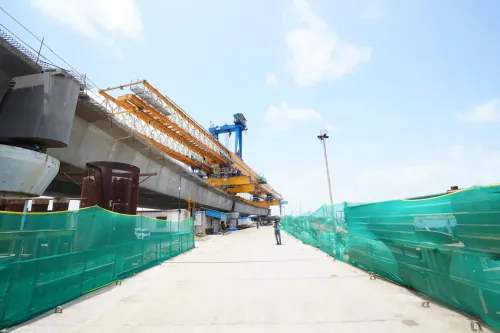
The Nashik Ring Road is a circumferential highway project aimed at easing congestion and boosting industrial connectivity to Mumbai and Pune .
Nashik district is a key agricultural zone known for grape and onion farming, making land acquisition politically sensitive.
Similar ring-road projects in Pune and Nagpur have required compensation revisions and alignment changes to resolve farmer disputes.
Updates on compensation packages and revised alignment notifications are expected at upcoming Maharashtra cabinet meetings or budget sessions.
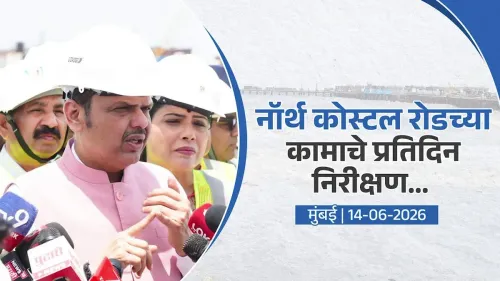
The Chief Minister's Office of Maharashtra on Saturday, 11 July 2026 directed Chief Minister Devendra Fadnavis to prioritise resolving farmers' concerns and complete the long-pending Nashik Ring Road project, underscoring the state government's focus on balancing infrastructure development with agricultural interests in Nashik district.
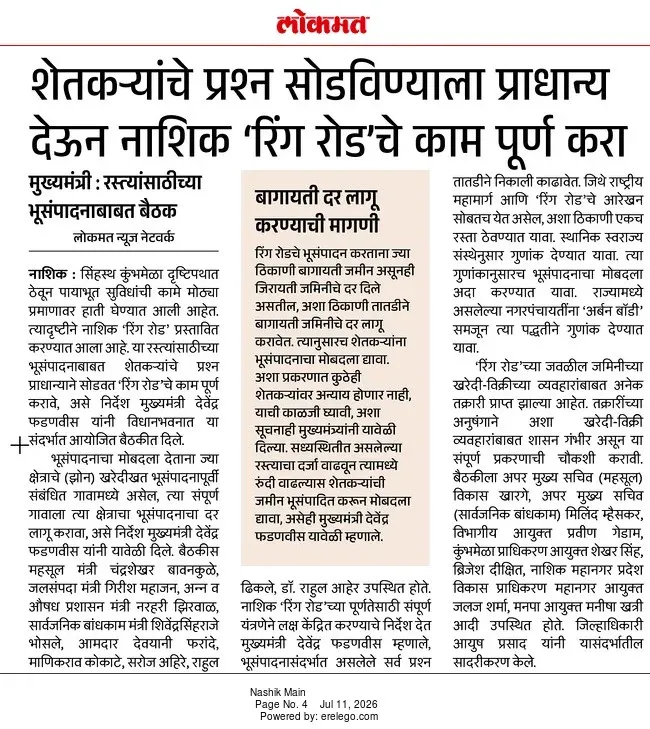
The post, addressed to @CMOMaharashtra and tagging @Dev_Fadnavis, stated in Marathi: 'शेतकऱ्यांचे प्रश्न सोडविण्याला प्राधान्य देऊन नाशिक रिंग रोडचे काम पूर्ण करा' — 'Give priority to resolving farmers' issues and complete the work on the Nashik Ring Road.'
Context
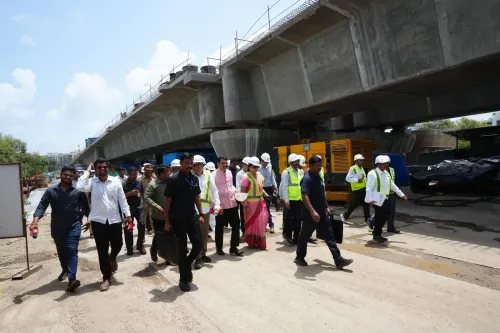
The Nashik Ring Road is a proposed circumferential highway designed to ease traffic congestion around Nashik city, one of Maharashtra's most economically significant tier-2 cities. The project is intended to improve freight connectivity to Mumbai and Pune, and to support the industrial zones emerging on Nashik's periphery. However, like many large-scale road projects in the state, it has intersected with the livelihoods of farming communities whose land falls within the proposed alignment.
Nashik district is a major hub for grape and onion cultivation, making agricultural land particularly sensitive to acquisition. The directive from the Chief Minister's Office signals that farmer grievances around land acquisition remain a live political and administrative issue that must be addressed before the project can advance.
Policy Backdrop
Maharashtra governments have pursued ring-road and expressway projects for tier-2 cities since the early 2010s, viewing them as instruments of urban expansion and economic growth. Similar proposals in Pune and Nagpur have encountered comparable friction with farming communities, requiring compensation package revisions and alignment adjustments before work could proceed.
Chief Minister Devendra Fadnavis, a BJP leader who has served multiple terms at the helm of Maharashtra, has consistently placed urban infrastructure at the centre of his administrative agenda. The public directive from his own office reflects the pressure on the government to deliver on infrastructure commitments while managing agrarian discontent — a balance that has defined state politics for years.
Stakeholders and Impact
The project's primary stakeholders include Nashik farmers whose agricultural holdings lie along the proposed ring-road corridor, urban commuters and local transporters who stand to benefit from reduced congestion, and industrial units seeking smoother freight movement. Resolving land-acquisition disputes is widely seen as the critical bottleneck that determines whether the project advances or stalls further.
For farming communities, the stakes are high: Nashik's grape and onion belts represent significant household income, and inadequate compensation or forced displacement can trigger sustained agitation. The Chief Minister's Office directive explicitly places farmer concerns ahead of construction timelines, a sequencing that carries both administrative and political weight.
What's Next
Observers will watch for updates on land-acquisition compensation packages and any revised alignment notifications, which are typically tabled at state cabinet meetings or announced during budget sessions. A formal response from Chief Minister Fadnavis or the state's Public Works Department outlining a timeline and a farmer-outreach mechanism is now expected following this public directive.
The directive sets a clear political signal: the Maharashtra government intends to move the Nashik Ring Road forward, but not at the cost of unresolved agrarian grievances — a posture that will be tested in the months ahead as land negotiations resume and construction schedules are revisited.
Point of View
The CMO is signalling political caution ahead of what could be a contentious land-acquisition phase — a pattern seen across Maharashtra's tier-2 city ring-road projects. For Fadnavis, who has built his brand on infrastructure delivery, the Nashik Ring Road is both an opportunity and a liability: completing it reinforces his legacy, but mishandling farmer negotiations could cost the BJP in an agriculturally dominant district. The public framing also serves as accountability — placing the directive on record makes it harder to defer the project without political cost.
NationPress
11 Jul 2026
Frequently Asked Questions
What is the Nashik Ring Road project?
The Nashik Ring Road is a proposed circumferential highway around Nashik city in Maharashtra , designed to ease urban traffic congestion, improve freight movement, and boost connectivity to Mumbai and Pune .
Why are farmers concerned about the Nashik Ring Road?
The ring road's proposed alignment passes through agricultural land in Nashik district , a major grape and onion farming belt. Farmers are concerned about land acquisition terms, compensation adequacy, and potential displacement from their primary source of income.
What did the Chief Minister's Office of Maharashtra say about the Nashik Ring Road?
On 11 July 2026 , the Chief Minister's Office of Maharashtra publicly directed CM Devendra Fadnavis to give priority to resolving farmers' issues and to complete the Nashik Ring Road project.
Who is Devendra Fadnavis?
Devendra Fadnavis is a BJP leader who has served multiple terms as Chief Minister of Maharashtra . He is known for prioritising urban infrastructure and road connectivity projects across the state.
When will the Nashik Ring Road be completed?
No official completion date has been confirmed as of July 2026 . The project's progress depends on resolving land-acquisition disputes with farmers, and updates are expected at forthcoming Maharashtra cabinet meetings or budget sessions.