Coimbatore farmers allege cast iron unit is destroying crops and groundwater
Synopsis
Farmers in two Coimbatore villages say a nearby cast iron unit has been silently destroying their crops, contaminating groundwater, and sickening their families — often under cover of night and holidays. Despite years of petitions, authorities have repeatedly visited and left without a fix. Now residents are demanding a formal investigation and immediate action.
Key Takeaways
Farmers from Appanaickenpatti and Karadivavi in Sulur taluk, Coimbatore allege a cast iron unit is causing air and groundwater pollution.
Residents report health issues including eye, nose, and throat irritation, persistent coughing, and alleged livestock deaths .
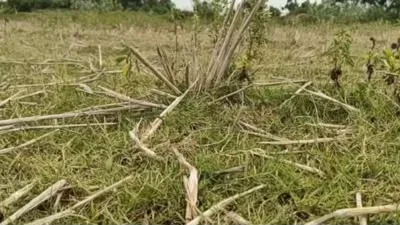
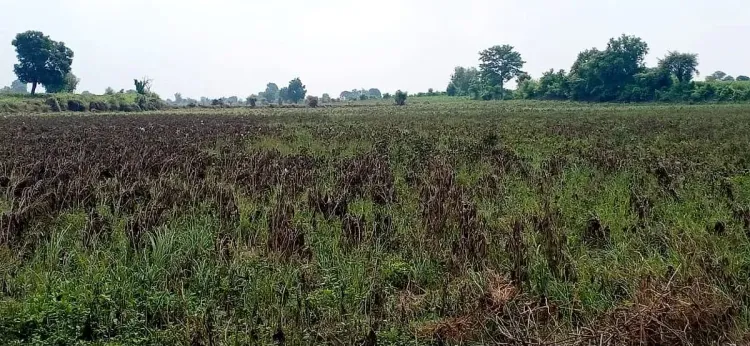
Farmer Sundara Pandyan says crops on his three-acre plot, 200 metres from the unit, have repeatedly withered over the past decade.
Farmers spend around ₹50,000 per acre on cultivation and have suffered repeated financial losses due to crop damage.
Emissions are allegedly worst during night hours, Sundays, and government holidays .
Residents are urging the Coimbatore district administration and Tamil Nadu Pollution Control Board to investigate and act immediately.
Farmers from Appanaickenpatti and Karadivavi villages in Sulur taluk, Coimbatore district, Tamil Nadu, on Saturday, 8 August raised urgent concerns over alleged air and groundwater pollution from a nearby cast iron unit. Residents claim that toxic emissions from the facility have damaged crops, threatened livelihoods, and harmed public health across the two villages for several years.
What Residents Are Alleging
According to affected farmers, smoke and foul-smelling emissions from the casting unit have made it difficult for people in surrounding agricultural areas to breathe. They allege the pollution is worst during night hours, Sundays, and government holidays — periods when regulatory oversight is reportedly minimal.
Residents have reported a range of health complaints including eye, nose, and throat irritation, persistent coughing, sore throat, and psychological distress. They also allege that livestock deaths have occurred in the area as a result of prolonged exposure.
Farmers Detail Crop and Financial Losses
Farmer P. Ramakrishnan said agricultural activities in the locality had been severely disrupted and that groundwater sources had also become contaminated. 'Our crops are being destroyed because of the toxic emissions. Groundwater has also been affected, and we are unable to breathe freely. We have submitted several petitions to government authorities, but no permanent solution has been provided,' he said.
Ramakrishnan also alleged that land brokers were pressuring farmers to sell their agricultural properties, compounding the distress of families dependent on farming.
Another farmer, Sundara Pandyan, who cultivates tomato and chilli on three acres located approximately 200 metres from the industrial unit, said his crops had repeatedly withered over the past decade during heavy emission events. He noted that farmers spend around ₹50,000 per acre on cultivation, and that repeated crop damage had resulted in substantial financial losses.
'Officials from the Pollution Control Board and Revenue Department visit the area whenever we submit petitions, but the problem continues without any lasting remedy,' Pandyan said.
Broader Impact on Land and Trees
Farmers further alleged that industrial emissions had damaged trees on agricultural land, reducing property values and repeatedly disrupting cultivation cycles. They said years of representations to multiple government departments had failed to produce any durable solution.
What Farmers Are Demanding
The affected residents have urged the Coimbatore district administration and Tamil Nadu Pollution Control Board to conduct a thorough investigation and take immediate steps to curb the alleged emissions. They have also called for urgent measures to prevent further contamination of groundwater and to protect the health, agricultural land, and livelihoods of residents in Appanaickenpatti and Karadivavi.
This comes amid growing scrutiny of industrial pollution in peri-urban agricultural zones across Tamil Nadu, where rapid industrialisation has placed farming communities under increasing environmental stress. Whether the authorities will act decisively — or offer another round of visits without resolution — remains to be seen.
Point of View
Allegations that intensify during off-hours when inspectors are absent, and farmers under simultaneous pressure from industrial pollution and land brokers. Tamil Nadu's Pollution Control Board has the legal authority to seal non-compliant units, yet the farmers' own account suggests years of complaints have yielded only cyclical visits. If the groundwater contamination allegation is verified, the stakes extend well beyond crop losses — aquifer damage in agricultural zones can take decades to reverse. The district administration's response to this specific complaint will be a test of whether environmental enforcement in peri-urban Tamil Nadu is reactive theatre or genuine accountability.
NationPress
23 Sept 2026
Frequently Asked Questions
What are Coimbatore farmers alleging against the cast iron unit?
Farmers from Appanaickenpatti and Karadivavi villages in Sulur taluk allege that a nearby cast iron unit is releasing toxic smoke and foul-smelling emissions that have damaged crops, contaminated groundwater, and caused health problems including respiratory issues and livestock deaths. They say the problem has persisted for several years despite multiple petitions to authorities.
How severe are the financial losses for affected farmers?
Farmers reportedly spend around ₹50,000 per acre on cultivation. Farmer Sundara Pandyan, who grows tomato and chilli on three acres about 200 metres from the unit, says his crops have repeatedly withered over the past decade during heavy emission events, resulting in substantial cumulative losses.
When is the pollution allegedly at its worst?
Farmers allege that emissions from the casting unit are particularly severe during night hours, Sundays, and government holidays — periods when regulatory monitoring is reportedly reduced.
What action are farmers demanding?
The affected residents are urging the Coimbatore district administration and the Tamil Nadu Pollution Control Board to conduct a detailed investigation, take immediate steps to control emissions, and prevent further groundwater contamination to protect the health and livelihoods of residents in both villages.
Have authorities responded to earlier complaints?
According to farmers, officials from the Pollution Control Board and Revenue Department have visited the area in response to previous petitions, but no lasting remedy has been implemented. Residents say the problem has continued unresolved for several years despite repeated representations to multiple government departments.