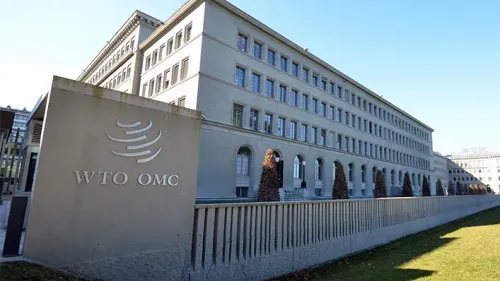
India's exports hit record $863 bn; Commerce Secretary flags resilient growth at WTO review
Synopsis
India walked into its 8th WTO Trade Policy Review in Geneva with a headline number that demands attention: $863.1 billion in exports for 2025-26, a record, backed by near-8% annual growth through one of the most turbulent global periods in decades. The review also marked India formally accepting the WTO Fisheries Subsidies Agreement — a signal of deepening multilateral engagement at a time when global trade rules are under strain.
Key Takeaways
India's exports reached a record $863.1 billion in 2025-26 , as disclosed at the WTO 8th Trade Policy Review in Geneva on 22 July .
Commerce Secretary Rajesh Agarwal reported average annual GDP growth of nearly 8 per cent during the review period ( January 2021 – December 2025 ).
India formally accepted the WTO Agreement on Fisheries Subsidies , depositing its Instrument of Acceptance the day before the review.
Key domestic reforms cited include the Jan Vishwas Initiative , digital customs, logistics modernisation, and Digital Public Infrastructure (DPI) .
TPRB Chair Ambassador Nelle Pepe Tavita Levy recognised India's leadership in digitally delivered services exports and its progress toward Viksit Bharat 2047 .
WTO members highlighted India's efforts to integrate MSMEs into global value chains as a standout development achievement.
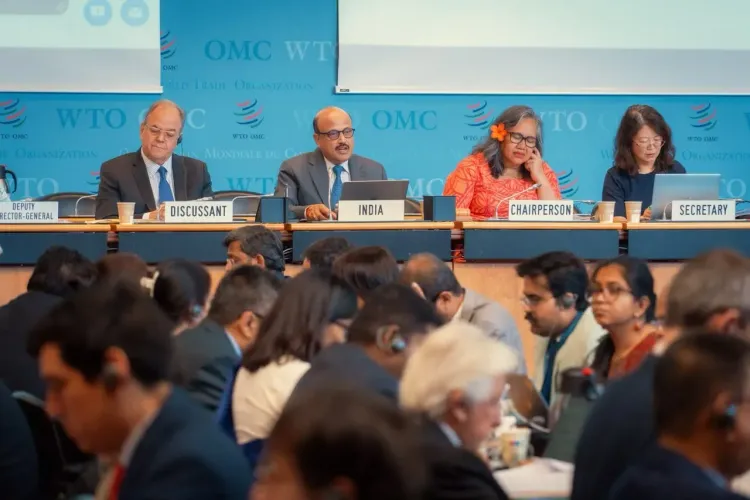
India's merchandise and services exports reached a record $863.1 billion in 2025-26, Commerce Secretary Rajesh Agarwal announced at the country's 8th Trade Policy Review (TPR) before the World Trade Organisation (WTO) in Geneva on 22 July. Agarwal underscored that India sustained an average annual growth rate of nearly 8 per cent through the review period despite a turbulent global environment marked by supply chain disruptions and rising protectionism.
Key Developments at the WTO Review
The Trade Policy Review, which assessed India's trade and related policies from 1 January 2021 to 31 December 2025, served as a platform for India to reaffirm its commitment to a balanced, rules-based, development-oriented, and transparent multilateral trading system. Agarwal described India's challenge as 'advancing the prosperity of nearly one-fifth of humanity amid global uncertainty, technological disruption, supply chain realignments and rising protectionism.'
Several WTO member nations recalled the depth of their trade and economic ties with India, broadly commending the country's constructive engagement in multilateral forums and its demonstrated economic resilience over the review period.
Reforms India Highlighted
Agarwal presented a wide-ranging slate of domestic policy actions undertaken during the review period. These included structural reforms under the Jan Vishwas Initiative, trade facilitation upgrades, digital customs modernisation, logistics infrastructure improvements, and the expansion of Digital Public Infrastructure (DPI). India also highlighted its push in artificial intelligence, innovation, and sustainability, alongside agricultural resilience programmes and the broadening of regional trade agreements.
Inclusive development initiatives — particularly South-South Cooperation and the Indian Technical and Economic Cooperation (ITEC) Programme — were also cited as pillars of India's trade and development strategy.
WTO Chair's Assessment
Trade Policy Review Body (TPRB) Chair Ambassador Nelle Pepe Tavita Levy welcomed the Indian delegation and acknowledged India's standing as one of the fastest-growing major economies, noting its trajectory toward the Viksit Bharat vision by 2047. Levy specifically recognised India's leadership in digitally delivered services exports and DPI-driven financial inclusion reforms.
According to an official statement, Levy also welcomed India's acceptance of the WTO Agreement on Fisheries Subsidies, marked by the deposition of its Instrument of Acceptance the previous day. She described India's timely responses to all advance written questions as a demonstration of transparency under the Trade Policy Review Mechanism.
Broader Significance
This comes amid a period of heightened global trade tensions, with protectionist measures proliferating across major economies. India's record export figure and near-8% growth rate position it as one of the few large economies to have maintained momentum through successive global shocks — from the pandemic aftershocks to geopolitical realignments. WTO members also highlighted India's efforts to integrate MSMEs into global value chains as a model for developing-economy participation in international trade.
India's next steps at the WTO will likely centre on advancing its positions on fisheries subsidies implementation, e-commerce negotiations, and the reform agenda for the dispute settlement mechanism — areas where New Delhi's stance carries significant weight for the Global South.
Point of View
But the headline obscures important texture: how much of that growth is services versus goods, and how resilient are those gains against a dollar that has been structurally stronger through this period? India's near-8% growth average is credible, but the WTO forum is also a diplomatic stage — the real test of India's multilateral commitment will come in the harder negotiations on e-commerce rules and dispute settlement reform, where New Delhi's positions have historically been defensive. The acceptance of the Fisheries Subsidies Agreement is a meaningful signal, but India's broader engagement on subsidy disciplines remains cautious. Geneva applause is easier to earn than binding reform at home.
NationPress
22 Jul 2026
Frequently Asked Questions
What is India's WTO Trade Policy Review and when did it take place?
India's 8th Trade Policy Review (TPR) is a formal assessment by WTO members of India's trade and related policies, covering the period from 1 January 2021 to 31 December 2025. It took place in Geneva on 22 July, providing WTO members an opportunity to examine India's trade framework and economic performance.
What was India's export figure for 2025-26?
India's exports reached a record $863.1 billion in 2025-26, as highlighted by Commerce Secretary Rajesh Agarwal at the WTO review. This figure was presented as evidence of the country's economic resilience despite a challenging global environment.
What is the WTO Agreement on Fisheries Subsidies and why does India's acceptance matter?
The WTO Agreement on Fisheries Subsidies is a multilateral accord aimed at curbing harmful subsidies that contribute to overfishing and illegal fishing practices. India deposited its Instrument of Acceptance the day before the Trade Policy Review, a step welcomed by TPRB Chair Ambassador Nelle Pepe Tavita Levy as a sign of India's commitment to the multilateral trading system.
What domestic reforms did India present at the WTO review?
India highlighted reforms under the Jan Vishwas Initiative, digital customs modernisation, logistics upgrades, Digital Public Infrastructure (DPI), and the expansion of regional trade agreements. Inclusive development programmes such as South-South Cooperation and the Indian Technical and Economic Cooperation (ITEC) Programme were also cited.
How did other WTO members respond to India's Trade Policy Review?
Several WTO members praised India's constructive engagement in the multilateral trading system and its strong economic resilience. They specifically highlighted India's Digital Public Infrastructure achievements, customs facilitation modernisation, startup and innovation initiatives, and efforts to integrate MSMEs into global value chains.