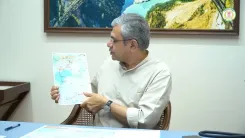
Punjab Police raids 646 locations on day 182 of Gangsteran Te Vaar

Synopsis
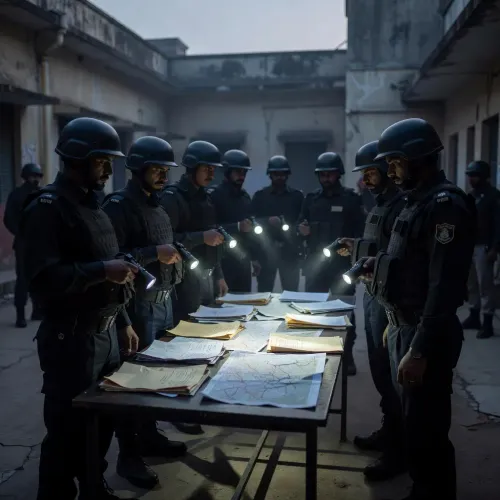
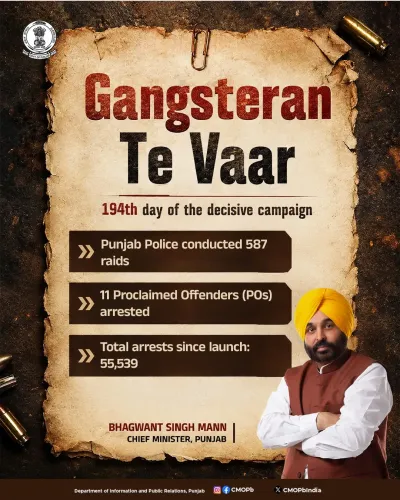
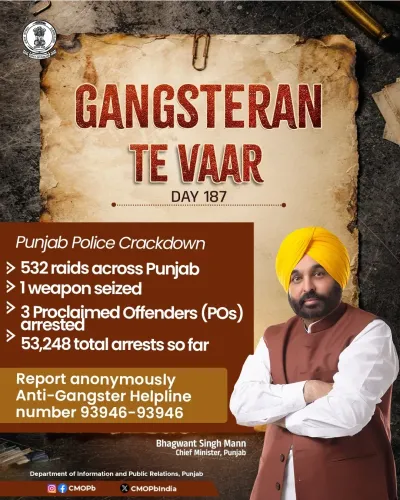
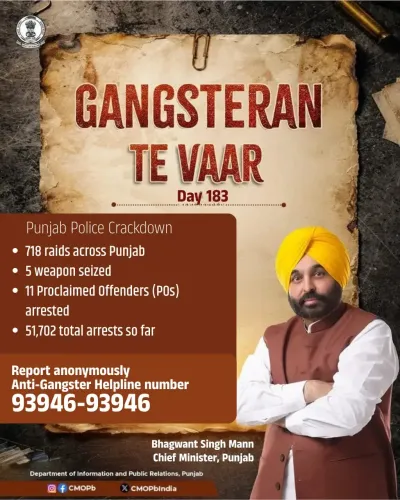
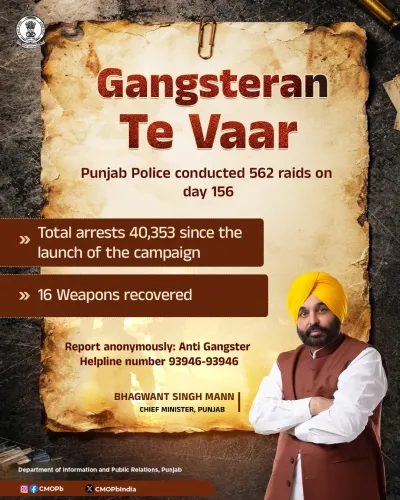
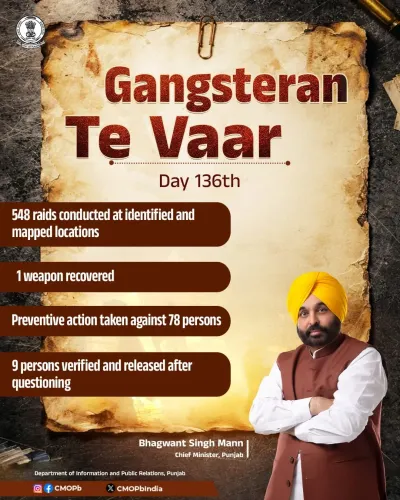
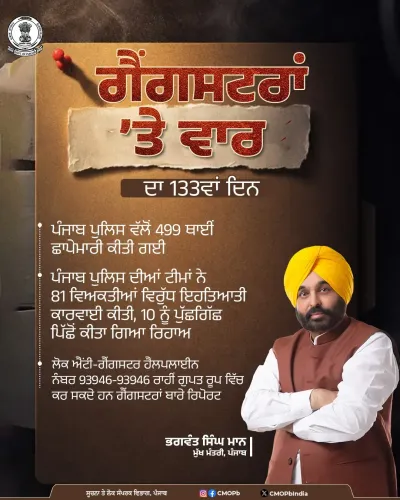
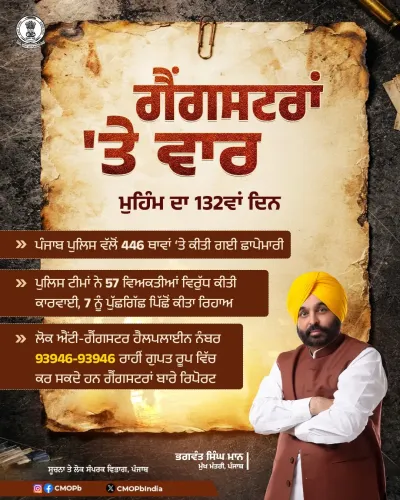
Punjab Police raided 646 mapped locations tied to gangster associates on day 182 of the Gangsteran Te Vaar campaign, lifting total arrests since the drive's launch to 51,256, the Chief Minister's Office announced on 22 July 2026.
Key Takeaways
646 raids were conducted simultaneously across Punjab on 22 July 2026 , the 182nd day of the Gangsteran Te Vaar campaign.
Cumulative arrests since the campaign's launch have reached 51,256 .
Raid locations were pre-identified and geo-mapped by Punjab Police intelligence units, reflecting a data-driven enforcement approach.
The campaign targets not only principal gangsters but also their broader associate networks involved in extortion, narcotics, and contract killings.
The drive was initiated under Chief Minister Bhagwant Mann's AAP government, which took office in March 2022 with a stated focus on curbing organised crime.
Future steps to watch include disaggregated crime data releases and potential state assembly legislation on gang-linked property attachment.
The Chief Minister's Office of Punjab announced on Wednesday, 22 July 2026 that Punjab Police conducted 646 simultaneous raids across the state as the anti-gangster drive Gangsteran Te Vaar ('Strike Against Gangsters') entered its 182nd day, pushing cumulative arrests since the campaign's launch to 51,256.
Context
The CMO's post states that police teams raided 646 identified and mapped locations linked to associates of gangsters across Punjab. The coordinated sweep resulted in fresh arrests, adding to a total that now stands at 51,256 since the campaign began. The office described the operation as part of the 'decisive' Gangsteran Te Vaar campaign — a phrase used consistently in official communications to underscore its sustained, data-driven character.
The raids targeted sites that had been pre-identified and geo-mapped by police intelligence units, reflecting a methodology that goes beyond reactive policing toward systematic network disruption.
Policy Backdrop
When Chief Minister Bhagwant Mann and the Aam Aadmi Party government took office in March 2022, tackling organised crime was a central plank of their governance agenda. Punjab had for years grappled with entrenched gang networks involved in extortion, contract killings, and narcotics trafficking — problems that periodically drew national attention.
The Gangsteran Te Vaar campaign emerged from that commitment, deploying a mapping-and-raid model designed to dismantle not just individual criminals but the broader associate networks that sustain gang operations. Periodic public updates from the CMO's office have been a consistent feature of the campaign, signalling both operational transparency and political ownership of the drive.
Stakeholders and Impact
The most immediate impact falls on individuals identified as associates of gangsters — a category that, by definition, extends beyond principal offenders to logistics providers, financiers, and shelter networks. The scale of 51,256 arrests over roughly six months indicates a broad enforcement net, though the breakdown between principal accused and associates has not been specified in the official update.
Punjab Police personnel across multiple districts are the operational backbone of the campaign. For residents in areas historically affected by gang activity — including parts of Amritsar, Ludhiana, Mohali, and Bathinda — sustained enforcement action has direct implications for everyday security conditions.
What's Next
The CMO's office has made regular milestone updates a visible part of the campaign's public communication, and further updates are expected as the operation continues. Analysts tracking Punjab's law-and-order situation will watch for the release of disaggregated crime statistics by Punjab Police that could shed light on conviction rates and the long-term deterrent effect of the arrests.
There is also legislative attention to monitor: the state assembly may consider measures to strengthen attachment of gang-linked properties, a step that would complement arrest-based enforcement with economic disruption of criminal networks. The trajectory of Gangsteran Te Vaar will likely remain a key political and governance benchmark for the Mann government through the remainder of its term.
Point of View
Directly addressing Punjab's long-standing reputation as a state burdened by gang and drug networks. The geo-mapping methodology signals a shift from reactive policing toward intelligence-led disruption — a model that, if sustained, could reshape how state governments approach organised crime. The critical test, however, will be whether arrest volumes translate into durable reductions in gang activity, a question that conviction rates and post-release recidivism data will ultimately answer.
NationPress
21 Oct 2026
Frequently Asked Questions
What is the Gangsteran Te Vaar campaign in Punjab?
Gangsteran Te Vaar ('Strike Against Gangsters') is a sustained Punjab Police operation launched by the Bhagwant Mann government to identify, map, and raid locations linked to gangsters and their associates across the state, with the goal of dismantling organised crime networks.
How many arrests have been made in the Gangsteran Te Vaar campaign?
As of 22 July 2026 — the campaign's 182nd day — cumulative arrests since the launch of Gangsteran Te Vaar stand at 51,256 , according to the Chief Minister's Office of Punjab.
How many raids did Punjab Police conduct on 22 July 2026?
Punjab Police conducted 646 raids on 22 July 2026 , targeting pre-identified and geo-mapped locations linked to associates of gangsters across the state.
Who is leading the anti-gangster drive in Punjab?
The operation is conducted by Punjab Police under the political oversight of Chief Minister Bhagwant Mann and his Aam Aadmi Party government, which has made tackling organised crime a flagship governance priority since taking office in March 2022.
Why does Punjab have a problem with gangsters?
Punjab has historically faced entrenched gang networks involved in extortion, contract killings, and narcotics trafficking. Porous borders, a history of militancy-era arms proliferation, and cross-border drug smuggling routes have contributed to the persistence of organised crime in the state.