Punjab CMO: 499 raids on Day 133 of Gangsteran Te Vaar drive
Synopsis
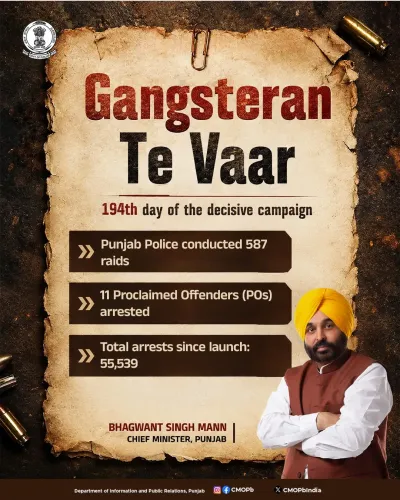
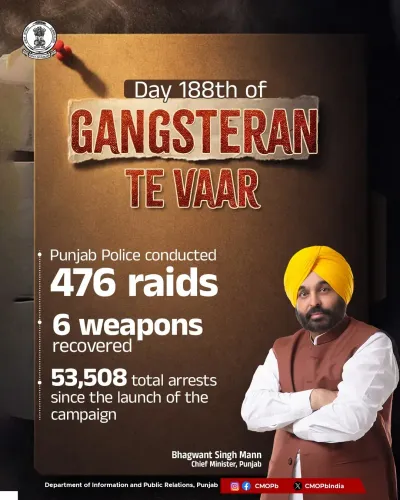
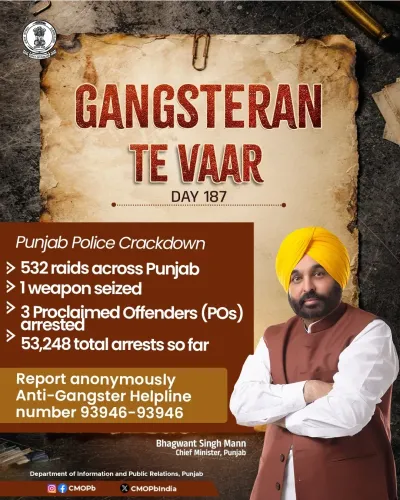
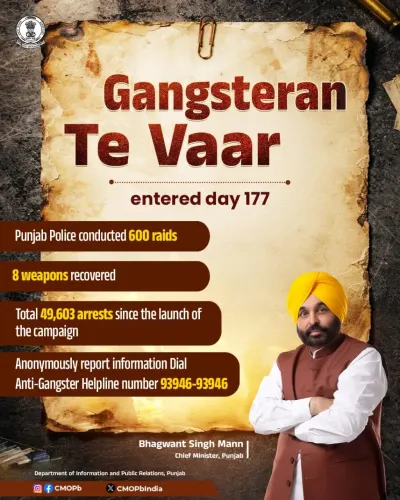
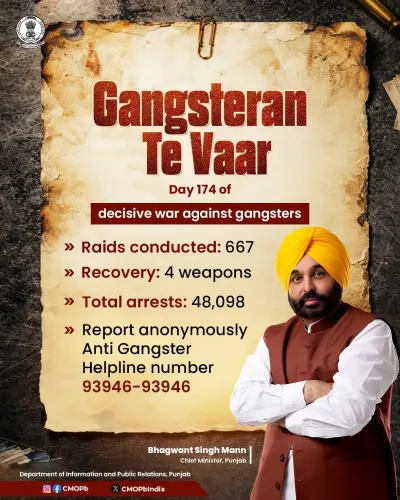
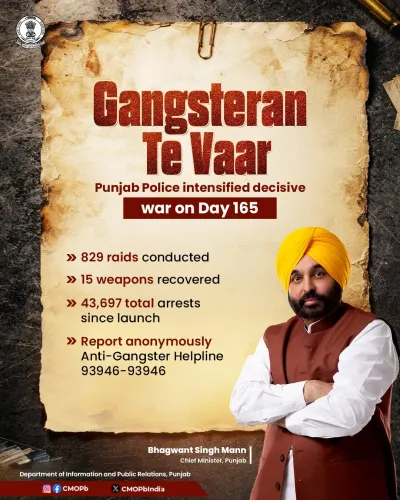
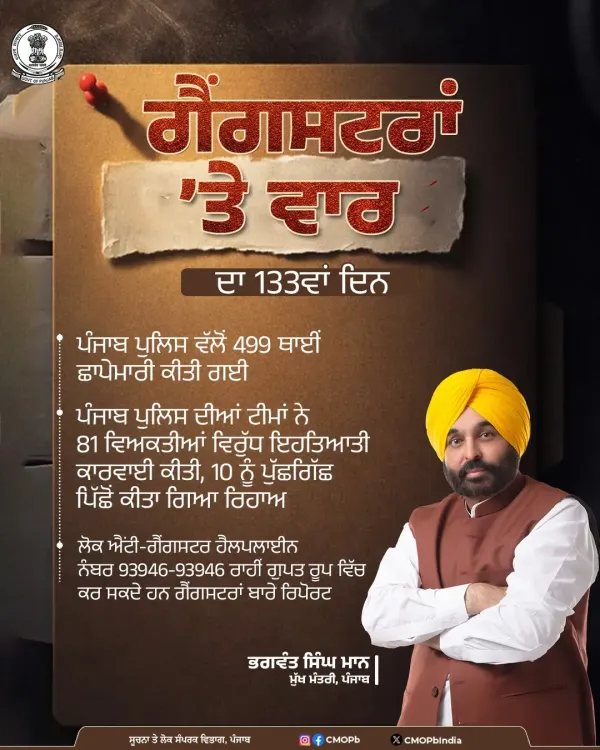
The Chief Minister's Office of Punjab said Punjab Police carried out 499 raids on Day 133 of the Gangsteran Te Vaar campaign, recovering two weapons and pushing cumulative arrests since launch to 33,340 as the intelligence-led drive against gangster associates continues across the state.
Key Takeaways
Punjab Police conducted 499 raids on Day 133 of the Gangsteran Te Vaar campaign.
Two weapons were recovered during the day's operations.
Cumulative arrests since the campaign's launch have reached 33,340 .
Raids targeted mapped locations linked to associates of gangsters across the state.
The drive is a flagship law-and-order initiative of the Bhagwant Mann government.
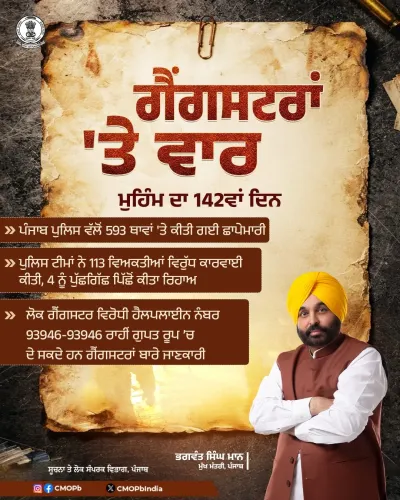
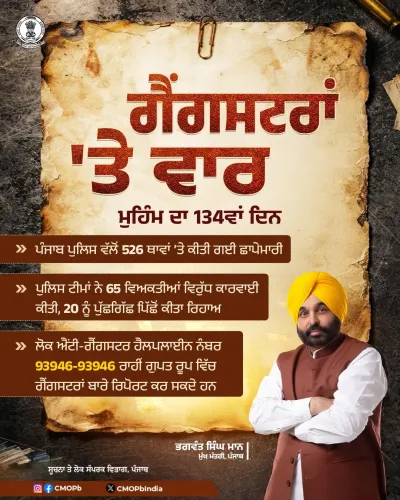
The Chief Minister's Office of Punjab on Wednesday, 3 June 2026, announced that the state's ongoing anti-gangster campaign, 'Gangsteran Te Vaar' (War on Gangsters), conducted 499 raids across mapped locations on its 133rd day. The update said Punjab Police teams recovered two weapons during the day's operations and that cumulative arrests since the campaign's launch have climbed to 33,340.
In its post, the CMO said the raids targeted 'identified and mapped locations linked to associates of gangsters across the state', framing the drive as a 'decisive' operation. The hashtags #GangsteranTeVaar and #CMOPunjab accompanied the bilingual Punjabi-English announcement.
Context
The daily bulletin format used by the Chief Minister's Office of Punjab has become a recognisable feature of the campaign, with the state government issuing day-wise tallies of raids, recoveries and arrests. Day 133 continues that template, foregrounding location mapping and associate networks rather than only headline arrests of named gangsters.
The recovery of two weapons on a single day, set against 499 raids, suggests the operation is focused as much on disrupting logistical and financial networks of gangs as on seizing arsenals. Officials have previously described the strategy as one of sustained pressure on the ecosystem that supports organised crime in Punjab.
Policy backdrop
The campaign sits within the broader law-and-order agenda of the Bhagwant Mann government, which took office in 2022 after the Aam Aadmi Party's sweep of the Punjab assembly elections. Action against gangsters, drug syndicates and extortion rackets has been a stated governance priority for the administration.
Punjab has long contended with organised crime networks linked to extortion, contract killings and narcotics trafficking, often with cross-border and overseas handlers. The state's response has increasingly relied on intelligence-led mapping of suspects and their associates, with repeated raids intended to deny safe havens.
Similar data-driven anti-mafia drives have been mounted in other Indian states grappling with entrenched local syndicates, though Punjab's combination of border geography and diaspora linkages gives the challenge a distinct profile.
Stakeholders and impact
For residents, the visible cadence of daily raids is intended to signal that the state is engaging organised crime at scale. The cumulative figure of 33,340 arrests cited by the CMO points to a wide net that extends beyond top-tier gangsters to associates, harbourers and financial facilitators.
For the police, the campaign has shifted operational rhythm towards near-daily, multi-district action. Coordinating 499 raids on a single day requires sustained input from intelligence units, district police and specialised teams.
For the gangster networks themselves, the repeated raids on mapped locations are designed to erode operational safe spaces, disrupt communications and squeeze recruitment among low-level operatives.
What's next
Key questions will turn on what follows the arrests: charge sheets filed, conviction rates secured, and assets attached or recovered. The credibility of any long-running anti-crime drive ultimately rests on judicial outcomes rather than on raid counts alone.
Observers will also watch for any legislative moves in the Punjab assembly to strengthen anti-gang provisions, as well as for the government's framing of the campaign as it crosses further milestones. For now, the Chief Minister's Office of Punjab appears committed to a high-visibility, daily-update model that keeps the operation in steady public view.
Point of View
Keeping the law-and-order narrative in steady public view. The numbers, 499 raids and a cumulative 33,340 arrests, signal scale, but the meaningful test lies downstream in charge sheets, convictions and asset recoveries. The campaign fits a wider Indian pattern of intelligence-mapped, sustained anti-mafia drives at the state level. Whether it translates into structural disruption of Punjab's gang ecosystem will depend on judicial follow-through and any legislative reinforcement.
NationPress
22 Sept 2026
Frequently Asked Questions
What is the Gangsteran Te Vaar campaign in Punjab?
Gangsteran Te Vaar, meaning 'War on Gangsters', is an ongoing Punjab Police campaign targeting gangsters and their associates through raids, weapon recoveries and arrests at mapped locations across the state.
How many arrests has Punjab Police made under the Gangsteran Te Vaar drive?
According to the Chief Minister's Office of Punjab, cumulative arrests under the campaign have reached 33,340 since its launch, with 499 fresh raids conducted on Day 133.
What happened on Day 133 of the Punjab anti-gangster campaign?
On Day 133, Punjab Police conducted 499 raids on identified and mapped locations linked to gangster associates across the state and recovered two weapons during the operations.
Who is leading the anti-gangster drive in Punjab?
The drive is a flagship law-and-order initiative under Chief Minister Bhagwant Mann's government, executed by Punjab Police and publicised through daily bulletins from the Chief Minister's Office of Punjab.
What does Gangsteran Te Vaar mean?
Gangsteran Te Vaar is a Punjabi phrase that translates to 'War on Gangsters' or 'Strike on Gangsters', and is the official name of the Punjab Police's sustained campaign against organised crime networks.