Congress losing elections since Rahul became its face in 2014: Sharmistha Mukherjee
Synopsis
Pranab Mukherjee's daughter Sharmistha has called Congress's electoral slide since 2014 a direct 'failure' of Rahul Gandhi — and accused him of treating politics as a part-time pursuit. Coming from a former Congress insider, the critique carries unusual weight and surfaces the party's deeper structural crisis ahead of 2029.
Key Takeaways
Sharmistha Mukherjee said Congress has lost elections consistently since Rahul Gandhi became its face in 2014 , calling it his personal 'failure.' She criticised Rahul Gandhi for a pattern of 'disappearing' after campaigns, citing the absence during the first anniversary of the Bharat Jodo Yatra .
She argued Congress prioritises alliance-building over internal strengthening, leaving it unable to win on its own strength.
Congress won 99 seats in the 2024 Lok Sabha elections; Mukherjee declined to speculate on 2029 prospects.
PM Modi was credited with delivering political stability over 12 years , including through initiatives like Digital India .
Mukherjee defended Jawaharlal Nehru 's legacy, calling him a visionary whose institution-building remains an undeniable contribution.
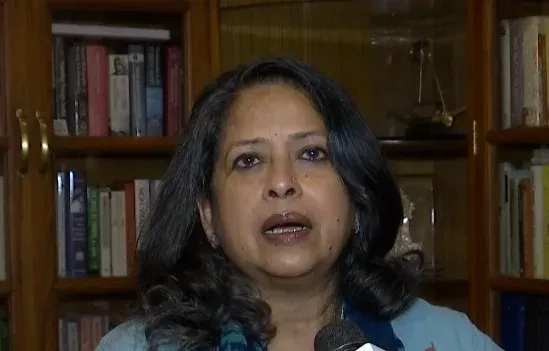
Sharmistha Mukherjee, daughter of former President Pranab Mukherjee, has delivered a pointed critique of Rahul Gandhi's leadership, arguing that the Indian National Congress (INC) has been on a sustained electoral decline since he emerged as its primary face in 2014. Speaking in an interview from Gurugram on 28 June, she called this trajectory a 'failure' on Rahul Gandhi's part and raised questions about his commitment to politics as a full-time vocation.
On Rahul Gandhi's Electoral Record
Mukherjee was unsparing in her assessment of the Congress leader. 'Rahul Gandhi has been the face of Congress since 2014. And, since 2014, Congress has been losing elections one after another,' she said. 'PM Narendra Modi is a mass leader. His popularity can be seen from his mandate. Rahul Gandhi is not able to bring his mandate to Congress. This is a failure of Rahul Gandhi.'
She also took aim at what she described as a pattern of political disengagement, noting that Rahul Gandhi tends to 'disappear' after high-profile initiatives. 'Where was he during the first anniversary of Bharat Jodo Yatra? Politics is a 24-hour, 365-day job,' she said. 'You come and then go out after two days. You do some rallies, meet some people and then you go out. So, according to me, politics is not like this.'
Congress's Organisational Weakness
Beyond Rahul Gandhi's personal performance, Mukherjee pointed to a deeper structural problem within the Congress. She said the party has historically prioritised alliance-building over internal strengthening. 'Even when I worked in Congress, it was just focused on how to win by forming alliances, not by strengthening the organisation. They don't have the encouragement to win on their own strength,' she observed.
On the prospects for 2029, she declined to speculate. She acknowledged that Congress won 99 seats in the 2024 Lok Sabha elections and that the Bharat Jodo Yatra yielded results, but argued that episodic momentum cannot substitute for sustained organisational work.
Praise for PM Modi's Stability
Mukherjee credited Prime Minister Narendra Modi with delivering political stability over the past 12 years — a quality she contrasted with the coalition-era instability that preceded him. 'Narendra Modi has been successful in giving a strong and stable Central government to the country,' she said, citing the Digital India initiative as a tangible example of policy delivery, including enabling digital payments in remote villages.
She was careful to add that every Prime Minister has contributed to the country's development and that historical comparison between leaders is not straightforward. 'History will judge the strengths and shortcomings of each leader,' she noted.
On Pranab Mukherjee and the 2014 Mandate
Mukherjee recalled her father Pranab Mukherjee's view that Prime Minister Modi became 'the country's first directly elected Prime Minister in the true sense' in 2014 — a reference to the fact that voters knew explicitly that a Bharatiya Janata Party (BJP) victory would install Modi as Prime Minister, making his mandate both partisan and personal. She noted that Pranab Mukherjee held significant responsibilities under both UPA 1 and UPA 2 governments and had a productive working relationship with Sonia Gandhi, while declining to second-guess the choice of Dr Manmohan Singh as Prime Minister in 2004.
On Nehru's Legacy
Asked about Jawaharlal Nehru's historical portrayal, Mukherjee defended his legacy, saying he deserves 'full credit for the roots of democracy in India.' She described him as a 'visionary' and 'statesman' whose scientific temperament and institution-building remain undeniable contributions to post-independent India.
Mukherjee's remarks add to a growing body of internal and former-insider criticism of the Congress's leadership model — and arrive at a moment when the party is navigating a string of state-level contests ahead of the next general election cycle.
Point of View
Because it points to a culture, not just a person. The Congress's challenge heading into 2029 is not finding a face; it is rebuilding a machine.
NationPress
28 Jun 2026
Frequently Asked Questions
Why does Sharmistha Mukherjee call Rahul Gandhi's tenure a 'failure'?
Sharmistha Mukherjee argues that since Rahul Gandhi became the face of Congress around 2014, the party has lost elections consistently, failing to secure a decisive mandate. She says this electoral record constitutes a personal failure of leadership on his part.
What did Sharmistha Mukherjee say about Rahul Gandhi's political commitment?
She accused Rahul Gandhi of a recurring 'disappearing act' after major political initiatives, pointing to his absence during the first anniversary of the Bharat Jodo Yatra. She stressed that politics is a '24-hour, 365-day job' that cannot be treated as episodic.
What is Sharmistha Mukherjee's view on Congress's organisational strength?
She said Congress has long focused on winning through alliances rather than building internal organisational strength, leaving it without the capacity to win elections on its own. She observed this pattern even during her own time working within the party.
What did she say about PM Modi's leadership?
Mukherjee credited PM Modi with delivering political stability over 12 years, contrasting it with the coalition-era instability of earlier governments. She cited Digital India as an example of tangible policy delivery, while noting that every Prime Minister has contributed to the country's development.
What was Pranab Mukherjee's view of PM Modi's 2014 mandate?
According to Sharmistha Mukherjee, her father Pranab Mukherjee believed that Modi became India's first directly elected Prime Minister in the true sense in 2014, because voters knew explicitly that a BJP victory would make him Prime Minister — giving his mandate both a party and a personal dimension.