Should Congress Apologize for the Offensive Rally Remarks Against PM Modi?
Click to start listening
Synopsis
Delhi BJP President Virendra Sachdeva demands a public apology from Congress for derogatory remarks made at a rally against PM Modi. He highlights the contradictions in Congress's stance on EVMs following their recent electoral wins, urging clarity on their claims of election manipulation.
Key Takeaways
- Virendra Sachdeva calls for an apology from Congress.
- Criticism of Congress for fostering a politics of hatred.
- The contradiction in EVM claims after Congress's victory in Kerala.
- BJP's win in Thiruvananthapuram seen as a win for nationalism.
- Political rivalry continues to shape public discourse.
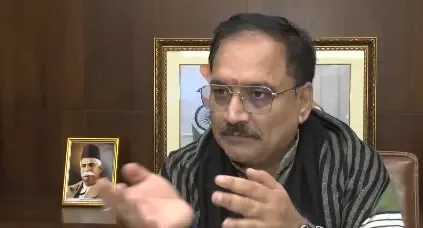
New Delhi, Dec 14 (NationPress) The President of Delhi BJP, Virendra Sachdeva, has urged Congress leaders to issue an apology for the offensive slogans directed at Prime Minister Narendra Modi during a rally held at Ramlila Maidan in the national capital.
Sachdeva criticized Congress leaders for endorsing a politics of hatred and failing to prevent their party members from uttering inappropriate slogans against PM Modi.
He condemned the distasteful remarks made at the Congress-organized rally, stating, "I demand that the Congress leadership extend an apology."
The Delhi BJP President emphasized that Congress' claims regarding election manipulation and their objections to the Special Intensive Revision (SIR) of electoral rolls undermine the democratic mandate of citizens across states like Haryana, Maharashtra, Delhi, and Bihar.
Sachdeva further noted that Congress leaders have persistently blamed the Central government and the Election Commission for misusing EVMs, advocating for elections to be conducted via ballot papers instead.
With the recent victory of the Congress-led UPA in the local body elections in Kerala, which were conducted using the same EVMs, the public is eagerly waiting for a response from Congress regarding this contradiction.
"If Congress asserts that every vote cast using EVMs favors the BJP, how did they secure victory in the Kerala municipal elections using those very EVMs?" Sachdeva questioned.
He characterized the BJP's triumph in the municipal elections in Thiruvananthapuram, the capital of Kerala, as a testament to nationalism and Sanatan Dharma.
Sachdeva also mentioned that while the 'pseudo-Communist' Arvind Kejriwal, the former Chief Minister, faced defeat in the early 2025 Delhi Assembly elections, the people of Kerala are set to reject the Communists in the upcoming Assembly elections before April 2026.
Point of View
It is vital to approach this issue with an unbiased lens, acknowledging the growing tensions between political parties. The demand for an apology from Congress by BJP leaders highlights the ongoing political rivalry, which continues to polarize public opinion. Engaging in constructive discourse and addressing underlying concerns could be key to fostering a more harmonious political environment in our nation.
NationPress
15/12/2025
Frequently Asked Questions
What did Virendra Sachdeva demand from Congress?
Virendra Sachdeva demanded an apology from Congress leaders for the objectionable slogans raised against Prime Minister Narendra Modi.
Why did Sachdeva criticize Congress leaders?
He criticized them for promoting a politics of hatred and failing to control their party members from making inappropriate remarks.
What are the implications of Congress's claims about EVMs?
Sachdeva highlighted the contradiction in Congress's claims about EVM manipulation after their recent electoral win in Kerala using the same machines.
How does Sachdeva view the BJP's electoral victory in Kerala?
He sees it as a victory for nationalism and Sanatan Dharma, contrasting it with Congress's political struggles.
What is the broader political context of this controversy?
This controversy reflects ongoing tensions between political parties in India, particularly regarding electoral integrity and public trust.