Petrol prices: Congress-ruled states levy ₹16/litre more than BJP states
Synopsis
A state-by-state fuel price breakdown exposes a ₹16-per-litre gap between BJP and Congress-ruled states — with Telangana topping ₹118/litre while Delhi sits at ₹102. The data lands as opposition parties press the Centre on excise cuts, even as their own states levy the country's highest VAT on fuel.
Key Takeaways
Petrol prices in Telangana have crossed ₹118 per litre ; Kerala stands at ₹114.9 and Karnataka at ₹110.3 — among the highest in the country.
Six BJP-governed states — Gujarat, Uttar Pradesh, Delhi, Haryana, Goa, Assam — have petrol at or below ₹102 per litre .
The price gap between the cheapest and most expensive states exceeds ₹16 per litre , driven primarily by state VAT rates.
Andhra Pradesh levies 31% VAT plus ₹4/litre plus a road cess, pushing its effective rate near 35% .
The Centre cut excise duty by ₹10 per litre on 27 March ; BJP states reportedly passed the full cut to consumers.
Fuel prices have risen approximately ₹7.5 per litre in four revisions this month due to the West Asia crisis .
As fuel prices recorded their fourth revision this month amid the ongoing West Asia crisis, a state-by-state comparison of retail petrol rates reveals a sharp divide along political lines — with Congress-ruled and INDIA bloc southern states imposing significantly higher value-added tax (VAT) than their Bharatiya Janata Party (BJP)-governed counterparts, according to data.
The Price Gap at the Pump
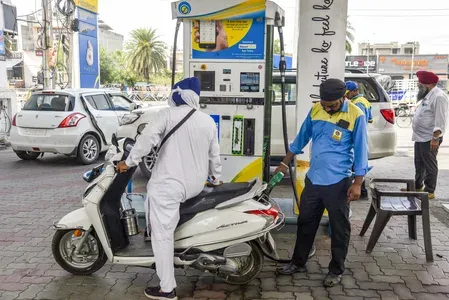
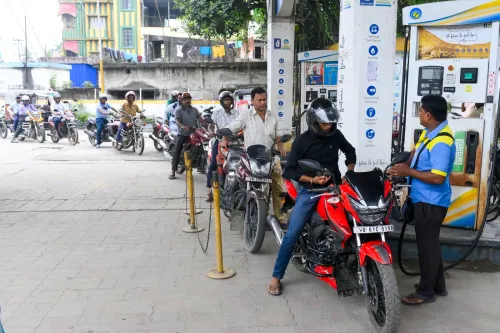
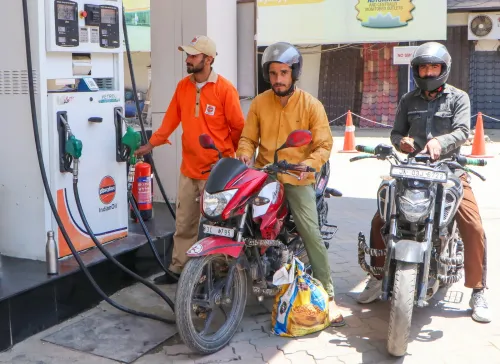
Petrol in Delhi is currently priced at ₹102 per litre, and in Gujarat at ₹101 per litre. By contrast, Telangana — governed by the Congress — has crossed ₹118 per litre, while Kerala stands at ₹114.9 per litre and Karnataka at ₹110.3 per litre. The differential between the cheapest and most expensive states amounts to over ₹16 per litre — a gap critics attribute entirely to state-level taxation decisions.
Six states currently have petrol at or below ₹102 per litre: Gujarat, Uttar Pradesh, Delhi, Haryana, Goa, and Assam — all governed by the BJP.
How State VAT Structures Drive the Difference
Andhra Pradesh charges 31% VAT plus ₹4 per litre plus a road development cess, pushing the effective rate close to 35%. Kerala levies an additional social security cess on top of its base VAT. Tamil Nadu and Karnataka also rank among the highest-taxing states on fuel nationally, according to available data.
This comes amid a cumulative upward revision of approximately ₹7.5 per litre across four days this month — described in reports as the 'smallest material upward movement' of any major economy outside Gulf producers that directly subsidise fuel.
The Central Excise Cut and State Pass-Through
When the Centre reduced excise duty by ₹10 per litre on both petrol and diesel on 27 March, BJP-governed states reportedly passed the full benefit through to retail prices. Opposition-ruled states, according to sources, did not make a corresponding reduction in their own VAT rates at the time.
Critics argue that opposition parties — including the Congress — have consistently called on the Central government to cut excise duty on fuel, while not reducing the VAT their own state governments levy on the same litre. The Congress has not publicly responded to these specific comparisons as of the time of this report.
Broader Context
Fuel pricing in India operates on a dual-tax structure: the Centre levies excise duty, while states independently set VAT rates. This means retail prices can vary by more than ₹15–18 per litre across state borders for the same commodity. The ongoing West Asia conflict has added fresh pressure on global crude prices, making the state-tax differential more visible to consumers at the pump.
With fuel costs directly affecting household budgets and logistics chains, the political debate over who taxes fuel more heavily is likely to intensify as prices continue to rise.
Point of View
But because the gap between rhetoric and state-level action is now measurable at the pump. What the comparison also obscures, however, is that VAT structures were often set years before current governments took office, and some states use fuel revenue to fund welfare programmes their electorates support. The real question is not which party taxes more, but whether any government — Central or state — has a credible roadmap to rationalise fuel taxation as crude volatility becomes a structural feature.
NationPress
20 Sept 2026
Frequently Asked Questions
Why are petrol prices higher in Congress-ruled states than BJP-ruled states?
Congress-ruled and INDIA bloc states such as Telangana, Kerala, and Karnataka levy significantly higher VAT rates on fuel than BJP-governed states like Gujarat, Delhi, and Uttar Pradesh. This state-level VAT differential — not Central excise alone — accounts for the ₹16-per-litre gap seen at the pump.
What is the current petrol price in Telangana, Kerala, and Karnataka?
As of 25 May, petrol in Telangana has crossed ₹118 per litre, Kerala stands at ₹114.9 per litre, and Karnataka at ₹110.3 per litre — among the highest retail fuel prices in the country.
How much has petrol risen in India this month?
Fuel prices have seen four upward revisions in May 2025, with a cumulative increase of approximately ₹7.5 per litre, driven by the continuing West Asia crisis pushing global crude prices higher.
Did BJP states pass on the Central excise duty cut to consumers?
According to reports, when the Centre cut excise duty by ₹10 per litre on 27 March, BJP-governed states passed the full reduction through to retail pump prices. Opposition-ruled states did not make a corresponding VAT reduction at the time.
Which states have the lowest petrol prices in India right now?
Six states currently have petrol at or below ₹102 per litre: Gujarat, Uttar Pradesh, Delhi, Haryana, Goa, and Assam. All six are governed by the BJP, and their lower prices reflect comparatively lower state VAT rates on fuel.