Is Congress Reviving the RTI Ecosystem with a National Conclave?
Synopsis
In an impactful push to restore transparency, Congress proposes a national conclave aimed at revitalizing the RTI law, countering alleged governmental erosion of transparency. This initiative seeks to unite stakeholders for a comprehensive dialogue on safeguarding citizens' rights.
Key Takeaways
National conclave proposed to revitalize RTI law.
Singhvi accuses government of weakening transparency .
Engagement with young lawyers initiated.
Legal support network for local leaders established.
Comprehensive report to be released following conclave.
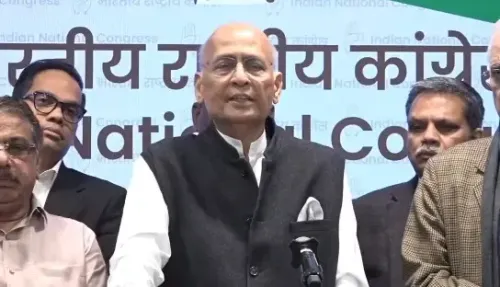
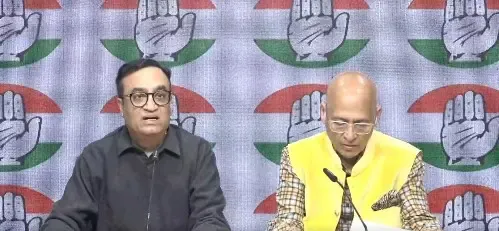
New Delhi, Feb 22 (NationPress) Accusing the Union government of diminishing the transparency law, Abhishek Singhvi, the Chairman of the AICC Law, Human Rights, and RTI Department, proposed a national conclave focused on the Right to Information (RTI) law on Sunday. This is among several measures aimed at revitalizing a previously established legal framework.
"Our goal is to restore the original essence and power of the RTI. In addition to legal measures, we suggest hosting a national conclave that gathers former officials, RTI advocates, social workers, journalists, and policy specialists for constructive dialogue," he remarked during a press briefing.
He further noted that this conclave will result in a detailed report that encapsulates findings and recommendations.
"This report will be made public and disseminated widely among stakeholders, legislators, and the general populace," he added.
Singhvi claimed that the RTI law "is being eroded bit by bit by this administration." He stated, "The RTI Act initiated a transformative path toward transparency in the nation, but it is currently being systematically undermined. When accountability is compromised, a structured national dialogue on this matter becomes imperative."
The AICC Law Department unveiled four new programs designed to engage young lawyers, rejuvenate existing legal networks, and provide a platform for voices opposing the erosion of the pivotal RTI Act.
The initiatives include: Legal Fellows Programme; Law, Human Rights, and RTI Department Podcast Series; Rapid Response Force; and a National Conclave to Reclaim the Right to Information (RTI) Act, as stated.
Singhvi mentioned that this groundbreaking transparency law was established by the Congress, yet it has been undermined by the Union government, which suppresses information under the guise of data protection regulations.
"The Congress, in collaboration with civil society, is taking legal measures—by filing a petition—against the dilution of the RTI law," he noted, adding that he will personally represent the case in court.
Previously, senior Congress figure and AICC Treasurer Ajay Maken emphasized that the initiatives proposed by Singhvi and his team hold significant importance for the entire party and its principles.
He indicated the AICC's complete financial support for the initiatives proposed by Singhvi.
Singhvi explained that as part of the Rapid Response Force, the Congress is developing a database of lawyers, guided by a singular principle: to ensure that five lawyers in every district are available to provide legal assistance to any party leader in need.
"This program is intentionally designed to offer active legal support to local leaders, particularly those vulnerable to threats and intimidation, especially in states governed by the Opposition," he added.
"We are currently compiling a digital directory of names submitted from various states, and responsibilities will be assigned to members of the Rapid Response Force accordingly," he concluded.
Point of View
The effectiveness of these initiatives will ultimately depend on broad-based engagement and genuine commitment from all stakeholders.
NationPress
12 Oct 2026
Frequently Asked Questions
What is the purpose of the proposed national conclave?
The national conclave aims to revitalize the Right to Information (RTI) law and restore its original essence by bringing together stakeholders for meaningful dialogue.
Who is leading the initiative for the national conclave?
Abhishek Singhvi, Chairman of the AICC Law, Human Rights, and RTI Department, is leading the initiative.
What are some of the new programs announced by the AICC Law Department?
The AICC Law Department announced several programs including a Legal Fellows Programme and a Podcast series focusing on Law, Human Rights, and RTI.
How does Congress plan to support local leaders legally?
Through the Rapid Response Force, Congress aims to ensure five lawyers are available in every district to provide legal support to local leaders facing threats.
What has been Singhvi's stance on the current state of the RTI law?
Singhvi has criticized the current government for systematically undermining the RTI Act, which he believes is essential for maintaining transparency and accountability.