Conrad Sangma's Meghalaya ECD Mission wins Gold SKOCH Award
Synopsis
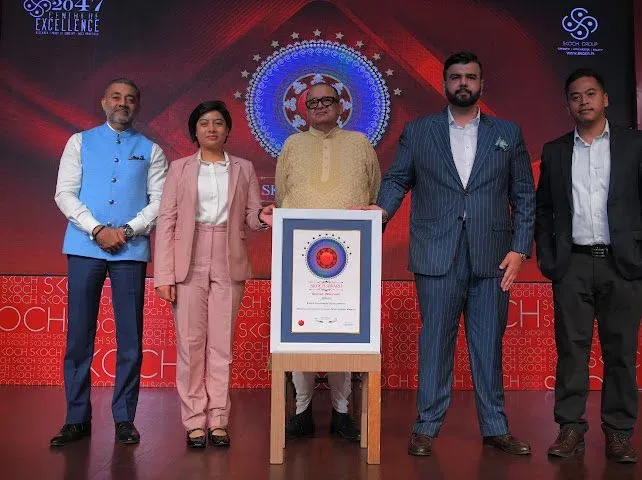
The Meghalaya Early Childhood Development Mission has won the Gold SKOCH Award for Excellence at the 108th SKOCH Summit in New Delhi, with CM Conrad Sangma hailing the recognition as validation of the state's pioneering, collaborative approach to child development and people-centric governance.
Key Takeaways
The Meghalaya ECD Mission received the Gold SKOCH Award for Excellence in Early Childhood Development at the 108th SKOCH Summit in New Delhi .
The summit was themed around the regulatory framework for Viksit Bharat , a national development goal targeting 2047.
CM Conrad Sangma tagged Union Health Minister JP Nadda and the Ministry of Health and Family Welfare , underlining the centre-state partnership.
The mission targets children in the birth-to-six age group , aligning with India's National Early Childhood Care and Education Policy (2013) and POSHAN Abhiyaan (2018) .
Meghalaya's model is seen as a potential reference for other northeastern states facing similar child-development challenges.
Meghalaya Chief Minister Conrad Sangma announced on Monday, 22 June 2026 that the Meghalaya Early Childhood Development (ECD) Mission has been conferred the Gold SKOCH Award for Excellence in Early Childhood Development at the 108th SKOCH Summit held in New Delhi, recognising the state's comprehensive framework for nurturing children from birth to six years.
Context
The 108th SKOCH Summit Public Policy Forum was themed around the regulatory framework for Viksit Bharat, bringing together policymakers and governance practitioners from across the country. The Gold SKOCH Award, presented at this forum, is among the more prominent peer-recognised honours in India's public-policy circuit, acknowledging innovation and impact in governance. CM Sangma tagged Union Health Minister JP Nadda and the Ministry of Health and Family Welfare in his post, signalling the central government's role as a partner in the state's child-development efforts.
In his post, Sangma described the recognition as one that 'celebrates Meghalaya's pioneering and collaborative approach to nurturing young children through a comprehensive ECD framework, reaffirming the State's position as a national leader in innovative social development and people-centric governance.'
Policy Backdrop
India's formal commitment to early childhood development dates to the National Early Childhood Care and Education Policy of 2013, which mandated integrated services for children under six years of age. This was followed by the launch of POSHAN Abhiyaan in 2018, a flagship inter-ministerial programme aimed at improving nutritional and developmental outcomes for young children and mothers. The Meghalaya ECD Mission builds on these national frameworks, deploying a state-specific model that integrates health, nutrition, stimulation and care within a single operational structure.
The mission's approach — centred on convergence between state health, education and social welfare departments — mirrors the inter-agency logic of POSHAN Abhiyaan while adapting delivery mechanisms to Meghalaya's predominantly rural and tribal geography. The state's focus on the zero-to-six age window reflects growing consensus among development economists that early childhood investment yields the highest long-term returns in human capital formation.
Stakeholders and Impact
The primary beneficiaries of the Meghalaya ECD Mission are children in the birth-to-six age group, along with their families, particularly in rural and remote communities across the state. State health and education departments are key implementing partners, and the recognition at a national forum is expected to strengthen inter-departmental coordination and attract additional technical support from the Ministry of Health and Family Welfare.
Several Indian states have introduced targeted early childhood frameworks in recent years to address malnutrition, cognitive development gaps and human capital deficits — all priorities under the Viksit Bharat 2047 agenda. Meghalaya's Gold SKOCH recognition positions it as a reference model, particularly for other northeastern states that share comparable demographic and geographic challenges.
What's Next
The award is likely to intensify interest in replicating the Meghalaya ECD model across the northeastern region, where early childhood outcomes have historically lagged national averages. Observers will watch whether the Ministry of Health and Family Welfare moves to formally study or scale elements of the Meghalaya framework as part of its national child-development strategy. Any announcement of expanded central funding or technical partnerships for the mission would be the next concrete policy signal to track.
Point of View
The award serves a dual political purpose: it reinforces his National People's Party government's development credentials at home while signalling alignment with the BJP-led central government's flagship welfare agenda — a useful posture for a regional ally. The tagging of Union Health Minister JP Nadda suggests a deliberate effort to draw central attention and potentially unlock greater technical or financial support for the mission. If the Ministry of Health and Family Welfare moves to study or replicate the Meghalaya model, it would mark a rare instance of a northeastern state's social-sector framework influencing national policy design.
NationPress
22 Jun 2026
Frequently Asked Questions
What is the Meghalaya Early Childhood Development Mission?
The Meghalaya Early Childhood Development Mission is a state-led initiative that delivers integrated health, nutrition, stimulation and care services for children from birth to six years, adapting national frameworks like POSHAN Abhiyaan to Meghalaya's rural and tribal context.
What is the SKOCH Award and why does it matter?
The SKOCH Award is a peer-recognised public-policy honour presented at the annual SKOCH Summit, which brings together governance practitioners across India. A Gold SKOCH Award signals national-level acknowledgement of innovation and impact in a specific policy domain.
What was the theme of the 108th SKOCH Summit?
The 108th SKOCH Summit Public Policy Forum was focused on the regulatory framework for Viksit Bharat, India's national development vision targeting 2047.
Why did CM Conrad Sangma tag JP Nadda in his post?
CM Sangma tagged Union Health Minister JP Nadda and the Ministry of Health and Family Welfare to acknowledge the central government's partnership role in child development programmes and to draw attention to Meghalaya's achievement at the national level.
Could Meghalaya's ECD model be adopted by other states?
Observers and policy analysts consider it possible, particularly for other northeastern states with similar demographic and geographic profiles. Any formal move by the Ministry of Health and Family Welfare to study or scale the model would be the clearest signal of broader replication.