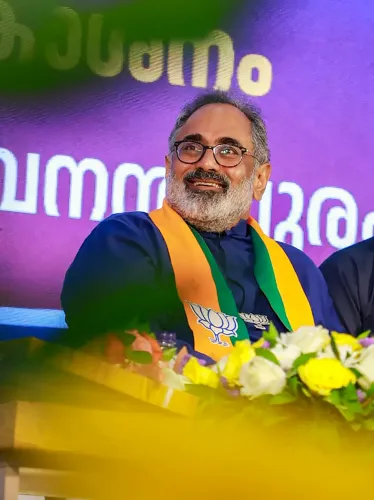
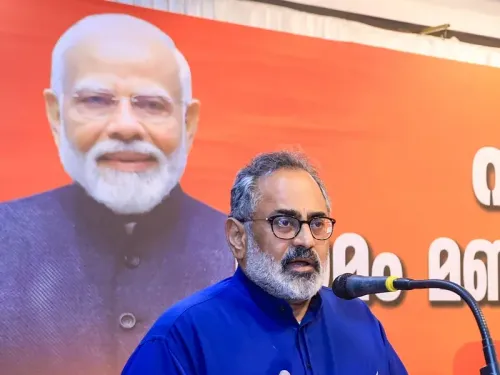
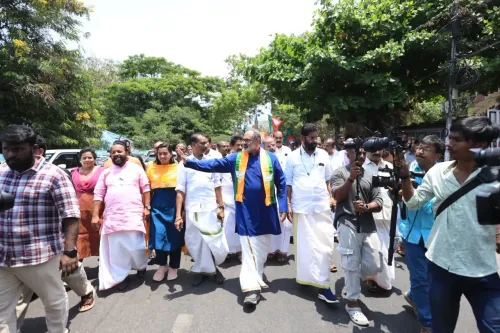
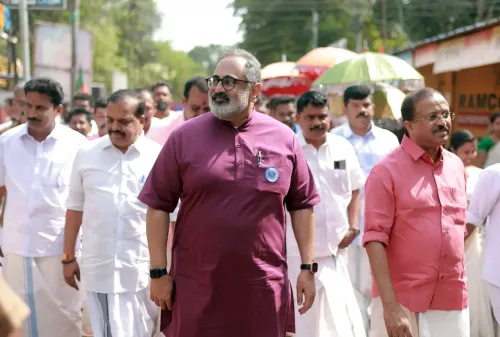
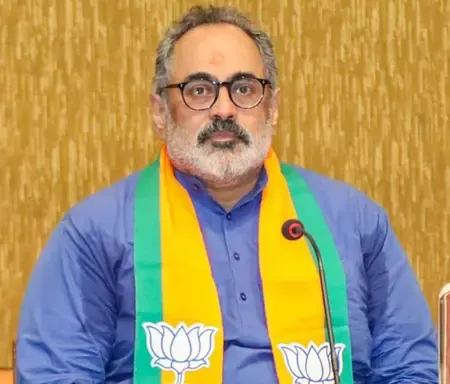
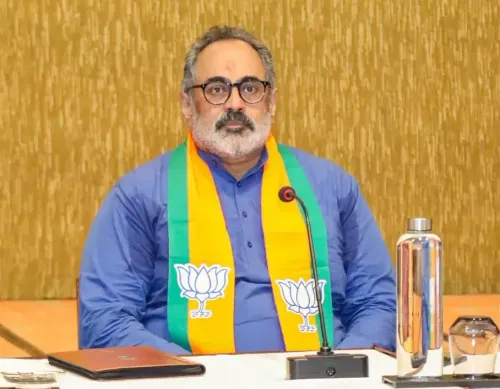
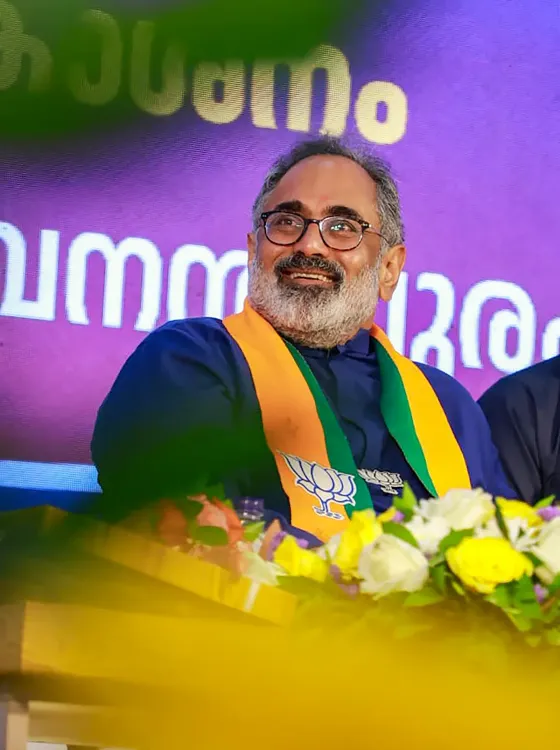
Kerala BJP chief Rajeev Chandrasekhar calls Core Committee reports fake, cites media conspiracy
Synopsis
Kerala BJP chief Rajeev Chandrasekhar has gone on the offensive, branding media reports about the party's State Core Committee meeting as fabricated and alleging a coordinated campaign to weaken the BJP through fake news. His sharp rebuke — targeting even century-old media houses — signals the party is prioritising a unified front in Kerala ahead of future electoral battles.
Key Takeaways
Kerala BJP President Rajeev Chandrasekhar on 11 August called media reports on the State Core Committee meeting 'completely false and factually incorrect.' Reports alleging criticism of BJP State general secretary Adv.
Suresh in the Core Committee were dismissed as 'completely untrue.' Both national and state BJP leaderships have expressed 'complete confidence' in Adv.
Suresh , according to Chandrasekhar.
Chandrasekhar alleged a deliberate campaign by 'vested interests' to discredit the BJP through fabricated news ahead of future elections.
He urged media organisations to follow fact-first journalism, warning that baseless reporting harms both press credibility and society.
Kerala Bharatiya Janata Party (BJP) President Rajeev Chandrasekhar on Tuesday, 11 August strongly denied media reports about the party's State Core Committee meeting, calling them 'completely false and factually incorrect.' The Core Committee had met in Thiruvananthapuram on Monday, and Chandrasekhar alleged that certain journalists had fabricated accounts of discussions that never took place.
What Chandrasekhar Said About the Reports
The Nemom Assembly constituency MLA dismissed as 'completely untrue' reports claiming that criticism had been raised against BJP State general secretary Adv. S. Suresh during the Core Committee meeting. He stated that both the national and state leaderships of the BJP had expressed 'complete confidence' in Suresh.
'The BJP strongly protests against attempts by certain journalists to turn imaginary accounts of events that never took place in the Core Committee into sensational stories,' Chandrasekhar said.
Allegations of a Coordinated Campaign
Chandrasekhar went further, framing the media coverage as part of a deliberate effort to weaken the BJP ahead of future electoral contests. He expressed confidence that BJP workers and supporters would not be swayed by what he described as 'false propaganda allegedly being spread by vested interests.'
'If the intention of some people was to discredit the party before the public, that attempt would fail,' he said. He also questioned what he called the media's 'disproportionate interest' in the BJP's internal affairs, contrasting it with what he characterised as silence on issues involving 'anti-national positions' and a state government 'reluctant to sing Vande Mataram.'
Party's Stand on Assembly Election Irregularities
Chandrasekhar reiterated that the BJP had repeatedly clarified to media organisations that there were 'no irregularities in connection with the Assembly elections.' He argued that continuing to circulate contrary claims violated journalistic ethics.
'It is unfortunate that even media organisations which have earned public credibility over more than a century are publishing reports about events that never happened, without even one per cent of factual basis,' he said.
Call for Fact-First Journalism
While acknowledging the media as the 'fourth pillar of democracy,' Chandrasekhar urged journalists to prioritise facts over controversy. 'Check the facts before the news. Seek the truth before the controversy. Journalistic ethics must be placed above political interests,' he said.
He warned that giving excessive prominence to baseless reports while neglecting issues of genuine public concern would damage both media credibility and society at large. He added that protecting press credibility was a shared responsibility — not just of the media, but of all who believe in democracy. With the BJP seeking to consolidate its position in Kerala ahead of upcoming electoral cycles, the party's internal unity messaging is likely to remain a key political priority.
Point of View
The BJP is trying to close down any narrative of factional tension before it takes root. The pointed reference to media organisations with 'over a century' of credibility publishing unverified stories is a calculated escalation — it shifts the story from BJP's internal health to press ethics. What this tactic does not resolve is why such reports emerged in the first place, and whether the denial itself will be sufficient to reassure the party's own cadre in Kerala, where the BJP is still working to convert its Nemom foothold into broader electoral ground.
NationPress
11 Aug 2026
Frequently Asked Questions
What did Rajeev Chandrasekhar say about the Kerala BJP Core Committee reports?
Chandrasekhar called the media reports 'completely false and factually incorrect,' stating that accounts of discussions critical of BJP State general secretary Adv. S. Suresh never took place. He alleged the reports were part of a campaign by vested interests to weaken the BJP.
When did the Kerala BJP State Core Committee meet?
The Kerala BJP State Core Committee met on Monday, 10 August, in Thiruvananthapuram. Chandrasekhar's rebuttal of media coverage came the following day, on Tuesday, 11 August.
Who is Adv. S. Suresh and why is he at the centre of the controversy?
Adv. S. Suresh is the BJP's Kerala State general secretary. Media reports had claimed criticism was raised against him during the Core Committee meeting, allegations that Chandrasekhar flatly denied, saying both national and state leaderships had full confidence in Suresh.
What was Chandrasekhar's criticism of the media?
Chandrasekhar accused certain journalists of fabricating events and giving 'disproportionate' attention to BJP's internal affairs while staying silent on what he described as anti-national political positions and a state government reluctant to sing Vande Mataram. He called on media to place journalistic ethics above political interests.
Does the BJP claim there were any irregularities in the Kerala Assembly elections?
No. Chandrasekhar reiterated that the BJP had repeatedly clarified to media that there were 'no irregularities in connection with the Assembly elections,' and said continuing to report otherwise was a breach of journalistic ethics.