Cotton import customs duty waived June 1–Oct 30 to ease textile sector
Synopsis
The Centre has scrapped all customs duties on cotton imports for five months starting 1 June, a direct response to geopolitical supply pressures squeezing Indian textile manufacturers. Paired with a ₹5,659.22 crore Mission for Cotton Productivity approved this month, the government is running a two-track play: immediate import relief now, structural self-reliance by 2031.
Key Takeaways
The Centre has exempted all customs duties on cotton imports from 1 June to 30 October 2025 .
The move is aimed at reducing input costs for the Indian textile and apparel sector , especially SMEs , amid geopolitical supply pressures.
The Union Cabinet separately approved ₹5,659.22 crore for the Mission for Cotton Productivity (2026–27 to 2030–31) .
The mission targets lint productivity growth from 440 kg/ha to 755 kg/ha by 2031 , producing 498 lakh bales .
An estimated 32 lakh farmers are expected to benefit from the productivity mission.
The Centre on Saturday, 31 May 2025, announced a temporary exemption on all customs duties on the import of cotton, effective 1 June through 30 October 2025, to bolster availability for the Indian textile sector amid ongoing geopolitical tensions. The measure, notified officially, is aimed at reducing input costs across the textile and apparel value chain while keeping the interests of domestic farmers in view.
What the Duty Exemption Covers
The temporary waiver covers all customs duties on cotton imports for a five-month window. According to the official notification, the exemption is designed to provide targeted relief to manufacturers and consumers by easing raw material costs. The measure is expected to have a pronounced positive impact on small and medium enterprises (SMEs) in the textile sector, improving cotton availability in the market during a period of supply-side pressure.
Broader Policy Context: Mission for Cotton Productivity
The duty relief follows closely on another significant government intervention. Earlier this month, the Union Cabinet, chaired by Prime Minister Narendra Modi, approved an outlay of ₹5,659.22 crore for the Mission for Cotton Productivity covering the period 2026–27 to 2030–31. The mission targets structural bottlenecks, declining growth rates, and quality concerns that have long weighed on India's cotton sector.
The initiative aligns with the government's 5F vision — Farm to Fibre to Factory to Fashion to Foreign — and focuses on developing high-yielding variety (HYV) seeds resistant to disease and pests, scaling up crop production technologies through state governments, Krishi Vigyan Kendras, and State Agricultural Universities (SAUs), and ensuring low-contaminant cotton supply to industry.
Key Targets of the Cotton Mission
The mission envisages producing 498 lakh bales (of 170 kg lint each) by enhancing lint productivity from 440 kg/ha to 755 kg/ha by 2031. An estimated 32 lakh farmers are projected to benefit, contributing to self-reliance in cotton production. Emphasis is placed on High Density Planting System (HDPS), Closer Spacing, Integrated Cotton Management, and the promotion of Extra Long Staple (ELS) Cotton.
The mission also targets modernisation of ginning and processing factories, capacity building, adoption of best processing practices, and strengthening of cotton testing infrastructure with standardised, accredited facilities for global benchmarking.
Impact on the Textile Industry
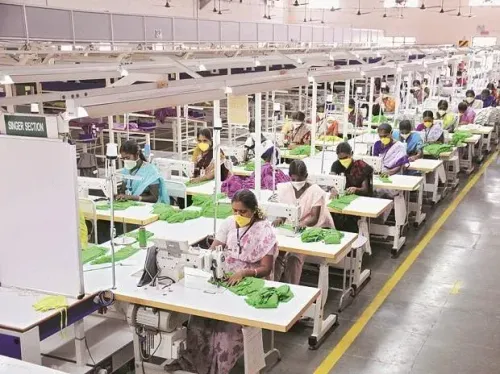
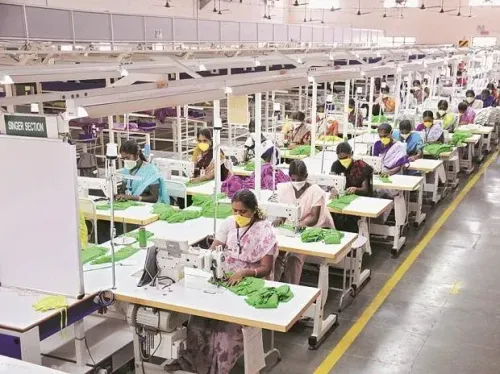
India's textile and apparel sector is among the country's largest employers, and cotton is its primary raw material. Geopolitical disruptions — including supply chain realignments following global trade tensions — have tightened cotton availability and pushed up input prices in recent months. The duty exemption is intended as a short-term buffer while the longer-term productivity mission takes shape. Notably, the twin interventions signal a two-track approach: immediate cost relief for manufacturers alongside a structural push to raise domestic output and quality.
With the exemption window closing on 30 October 2025, the government's next step will be closely watched — particularly whether the duty waiver is extended if global supply conditions remain tight, and how quickly the Mission for Cotton Productivity disburses its first tranche to farmers and research institutions.
Point of View
But it also reveals a structural vulnerability: India, one of the world's largest cotton producers, is resorting to import relief to protect its own textile industry. That contradiction sits at the heart of the sector's challenge — productivity has stagnated even as downstream demand has grown. The ₹5,659.22 crore Mission for Cotton Productivity is the right long-term instrument, but missions of this kind have historically taken years to show field-level impact. The real test is whether the productivity targets — nearly doubling lint yield to 755 kg/ha by 2031 — are backed by verifiable, time-bound milestones, or whether they remain aspirational headline numbers. Until domestic supply reliably meets industry demand, duty exemption windows will remain a recurring crutch.
NationPress
14 Oct 2026
Frequently Asked Questions
What is the cotton import customs duty exemption announced by the Centre?
The Centre has announced a temporary waiver of all customs duties on cotton imports, effective 1 June to 30 October 2025. The move is intended to ease raw material availability and reduce input costs for India's textile and apparel sector amid geopolitical supply disruptions.
Why has the government waived cotton import duties?
The duty exemption was announced to augment cotton availability for the Indian textile sector, which has faced supply-side pressure due to geopolitical tensions. It is designed to provide targeted relief to manufacturers and consumers, particularly small and medium enterprises.
What is the Mission for Cotton Productivity approved by the Union Cabinet?
It is a five-year government programme with an outlay of ₹5,659.22 crore covering 2026–27 to 2030–31, aimed at raising India's lint productivity from 440 kg/ha to 755 kg/ha by 2031 and producing 498 lakh bales. The mission focuses on high-yielding seeds, modern farming technologies, and upgraded ginning infrastructure.
Who benefits from the cotton duty exemption and the productivity mission?
The duty exemption primarily benefits textile and apparel manufacturers — especially SMEs — and ultimately consumers through lower input costs. The Mission for Cotton Productivity is projected to directly benefit approximately 32 lakh cotton farmers across India.
How long will the cotton import duty exemption last?
The exemption is in effect from 1 June 2025 to 30 October 2025 — a five-month window. Whether it will be extended beyond that date will depend on prevailing supply conditions and the government's assessment of the textile sector's needs.