CPCB orders closure of Delhi-NCR industries lacking pollution control devices
Synopsis
With winter smog season beginning, the CPCB has ordered immediate closure proceedings against Delhi-NCR industrial units still flouting a particulate matter emission standard that took effect on 1 October 2026. Units have just five days to show proof of compliance — or face shutdown, electricity disconnection, and cancellation of operating consent.
Key Takeaways
CPCB on 31 October 2026 directed the DPCC and SPCBs of Haryana , UP , and Rajasthan to issue show-cause closure notices to non-compliant industries.
Industries must comply with the revised 50 mg/Nm³ particulate matter emission standard under CAQM Direction No.
98 , in force since 1 October 2026 .
Non-compliant units have five days to submit proof of APCD work orders or valid exemption reports before formal closure orders are issued.
Closed units will remain shut until they place required work orders and submit a credible compliance timeline accepted by pollution control boards.
Authorities must submit weekly status reports to the CPCB; enforcement tools include CTO revocation and electricity disconnection via DISCOMs or District Magistrates.
CPCB's dedicated compliance portal is live at https://apcd.cpcb.gov.in .
The Central Pollution Control Board (CPCB) on 31 October 2026 directed pollution control authorities across Delhi-NCR to immediately issue show-cause notices for closure to industrial units that have failed to place work orders for the installation or retrofitting of Air Pollution Control Devices (APCDs). The directive targets non-compliant units under the revised particulate matter emission standard of 50 mg/Nm³, which came into force on 1 October 2026. The action signals a sharp enforcement push at the onset of the winter smog season, when industrial stack emissions are most damaging to Delhi's air quality.
Background and Regulatory Basis
The CPCB issued the direction under Section 18(1)(b) of the Air (Prevention and Control of Pollution) Act, 1981, addressing the Delhi Pollution Control Committee (DPCC) and the State Pollution Control Boards (SPCBs) of Haryana, Uttar Pradesh, and Rajasthan. The revised emission standard originates from Commission for Air Quality Management (CAQM) Direction No. 98, issued on 20 February 2026, which prescribed a maximum permissible limit of 50 mg/Nm³ for particulate matter emissions from 17 categories of highly polluting industries. An amendment dated 30 July 2026 extended the standard to all industries specified under Clause 21(i) of Direction No. 98 with effect from 1 October 2026.
Covered industries include Red Category (medium and large) air-polluting units, food and food-processing and textile industries operating boilers or thermic fluid heaters, and metal industries with furnaces operating in Delhi-NCR.
What Industries Were Required to Do
The CPCB had earlier, on 23 March 2026, directed NCR pollution control boards to ensure industries registered on its dedicated portal by 31 March and submitted work orders for APCD installation or retrofitting by 30 April 2026. Units that failed to comply were already liable to face closure, revocation of their Consent to Operate (CTO), disconnection of electricity, and sealing of premises. Despite these earlier deadlines, the CPCB notes that several units have neither placed work orders nor obtained adequacy assessment reports or exemption certificates from designated agencies or empanelled original equipment manufacturers (OEMs).
Key Enforcement Steps Ordered
Under the latest direction, SPCBs and the DPCC must immediately issue show-cause notices for closure to all defaulting units. If a unit fails to produce satisfactory evidence of a work order placement — or a valid exemption or adequacy report — within five days, a formal closure order must follow. Such units will remain closed until they place the required work orders and submit a credible compliance timeline accepted by the concerned pollution control board.
Authorities have also been directed to share unit-wise lists of non-compliant industries and submit weekly status reports to the CPCB, detailing action taken including CTO revocation and electricity disconnection through distribution companies (DISCOMs) or District Magistrates. Immediate acknowledgement of the direction and weekly action-taken reports are mandatory.
Why This Matters for Delhi Air Quality
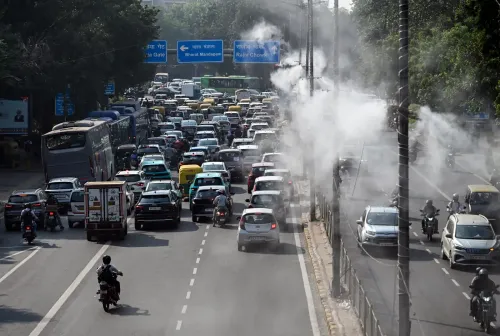
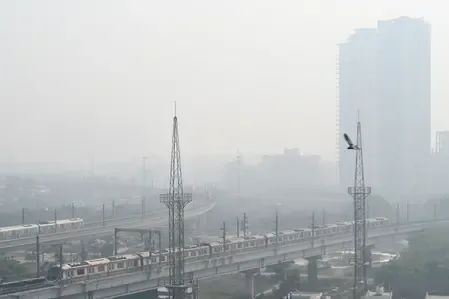
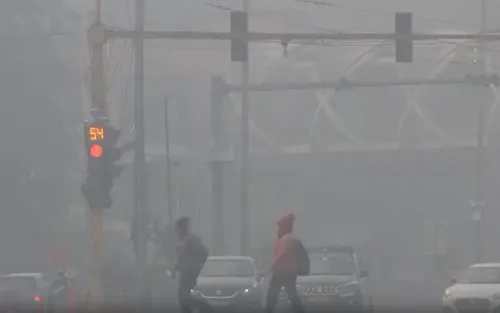
The CPCB has explicitly flagged industrial stack emissions as a significant contributor to particulate matter concentrations in the National Capital Region, emphasising that controlling pollution at source during the winter season is critical for improving ambient air quality. The board stated that continued operation of non-compliant units 'poses a serious threat to public health and ambient air quality.' This enforcement round is the latest in a series of regulatory escalations as Delhi braces for its annual winter air quality crisis, typically peaking between November and January.
The CPCB has developed a dedicated online portal at https://apcd.cpcb.gov.in for industry registration and real-time monitoring of APCD installation and retrofitting status. All future compliance filings are expected to flow through this platform.
Point of View
Meaning non-compliant units have effectively had a six-month grace period they chose to ignore. The five-day ultimatum now is credible only if pollution control boards, historically slow on industrial enforcement, follow through with actual closures rather than paper notices. Critically, this is not a new regulatory regime but an escalation within one already in place; the fact that industries still haven't installed APCDs months after the standard took effect points to weak ground-level enforcement. With Delhi's AQI routinely touching 'severe' levels between November and January, the timing of this crackdown — the last day of October — is as much political signalling as regulatory action.
NationPress
1 Nov 2026
Frequently Asked Questions
Why has the CPCB ordered closure of Delhi-NCR industries?
The CPCB ordered closure proceedings against industrial units in Delhi-NCR that have failed to install or retrofit Air Pollution Control Devices (APCDs) to meet the revised particulate matter emission standard of 50 mg/Nm³, which became mandatory from 1 October 2026. The board cited the units' non-compliance as a serious threat to public health and ambient air quality.
Which industries are covered under this CPCB direction?
The direction covers 17 categories of highly polluting industries identified by the CPCB, Red Category (medium and large) air-polluting industries, food and food-processing and textile units with boilers or thermic fluid heaters, and metal industries with furnaces operating in Delhi-NCR — all under CAQM Direction No. 98.
What happens if an industry does not comply within five days?
If a defaulting unit fails to produce satisfactory evidence of a work order for APCD installation, or a valid exemption or adequacy report, within five days of receiving the show-cause notice, a formal closure order must be issued. The unit will remain closed until it places the required work orders and gets a credible compliance timeline approved by the concerned pollution control board.
What enforcement tools do pollution control boards have?
Beyond issuing closure orders, boards can revoke a unit's Consent to Operate (CTO), disconnect electricity through DISCOMs or District Magistrates, and seal the premises. Boards must also submit weekly action-taken reports to the CPCB.
Where can industries register for APCD compliance?
The CPCB has developed a dedicated online portal at https://apcd.cpcb.gov.in for industry registration and for monitoring the installation and retrofitting status of Air Pollution Control Devices. All compliance filings are expected to be submitted through this platform.