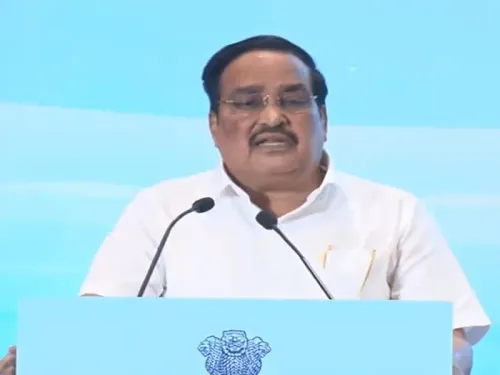
Jal Shakti Minister CR Paatil reviews Assam irrigation studies at NERIWALM meet
Synopsis
At NERIWALM's 6th Governing Body meeting, Jal Shakti Minister CR Paatil pushed for a new Irrigation Field Laboratory in North East India and reviewed a study linking Brahmaputra erosion to community displacement — signalling a shift toward evidence-based water governance in a region long underserved by national policy.
Key Takeaways
Jal Shakti Minister C.R.
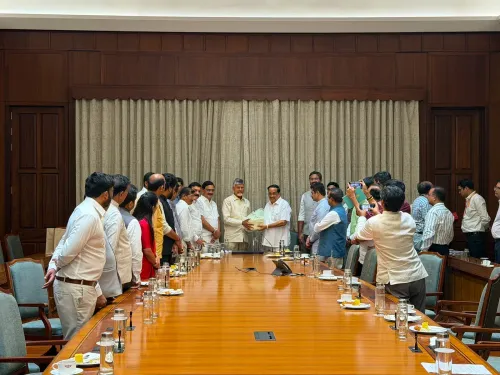
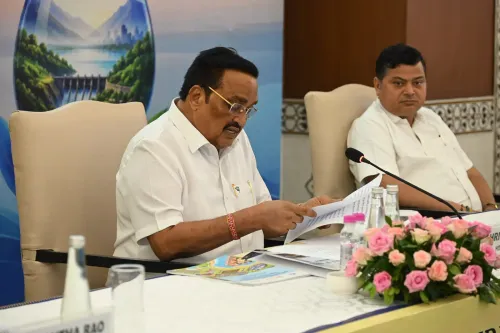
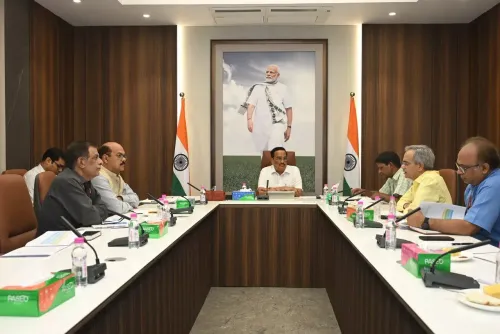
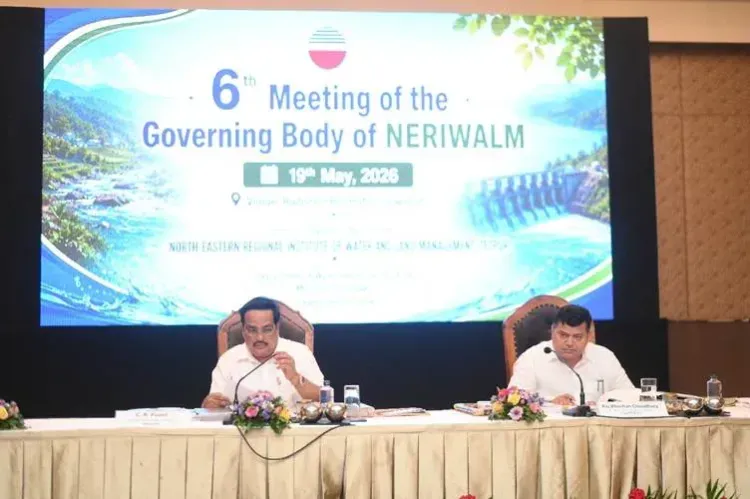
Paatil chaired the 6th NERIWALM Governing Body Meeting on 19 May in New Delhi .
A proposal to establish an Irrigation Field Laboratory and Demonstration Farm was tabled to advance irrigation research in North East India.
NERIWALM organised 71 training programmes in FY 2024–25 , benefitting more than 2,800 participants .
The Governing Body reviewed a study on livelihood challenges of erosion-affected families in the Brahmaputra Valley .
Discussions covered scholarship support for M.Tech. and Ph.D. students and GIS-based water resources research.
The Annual Report and Audited Accounts for FY 2024–25 were formally approved at the meeting.
Union Jal Shakti Minister C.R. Paatil on Tuesday, 19 May chaired the 6th Meeting of the Governing Body of the North Eastern Regional Institute of Water and Land Management (NERIWALM) in New Delhi, reviewing the institute's expanding portfolio of externally funded research, including studies on sustainable irrigation development in Assam, the economic impacts of Brahmaputra water diversion, and water management practices across North East India.
Key Agenda and Decisions
A central proposal at the meeting was the establishment of an Irrigation Field Laboratory and Demonstration Farm — a facility aimed at boosting field-level research, live demonstrations, and the wider dissemination of irrigation technologies across the region. The Governing Body also approved the Annual Report and Audited Accounts for FY 2024–25, marking another year of institutional progress.
Discussions covered scholarship support for M.Tech. and Ph.D. students, faculty development, strengthening research capabilities, and advancing climate- and GIS-based applications in water resources management — areas increasingly critical as the North East faces erratic monsoon patterns and riverine flooding.
Brahmaputra Erosion and Livelihood Crisis
The Governing Body deliberated on findings from a significant study examining livelihood challenges faced by erosion-affected families in the Brahmaputra Valley. The meeting explored sustainable rehabilitation and livelihood interventions for displaced communities — a long-standing humanitarian concern in a region where annual river erosion has displaced thousands over decades. Notably, this is among the first formal institutional reviews to link water diversion economics directly to community displacement outcomes.
What the Minister Emphasised
Paatil underscored the importance of scientific water management and called for enhanced capacity-building and deeper state-level engagement to address emerging challenges in the North Eastern Region, according to an official statement. He reaffirmed the Ministry's commitment to positioning NERIWALM as a centre of excellence in water and land management under the Department of Water Resources, River Development and Ganga Rejuvenation.
NERIWALM's Performance in FY 2024–25
During the year under review, NERIWALM exceeded its training targets by organising 71 training programmes that benefitted more than 2,800 participants, while continuing its specialised MTech and PhD programmes in Water Resource Management. The institute's output reflects a steady scaling of capacity-building efforts in a region where water governance has historically lagged behind national averages.
With the proposed Irrigation Field Laboratory awaiting formal clearance, the coming months will test whether institutional intent translates into on-ground infrastructure for one of India's most water-stressed and flood-prone regions.
Point of View
Yet the North East's water challenges — Brahmaputra flooding, riverine erosion, and chronic irrigation deficits — are among India's most complex. Paatil's push for an Irrigation Field Laboratory is directionally right, but the region has seen institutional proposals stall at the proposal stage before. The more consequential agenda item is the Brahmaputra erosion-livelihood study: if its findings inform rehabilitation policy rather than gather dust, it would mark a genuine departure from how displacement in the valley has historically been managed — acknowledged but unaddressed.
NationPress
26 Sept 2026
Frequently Asked Questions
What is NERIWALM and why is it significant?
NERIWALM, the North Eastern Regional Institute of Water and Land Management, is a specialised institute under the Department of Water Resources, River Development and Ganga Rejuvenation. It focuses on water and land management research, training, and academic programmes for the North Eastern Region, an area facing acute challenges from flooding, erosion, and irrigation deficits.
What was discussed at the 6th NERIWALM Governing Body Meeting?
The meeting reviewed externally funded studies on sustainable irrigation in Assam, the economic impact of Brahmaputra water diversion, and livelihood challenges of erosion-affected families in the Brahmaputra Valley. It also tabled a proposal for an Irrigation Field Laboratory and approved the institute's Annual Report for FY 2024–25.
What is the proposed Irrigation Field Laboratory?
It is a facility proposed at NERIWALM to enhance field-level research, live demonstrations, and the dissemination of irrigation technologies across North East India. The proposal was discussed at the Governing Body meeting on 19 May but is yet to receive formal clearance.
How did NERIWALM perform in FY 2024–25?
NERIWALM exceeded its training targets in FY 2024–25 by organising 71 training programmes that benefitted more than 2,800 participants. The institute also continued its specialised MTech and PhD programmes in Water Resource Management.
Why is the Brahmaputra erosion study significant?
The study examines the livelihood challenges faced by families displaced by riverine erosion in the Brahmaputra Valley, a long-standing humanitarian issue in Assam and surrounding states. The Governing Body deliberated on sustainable rehabilitation interventions, signalling a policy focus on communities displaced by water-related disasters.