Jal Shakti Minister CR Patil orders fast-track completion of water projects
Synopsis
Union Jal Shakti Minister CR Patil has put officials on notice — water projects must stop stalling. At a sweeping review covering the Ken–Betwa Link, Farakka Barrage, and 35 M-CADWM pilot clusters, he ordered bottlenecks identified and cleared. The urgency signals growing pressure on India's chronically delayed water infrastructure pipeline.
Key Takeaways
Union Jal Shakti Minister C.R.
Patil chaired a review meeting in New Delhi on 27 October 2026 .
Minister of State Raj Bhushan Choudhary was also present at the session.
Presentations were made by 11 wings and agencies , including the Flood Management Wing, Farakka Barrage Project, National Water Mission, and NIH.
Patil reviewed the status of 35 pilot clusters under M-CADWM and the Ken–Betwa Link Project , including the Daudhan Dam.
The minister directed that bottlenecks be identified and resolved speedily to ensure timely, time-bound completion of projects.
Stronger Centre-state coordination was stressed for multi-agency schemes like FMBAP and river basin management.
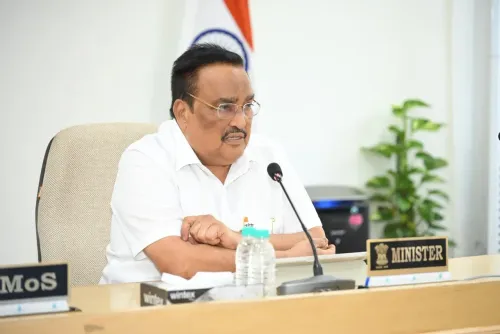
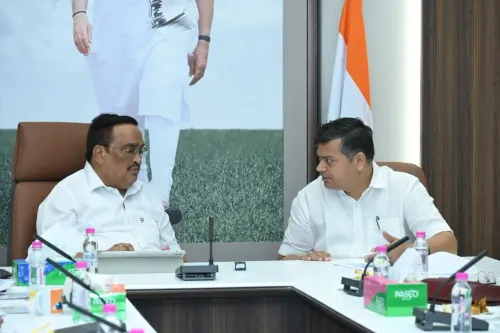
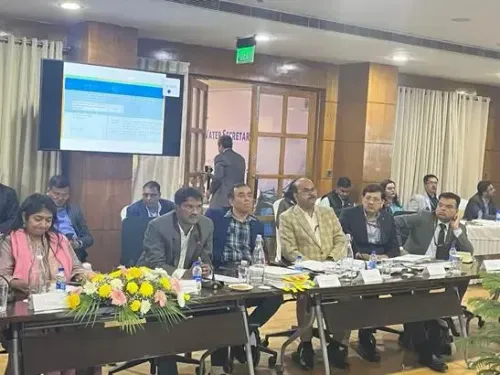
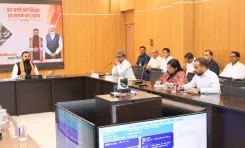
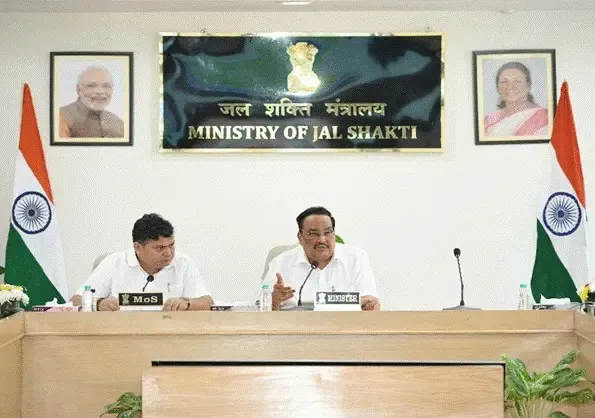
Union Jal Shakti Minister C.R. Patil on Tuesday, 27 October chaired a comprehensive review meeting with departmental heads in New Delhi, directing officials to identify and resolve bottlenecks stalling water-sector projects and ensure their completion within stipulated timelines. The session, co-attended by Minister of State for Jal Shakti Raj Bhushan Choudhary, covered the full portfolio of the Department of Water Resources, River Development and Ganga Rejuvenation.
Key Developments at the Review
The meeting saw detailed presentations from more than a dozen wings and agencies, including the Flood Management Wing, the Farakka Barrage Project, the National Water Mission, Modernisation of Command Area Development and Water Management (M-CADWM), Basin Management–I & II, the National Water Development Agency, the Ken–Betwa Link Project Authority, Brahmaputra–Barak River Matters, the Brahmaputra Board, Minor Irrigation Statistics, and the National Institute of Hydrology (NIH).
Discussions spanned the status of ongoing works under the Flood Management and Border Areas Programme (FMBAP), progress on replacement of barrage gates and anti-erosion measures under the Farakka Barrage Project, and implementation challenges across various schemes, according to an official statement.
Projects and Programmes Under the Lens
Minister Patil specifically reviewed the implementation status of 35 pilot clusters under M-CADWM, the progress of the Ken–Betwa Link Project — covering the link canal and Daudhan Dam — and the preparation of master plans and Detailed Project Reports (DPRs) by the Brahmaputra Board. He also assessed the progress of four ongoing censuses under the Minor Irrigation Statistics programme and targets set for major activities of the NIH.
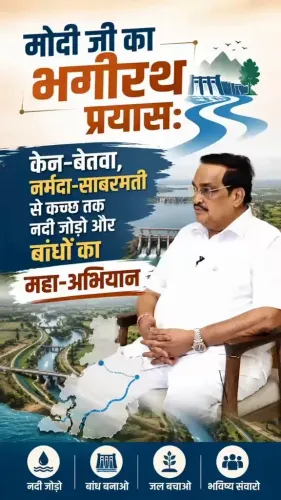
This comes amid broader government emphasis on water security and inter-basin river linking, both of which have seen repeated execution delays over successive administrations. The Ken–Betwa Link Project, in particular, is India's first major inter-linking river project and has faced years of legal, environmental, and inter-state coordination hurdles.
Minister's Directions to Officials
Patil issued firm directions aimed at accelerating project implementation and strengthening coordination with state governments. He instructed senior officers and heads of departmental wings to ensure effective follow-up on all decisions taken during the review and to maintain close monitoring of progress, with a clear focus on achieving outcomes within set deadlines.
Notably, the minister stressed that bottlenecks must be identified and resolved speedily — signalling a shift from periodic review to active problem-solving. The emphasis on Centre-state coordination is especially significant for projects like FMBAP and river basin management, where state governments are co-implementing partners.
Why It Matters
India's water infrastructure projects have historically faced cost and time overruns, with several large irrigation and flood management schemes taking decades to complete. The current government has prioritised schemes such as Jal Jeevan Mission and river rejuvenation as flagship commitments. Tuesday's review reflects an effort to tighten execution accountability across the sector's sprawling institutional architecture.
All eyes will now be on whether the directions issued translate into measurable progress on the ground, particularly for the Ken–Betwa Link Project, which carries significant political and ecological importance for the states of Madhya Pradesh and Uttar Pradesh.
Point of View
In itself, routine — what matters is whether it produces accountability beyond the room. India's water infrastructure graveyard is littered with schemes that were 'reviewed' repeatedly but never finished on time. The Ken–Betwa Link Project, launched under the NDA as a historic first, has already taken years longer than projected; a direction to 'resolve bottlenecks speedily' is only credible if follow-up mechanisms are genuinely independent and time-bound. The real test for Patil's push will come when the next quarterly progress reports land — and whether they are made public.
NationPress
27 Oct 2026
Frequently Asked Questions
What did Jal Shakti Minister CR Patil review on 27 October 2026?
Minister C.R. Patil chaired a review of the Department of Water Resources, River Development and Ganga Rejuvenation, assessing progress across projects including the Ken–Betwa Link, Farakka Barrage, National Water Mission, M-CADWM pilot clusters, and the National Institute of Hydrology. He directed officials to identify bottlenecks and ensure time-bound completion of all schemes.
What is the Ken–Betwa Link Project?
The Ken–Betwa Link Project is India's first major inter-linking river project, designed to transfer surplus water from the Ken river in Madhya Pradesh to the Betwa river in Uttar Pradesh. The project includes a link canal and the Daudhan Dam, and has faced years of legal, environmental, and inter-state coordination challenges.
What is the Flood Management and Border Areas Programme (FMBAP)?
FMBAP is a centrally sponsored scheme that funds flood management works and erosion-control measures, particularly in states bordering rivers along international boundaries. Progress under the programme was among the key items reviewed at the 27 October meeting.
What are the M-CADWM pilot clusters mentioned in the review?
M-CADWM stands for Modernisation of Command Area Development and Water Management, a programme aimed at improving water-use efficiency in irrigated agriculture. The minister reviewed the implementation status of 35 pilot clusters currently underway under this initiative.
Why do India's water infrastructure projects face repeated delays?
Large-scale water projects in India typically involve multiple agencies, inter-state agreements, environmental clearances, and land acquisition — all of which create coordination bottlenecks. Historically, both costs and timelines have significantly overrun initial projections, a pattern the 27 October review meeting was specifically aimed at addressing.