RSS Chief Bhagwat in New York: Build local unity models, take interfaith dialogue to block level
Synopsis
RSS Chief Mohan Bhagwat travelled to New York not to deliver platitudes but to issue a structural challenge: stop holding international conferences and start building block-level dialogue networks. Drawing on seven years of RSS-led interfaith engagement in India — slow, frustrating, but ongoing — he told global religious leaders that habit change, not just intellectual agreement, is the only real measure of progress.
Key Takeaways
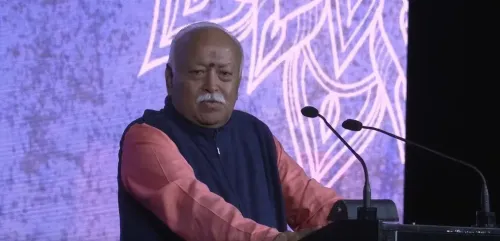
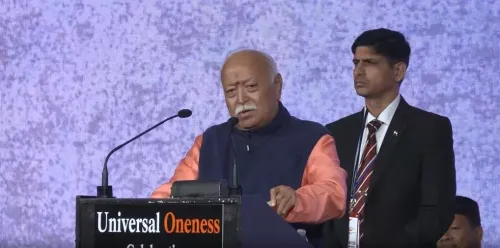
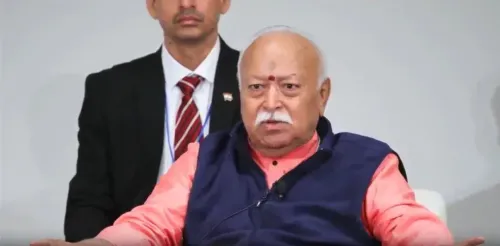
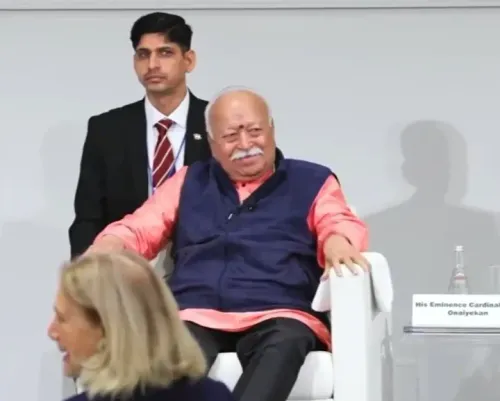
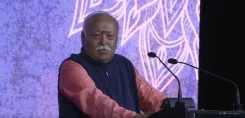
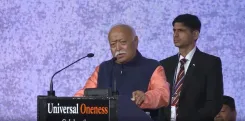
RSS Chief Mohan Bhagwat addressed the 'One World, One Humanity' programme in New York on 30 August .
He called on religious leaders to build local models of unity and selfless service rather than rely on international conferences.
Bhagwat urged interfaith dialogue to be taken beyond senior leaders to province, district, and block levels .
He cited RSS-led dialogue with Muslim and Christian communities in India, ongoing since his 2018 Delhi address , as a working example.
He acknowledged participant frustration — 'We have sat for seven times, nothing has happened' — but urged continued, tireless engagement.
The RSS , founded in Nagpur in 1925 , completed its centenary in 2025 ; Bhagwat has led it since 2009 .
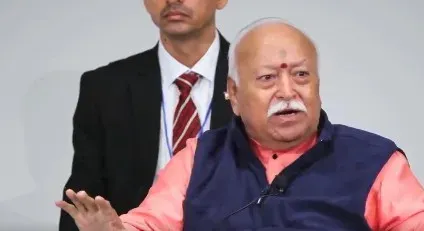
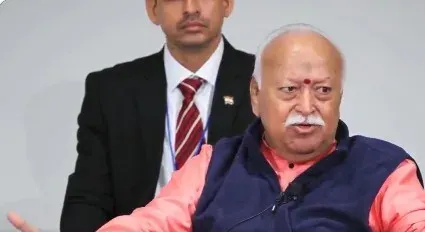
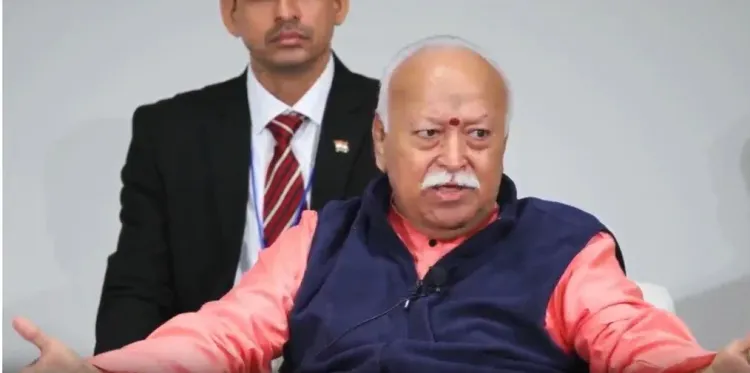
Rashtriya Swayamsevak Sangh (RSS) Chief Mohan Bhagwat on 30 August called on religious leaders gathered in New York to stop waiting for global summits to deliver change and instead build grassroots models of unity and selfless service in their own communities. Speaking at the 'One World, One Humanity' programme, Bhagwat argued that durable global transformation can only be achieved when interfaith resolve is translated into local, visible action.
The Core Message: Start at Home
Bhagwat urged every participant to carry their collective commitment back to their home countries and convert it into concrete community initiatives. 'Whatever we decide to do today, we should start in our own country and create pockets of such selfless service, such atmosphere of unity,' he said. He stressed that successful local projects must then be networked across regions and nations to create a broader shift in social atmosphere.
'We should create at our own place the models of the world we want,' Bhagwat said, adding, 'And we should connect. We should keep on this dialogue.' The emphasis on sustained, multi-level engagement marked a departure from the typical conference-resolution format that rarely outlasts the event itself.
Dialogue Must Reach Districts and Blocks
The RSS Chief argued that interfaith engagement had so far remained confined to senior religious figures and international forums. He called for that dialogue to be pushed down to provinces, districts, and administrative blocks. 'This dialogue also we should take to the lower level,' he said. 'If we start at this level and start instructing our own people and then try to have this dialogue in all the countries, in the provinces of those countries, district level, block level, if you go like that, then the atmosphere will change,' he added.
RSS Experience With Interfaith Dialogue in India
Bhagwat drew on the RSS's own track record to illustrate that patience was indispensable. He noted that the organisation had been conducting structured dialogue with Muslim and Christian communities in India since his address in Delhi in 2018, and that the engagement had continued despite frustration over slow results. 'So we started that dialogue. Mainly with Muslims and Christians of Bharat,' he said. 'And step by step we are going ahead.'
He acknowledged that some participants had grown impatient, quoting them as saying: 'We have sat for seven times, nothing has happened.' His response, he said, was: 'Okay, continuously, something will happen.' The candid admission of slow progress was notable coming from the head of one of the world's largest volunteer organisations.
Habit, Not Just Understanding, Is the Goal
Bhagwat argued that intellectual acceptance of values such as goodness and love was insufficient on its own. Behaviour change, he said, required those values to become deeply ingrained habits capable of resisting the pull of material gain, power, and status. 'We have to instill the practice,' he said. 'Habit should be changed so radically and new habit should be so strong that it should fight this deflection of the lure of material happiness.'
He closed with a call for tireless perseverance: 'We have to add one more resolve there. That we will pursue this code untiringly for the time it takes.'
About Mohan Bhagwat and the RSS
Mohan Bhagwat has served as Sarsanghchalak (Chief) of the RSS since 2009, holding the organisation's highest office and guiding its ideological and organisational direction. The RSS was founded in Nagpur in 1925 by K.B. Hedgewar and completed its centenary year in 2025. The New York address is among Bhagwat's most prominent recent international appearances and signals the RSS's growing engagement with global interfaith platforms.
Point of View
Which operates within a political ecosystem that frequently inflames communal tensions, to simultaneously champion interfaith harmony abroad? The credibility of the 'local models' argument depends entirely on whether those models can survive the domestic political weather — and that test is far harder than any international conference.
NationPress
30 Aug 2026
Frequently Asked Questions
What did RSS Chief Mohan Bhagwat say at the New York event?
Bhagwat urged religious leaders at the 'One World, One Humanity' programme in New York to build grassroots models of unity and selfless service in their own communities rather than depend on international forums. He called for interfaith dialogue to be taken down to district and block levels across countries.
What is the 'One World, One Humanity' programme?
It is an interfaith gathering held in New York that brought together religious leaders to discuss unity and global harmony. Bhagwat used the platform to argue that resolutions made at such events must be converted into local, visible action to have lasting impact.
What interfaith dialogue has the RSS been conducting in India?
The RSS has been holding structured dialogue with Muslim and Christian communities in India since Bhagwat's 2018 address in Delhi. Bhagwat acknowledged the process has been slow, with some participants noting that seven rounds had yet to produce visible results, but said the engagement was continuing.
Why does Bhagwat say intellectual understanding of values is not enough?
Bhagwat argued that people may accept principles of goodness and love intellectually but still fail to act on them. He said values must become deeply ingrained habits strong enough to resist the attractions of material gain, power, and superiority — and that this requires sustained practice, not just awareness.
How long has Mohan Bhagwat led the RSS?
Mohan Bhagwat has served as Sarsanghchalak (Chief) of the Rashtriya Swayamsevak Sangh since 2009. The RSS was founded in Nagpur in 1925 by K.B. Hedgewar and completed its centenary in 2025.