Faith leaders from 30 nations reject religion-fuelled hate at New York summit
Synopsis
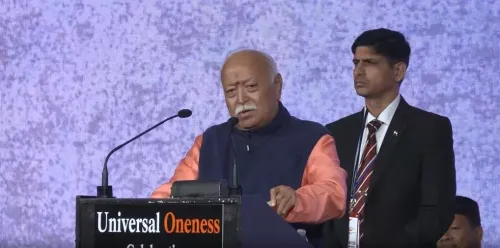
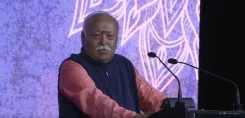
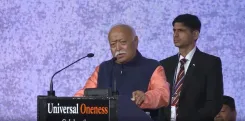
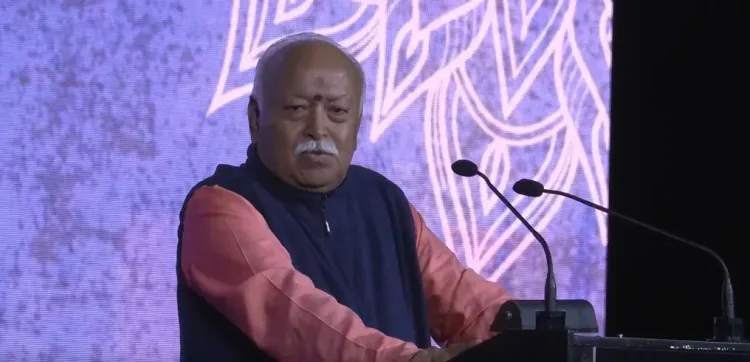
More than 200 religious leaders from 30 countries gathered at Madison Square Garden on 30 August and signed a declaration rejecting the use of faith to justify hatred — and, unusually, called out artificial intelligence as a frontier where human dignity must be actively defended. RSS Chief Mohan Bhagwat was among the attendees, lending the summit rare cross-civilisational weight.
Key Takeaways
More than 200 religious representatives from 30 countries signed the 'Universal Oneness' declaration at Madison Square Garden, New York on 30 August .
RSS Chief Mohan Bhagwat attended alongside delegates from several major world faiths.
The declaration includes five commitments : self-examination, speaking out against targeting, cross-cultural relationship-building, youth engagement, and joint service.
Leaders explicitly addressed artificial intelligence , pledging to ensure technology serves human dignity rather than diminishes it.
Each participating leader was asked to undertake at least one concrete initiative , moving beyond symbolic declarations.
Participants tied rakhis on one another, extending the tradition to friends, neighbours, and communities as a symbol of mutual responsibility.
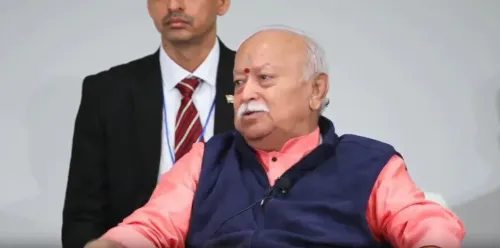
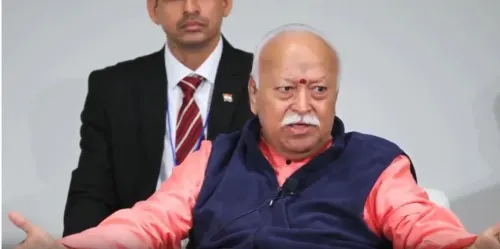
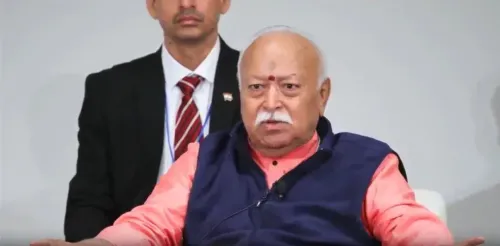
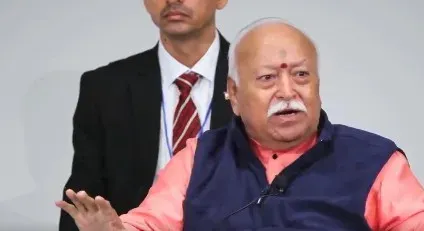
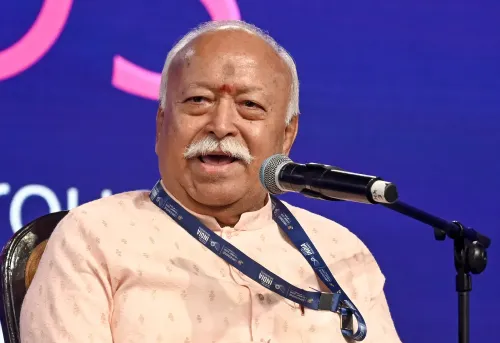
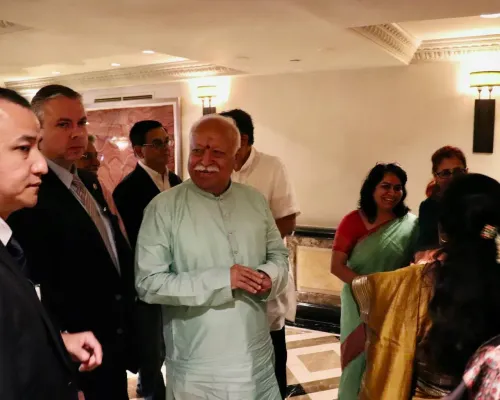
Religious leaders representing 30 countries gathered at Madison Square Garden in New York on 30 August to unveil a landmark declaration pledging to confront hatred, protect persecuted communities, and ensure that artificial intelligence serves human dignity rather than undermines it. The 'Universal Oneness' summit drew more than 200 religious representatives, including Rashtriya Swayamsevak Sangh (RSS) Chief Mohan Bhagwat, who attended alongside delegates from several major world faiths.
The Declaration and Its Five Commitments
The call to action was finalised after negotiations held earlier on Saturday, with participants endorsing five core commitments. These include examining their own communities' teachings and practices, speaking out when individuals are targeted, and actively building relationships across religious and cultural boundaries.
The declaration stated: 'We will reject the use of religion to justify hatred, humiliation, dehumanisation or violence and teach that deep conviction can coexist with respect for those who believe differently.' It was candid about religion's dual legacy — its capacity to heal and reconcile, as well as its historical misuse to divide and justify violence.
Why This Summit, Why Now
The gathering came against a backdrop of escalating armed conflicts, mass displacement, and deepening societal mistrust worldwide. Organisers noted that hatred now travels rapidly across borders through digital platforms, making coordinated interfaith action more urgent than ever. 'No government, institution, or technology can carry responsibility for the moment alone,' the declaration read, while affirming that religious leaders bear a responsibility that is 'uniquely' theirs.
Notably, the declaration also addressed emerging technologies, calling on participants to 'insist that human progress remain in the service of human beings and that technology strengthen rather than diminish dignity, truth, freedom and human connection.' The explicit reference to artificial intelligence marks a rare instance of a major interfaith document directly engaging with tech governance.
Symbolism and Concrete Action
Beyond declarations, each participating leader was asked to undertake at least one concrete initiative — whether bringing together communities that rarely interact, confronting hatred, creating opportunities for young people, or serving alongside another religious group. The declaration was direct: 'Our cooperation should be visible not only in what we say together, but in what we do together.'
In a symbolic gesture, participants tied rakhis on one another, with organisers extending the tradition beyond family bonds to friends, neighbours, and communities as a mark of mutual responsibility and care.
RSS Chief Mohan Bhagwat's Presence
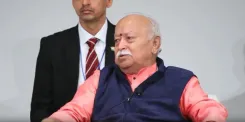
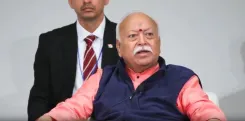
Mohan Bhagwat has led the Rashtriya Swayamsevak Sangh as its Sarsanghchalak since 2009. The RSS, founded in 1925, is currently marking its centenary year and operates organisations and affiliates across several countries. His attendance at a global interfaith summit in New York is significant given the RSS's traditionally India-centric focus and its centenary context.
What the Declaration Stands For
The summit's central message was that unity does not demand conformity. 'Unity does not require conformity. Conviction does not require contempt,' the declaration affirmed. Leaders also committed to proactively bringing young people from different religious and cultural backgrounds together — before disputes or tragedies arise — on the premise that 'the person we know is harder to hate.'
With the declaration now public, attention shifts to whether the commitments translate into verifiable action on the ground across the 30 participating nations.
Point of View
And the presence of RSS Chief Mohan Bhagwat at a pluralist, multi-faith platform in New York during the organisation's centenary year. Whether the five commitments produce measurable outcomes, or whether this joins a long list of well-worded declarations that fade without follow-through, will depend entirely on the concrete initiatives each leader actually delivers. The declaration's own caveat — 'we are not naive' — suggests organisers are aware of the credibility gap between interfaith symbolism and ground-level change.
NationPress
30 Aug 2026
Frequently Asked Questions
What is the 'Universal Oneness' summit held in New York?
It is an interfaith gathering held at Madison Square Garden in New York on 30 August, attended by more than 200 religious representatives from 30 countries. The summit produced a declaration committing participants to reject religion-fuelled hatred, protect persecuted communities, and ensure technology — including artificial intelligence — serves human dignity.
Who attended the Universal Oneness interfaith summit?
More than 200 religious representatives from 30 countries attended, including RSS Chief Mohan Bhagwat and delegates from several major world faiths. The gathering was broad-based, spanning multiple religions and regions.
What are the five commitments in the interfaith declaration?
The five commitments include examining their own communities' teachings, speaking out when people are targeted, building cross-religious and cross-cultural relationships, proactively bringing young people together before conflicts arise, and jointly serving communities facing hunger, illness, displacement, and persecution.
Why was RSS Chief Mohan Bhagwat at the New York interfaith summit?
Mohan Bhagwat, who has led the Rashtriya Swayamsevak Sangh as its Sarsanghchalak since 2009, attended as a representative of the RSS, which is marking its centenary year in 2025 and operates affiliates in several countries. His participation placed the RSS within a global pluralist interfaith framework.
How does the declaration address artificial intelligence?
The declaration explicitly calls on religious leaders to 'insist that human progress remain in the service of human beings and that technology strengthen rather than diminish dignity, truth, freedom and human connection.' It is one of the few major interfaith documents to directly engage with AI as a governance and ethical concern.