CRPF marks 47-year first: 1 year, 4 days with zero operational casualties

Synopsis
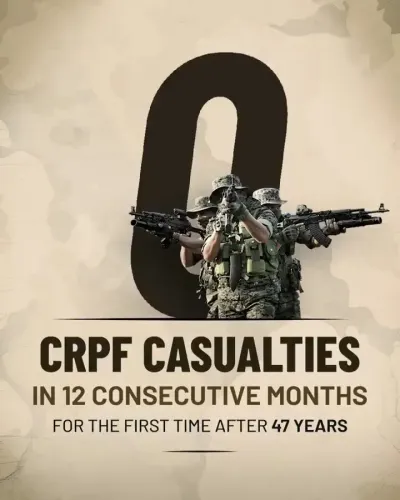
For the first time in 47 years, the CRPF has gone more than a year without a single operational casualty — a milestone that reflects not just a calmer security environment in J&K, the Northeast and LWE zones, but a deliberate overhaul of tactics, technology and inter-agency coordination that has quietly rewritten the force's operational safety record.
Key Takeaways
The CRPF completed one year and four consecutive days without an operational casualty as of 4 November 2026 — the first such run in 47 years .
Former CRPF Inspector General Arun Kumar credited strategic changes, technology induction, leadership at all levels, and the Ministry of Home Affairs .
Improved vehicles have helped contain IED blast casualties; bulletproof jackets, upgraded weapons, and better intelligence have also contributed.
Defence expert Brigadier Hemant Mahajan (Retd.) cited improved security in Jammu and Kashmir , a decline in Northeast insurgency, and the elimination of Left-Wing Extremism in Chhattisgarh's Bastar region .
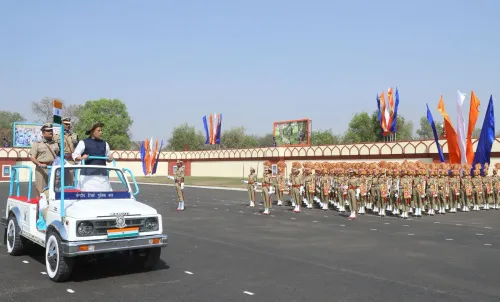
The CRPF has a strength of approximately 3.5 lakh personnel deployed across J&K, the Northeast, LWE-affected areas, and other locations.
The Central Reserve Police Force (CRPF) has completed one year and four consecutive days without recording a single operational casualty among its personnel — the first such achievement in 47 years. The milestone, observed on 4 November 2026 in New Delhi, has been attributed to a combination of strategic overhauls, technological upgrades, improved inter-agency coordination, and a markedly better internal security environment across conflict-affected regions.
What the Milestone Means
For a force of approximately 3.5 lakh personnel deployed in some of India's most volatile theatres — Jammu and Kashmir, the Northeast, and Left-Wing Extremism (LWE)-affected districts — sustaining zero operational fatalities for over a year is an extraordinary operational outcome. The last comparable period without a single combat death dates back nearly five decades, underscoring the scale of the achievement.
Former CRPF Inspector General Arun Kumar called it 'a significant achievement,' crediting personnel at all levels, ground commanders, senior leadership, and the Ministry of Home Affairs (MHA). 'It is the first time in 47 years that such a feat has been achieved, with no CRPF personnel being martyred during operations,' he said.
Technology and Tactical Shifts Drive Safer Operations
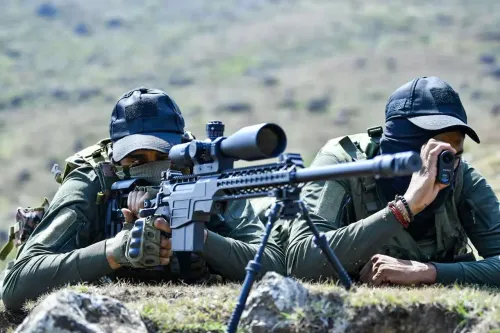
Kumar pointed to the induction of modern technology as one of the primary drivers. Improved vehicle design has helped contain the impact of Improvised Explosive Device (IED) blasts — historically the leading cause of CRPF fatalities in LWE zones. Bulletproof jackets, upgraded weaponry, refined operational tactics, stronger intelligence-gathering frameworks, and enhanced medical facilities have collectively raised the safety threshold for deployed personnel.
'One of the main reasons for there being no casualties is the induction of technology. The vehicles have improved, and thus IED blasts have been somewhat controlled. There are bulletproof jackets too now,' Kumar said.
Security Situation Across Theatres
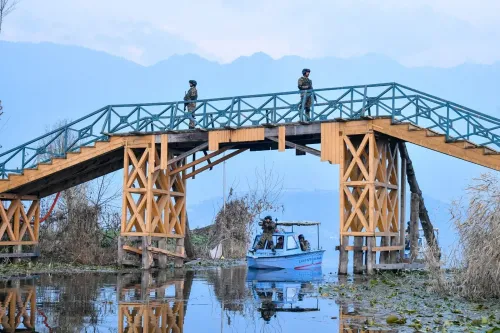
Retired Brigadier Hemant Mahajan, a defence expert, credited the improved security environment across multiple fronts. In Jammu and Kashmir, he said, sustained counter-terror operations by the Army and tighter coordination among the Army, CRPF, and Jammu and Kashmir Police had yielded a considerably calmer operational landscape.
In the Northeast, insurgency-related violence has declined, including a reduction in tensions between Naga and Kuki communities. Most notably, Mahajan said Left-Wing Extremism — which had remained active in Chhattisgarh's Bastar region in recent years — had been 'wiped out' from the state, removing one of the CRPF's most dangerous operational zones.
Leadership and Adaptive Strategy
Both experts highlighted the role of institutional leadership in sustaining gains. Kumar noted that internal security challenges continue to evolve daily, requiring constant adaptation of tactics and capabilities. 'The incumbent leadership actively keeps everything under their watchful eye,' he said, adding that the CRPF would continue implementing operational and technological improvements to sustain the milestone.
The force's ability to absorb lessons from past engagements and recalibrate its doctrine — particularly around IED threat mitigation and real-time intelligence sharing — appears central to the turnaround. As the security environment continues to shift, sustaining this record will depend on whether structural improvements can outlast the current threat lull.
Point of View
But the full picture demands two questions mainstream coverage is not asking. First, how much of this is durable doctrine and how much is a temporary lull — particularly in J&K, where the security situation remains fluid beneath the calm? Second, the 'wiping out' of LWE in Chhattisgarh's Bastar has been declared before, only for violence to resurge. If the structural gains are real, the government should publish verifiable incident data, not just rely on expert testimonials. Sustaining a 47-year record requires more than technology and coordination — it requires honest assessment of where the threats are migrating, not disappearing.
NationPress
4 Nov 2026
Frequently Asked Questions
What is the CRPF's zero-casualty milestone in 2026?
The Central Reserve Police Force completed one year and four consecutive days without a single operational casualty as of 4 November 2026 — the first such achievement in 47 years. The milestone covers all theatres where the CRPF is deployed, including Jammu and Kashmir, the Northeast, and Left-Wing Extremism-affected areas.
What factors contributed to CRPF's zero operational casualties?
Former CRPF Inspector General Arun Kumar credited technological upgrades — including improved vehicles that reduce IED blast impact and bulletproof jackets — along with better weaponry, intelligence gathering, operational tactics, and medical facilities. Senior leadership and strategic policy changes under the Ministry of Home Affairs were also cited.
How has the security situation in Jammu and Kashmir, the Northeast, and Chhattisgarh changed?
According to retired Brigadier Hemant Mahajan, sustained Army operations and improved coordination among the Army, CRPF, and J&K Police have considerably improved the situation in Jammu and Kashmir. Insurgency-related violence has declined in the Northeast, and Left-Wing Extremism has reportedly been wiped out from the Bastar region of Chhattisgarh.
How large is the CRPF and where is it deployed?
The CRPF has a strength of approximately 3.5 lakh personnel. It is deployed in Jammu and Kashmir, the Northeast, Left-Wing Extremism-affected districts, and other areas requiring security and law-and-order support across India.
Will the CRPF be able to sustain this zero-casualty record?
Former Inspector General Arun Kumar said the force would continue implementing operational and technological improvements to sustain the achievement. He noted that internal security challenges continue to evolve daily, requiring constant adaptation of strategies and capabilities.