CTA Representative Meets CM Shivakumar, Presents Dalai Lama Letter
Synopsis
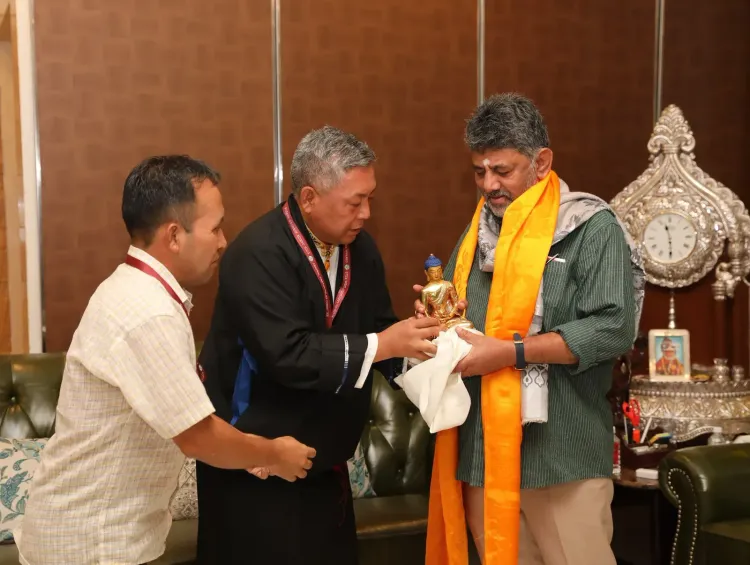
The CTA's Bengaluru representative Jigmey Tsultrim called on Karnataka CM D.K. Shivakumar, presenting letters from the Dalai Lama and Sikyong Penpa Tsering. The meeting reflects routine administrative ties between Karnataka and the Tibetan exile community, which includes major settlements at Bylakuppe and Mundgod.
Key Takeaways
Jigmey Tsultrim , Chief Representative of the Central Tibetan Administration in Bengaluru, met Karnataka CM D.K.
Shivakumar at his residence on June 14, 2026 .
Tsultrim presented letters from His Holiness the Dalai Lama and Sikyong Penpa Tsering , the CTA's elected political leader since 2021.
Karnataka hosts major Tibetan refugee settlements at Bylakuppe and Mundgod , established in the early 1960s.
India is home to an estimated 1 lakh Tibetan refugees, with the CTA headquartered in Dharamshala .
The meeting is a routine administrative engagement and does not signal any change in India's foreign policy on Tibet.
The Chief Minister's Office of Karnataka announced on Sunday, June 14, 2026, that Jigmey Tsultrim, Chief Representative of the Central Tibetan Administration (CTA) in Bengaluru, called on Karnataka Chief Minister Shri D.K. Shivakumar at his residence. During the visit, Mr. Tsultrim presented letters from His Holiness the Dalai Lama and Sikyong Penpa Tsering, the elected political head of the CTA.
Context
The meeting reflects the longstanding administrative relationship between the Karnataka state government and the Tibetan exile community based in India. The CTA maintains a representative office in Bengaluru to coordinate on matters of refugee welfare, land use, education, and cultural preservation relevant to the state's Tibetan population.
Karnataka is home to some of the largest Tibetan refugee settlements in India, including Bylakuppe in Kodagu district and Mundgod in Uttara Kannada district, both established in the early 1960s following India's grant of asylum to Tibetan refugees.
Policy Backdrop
India granted asylum to the 14th Dalai Lama in 1959 after the Lhasa uprising, and the CTA — headquartered in Dharamshala, Himachal Pradesh — was subsequently established in 1960. India formally recognises Chinese sovereignty over Tibet while permitting the CTA to function as the Tibetan government-in-exile and operate liaison offices across Indian state capitals.
An estimated 1 lakh Tibetan refugees reside in India, with a significant portion concentrated in Karnataka. Successive state governments have engaged the community on issues ranging from land tenure to cultural rights, making such courtesy calls a routine feature of Karnataka's administrative calendar.
Stakeholders and Impact
The presentation of letters from both His Holiness the Dalai Lama and Sikyong Penpa Tsering — who has led the CTA since 2021 — signals the Tibetan leadership's continued engagement with Karnataka's elected government at the highest level. For the Tibetan refugee community in the state, direct access to the Chief Minister's office is significant for advancing welfare and settlement-related concerns.
The meeting does not represent a shift in India's foreign policy posture on Tibet, which remains a matter handled exclusively by the central government. State-level interactions are understood to pertain to local administrative and community welfare issues.
What's Next
Observers will watch for any follow-up announcements from the Karnataka government regarding Tibetan settlement welfare schemes or infrastructure support for communities in Bylakuppe and Mundgod. At the national level, any commentary from the central government in the context of ongoing India-China boundary negotiations could provide broader diplomatic context to such state-level engagements.
Point of View
The Tibetan community has cultivated durable ties with successive state governments regardless of party affiliation. The presentation of letters from both the Dalai Lama and Sikyong Penpa Tsering — the spiritual and political heads of the exile administration — reflects the CTA's deliberate effort to maintain high-level goodwill at the state level. At a time when India-China relations remain sensitive, such state-level engagements serve as a quiet affirmation of India's longstanding humanitarian commitment to the Tibetan refugee community without crossing into formal diplomatic territory.
NationPress
13 Sept 2026
Frequently Asked Questions
Why did the CTA representative meet Karnataka CM D.K. Shivakumar?
Jigmey Tsultrim, the CTA's Chief Representative in Bengaluru, called on CM Shivakumar to present letters from His Holiness the Dalai Lama and Sikyong Penpa Tsering, maintaining the routine administrative relationship between the Tibetan exile administration and Karnataka's state government.
What is the Central Tibetan Administration and where is it based?
The Central Tibetan Administration is the Tibetan government-in-exile, headquartered in Dharamshala, Himachal Pradesh. It was established in 1960 after India granted asylum to the Dalai Lama and maintains representative offices in Indian state capitals including Bengaluru.
How many Tibetan refugees live in Karnataka?
Karnataka is home to some of the largest Tibetan refugee settlements in India, including Bylakuppe in Kodagu district and Mundgod in Uttara Kannada district. India overall hosts an estimated 1 lakh Tibetan refugees.
Who is Sikyong Penpa Tsering?
Sikyong Penpa Tsering is the elected political leader of the Central Tibetan Administration. He has held the position of Sikyong — equivalent to a prime minister of the exile government — since 2021.
Does this meeting affect India's policy on Tibet or China?
No. State-level meetings between Karnataka officials and CTA representatives are administrative in nature, covering local issues such as refugee welfare and land use. India's foreign policy on Tibet, including its formal recognition of Chinese sovereignty, is handled exclusively by the central government.