Cyclone Akvan: Odisha on high alert as severe storm to hit coast by Nov 20

Synopsis
Severe Cyclonic Storm Akvan is barrelling toward Odisha's coast, with landfall near Puri expected by noon on 20 November packing winds up to 110 kmph. The state has activated full evacuation protocols across 14 districts — including ordering residents of two-storied coastal buildings to leave — in what is shaping up as the most significant cyclone threat to the Odisha coast in recent seasons.
Key Takeaways
Cyclone Akvan is expected to cross the coasts between Narsapur and Puri by noon on 20 November as a severe cyclonic storm.
Maximum sustained winds of 90–100 kmph , gusting to 110 kmph , forecast at landfall.
14 districts — including Ganjam, Puri, Khordha, Baleswar, and Bhadrak — are under cyclone alert.
Odisha's Special Relief Commissioner has ordered mass evacuation of coastal and low-lying residents, including from two-storied buildings near the shore.
A strict fishing ban is in force until IMD issues a de-warning; mobile health and veterinary teams are on standby.
Round-the-clock control rooms and backup power at health institutions have been mandated statewide.
The Special Relief Commissioner (SRC)'s office of the Odisha government on Wednesday, 18 November 2026, directed all district collectors across the state to initiate comprehensive preparedness measures ahead of Cyclone Akvan, a severe cyclonic storm that has formed over the Bay of Bengal and shifted course toward Odisha's coastline. The storm is expected to make landfall by noon on 20 November, threatening lives, livestock, and infrastructure across 14 coastal and adjoining districts.
Landfall Forecast and Storm Intensity
According to the India Meteorological Department (IMD), Severe Cyclonic Storm Akvan is moving in a north-northwestward direction and is likely to cross the coasts between Narsapur and Puri — spanning North Andhra Pradesh, Yanam, and South Odisha — around noon on 20 November. At landfall, the storm is projected to carry maximum sustained wind speeds of 90–100 kmph, gusting up to 110 kmph, placing it firmly in the severe cyclonic storm category.
Mass Evacuation Orders Issued
The SRC has directed collectors to immediately shift all residents of kutcha houses, coastal zones, and low-lying areas in affected districts to Multipurpose Cyclone and Flood Shelters and other identified safe structures. In a notable escalation of precaution, even residents of two-storied buildings near the coastline have been ordered to evacuate to cyclone shelters, given IMD's storm surge alerts.
Special provisions have been mandated for the elderly, differently-abled persons, pregnant women, and children, who must be relocated to shelters well before the storm arrives. Collectors have also been asked to verify the safety of residential schools, childcare institutions, and old age homes, and shift their occupants if warranted.
District-Level Preparedness Measures
Collectors across the 14 districts — including Gajapati, Ganjam, Puri, Khordha, Jagatsinghpur, Kendrapada, Bhadrak, Baleswar, Nayagada, Kataka, Jajpur, Dhenkanal, Kendujhar, and Mayurbhanj — have been instructed to inspect and test cyclone shelters, generators, water supply systems, and rescue equipment, and repair defective machinery before the cyclone's arrival.
Shelters must be stocked with cooked food, safe drinking water, lighting, healthcare, and sanitation facilities. Officers have been assigned specific responsibilities, and round-the-clock control rooms and alternative communication systems must remain operational. Advance arrangements for road clearance and restoration of electricity, telecom, and internet services post-cyclone have also been ordered.
Fishing Ban and Public Advisories
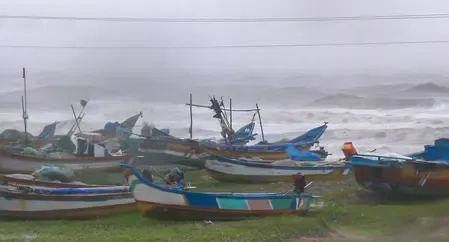
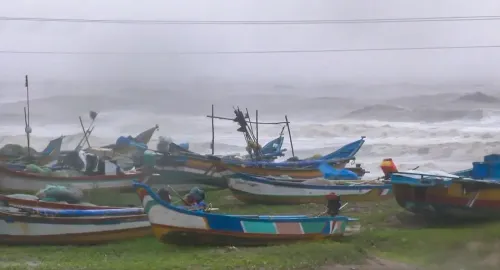
A strict ban on fishing in the affected waters is in force until IMD issues a formal de-warning. Collectors must disseminate verified public advisories and keep mobile health and veterinary teams ready for rapid deployment. Adequate feed and fodder for livestock must be arranged, and livestock in vulnerable areas must be evacuated. The government has also directed backup power at all offices, including health institutions.
This comes amid Odisha's long-established reputation for cyclone preparedness — the state's response machinery, hardened after the devastating 1999 Super Cyclone, has been credited internationally with dramatically reducing fatalities in subsequent storms. With Cyclone Akvan set to arrive within 48 hours, the efficacy of that machinery faces another real-world test.
Point of View
Which is well-rehearsed, but its last-mile execution: whether vulnerable populations — the elderly, differently-abled, and those in remote coastal hamlets — are actually reached before landfall on 20 November. Historically, the gap between SRC orders and ground reality has decided whether a cyclone becomes a tragedy or a managed emergency. With the 1999 Super Cyclone still a reference point, Odisha cannot afford complacency even when the system looks textbook-ready.
NationPress
18 Nov 2026
Frequently Asked Questions
When and where is Cyclone Akvan expected to make landfall?
Cyclone Akvan is forecast to cross the North Andhra Pradesh, Yanam, and South Odisha coasts between Narsapur and Puri by noon on 20 November 2026, according to the India Meteorological Department. It is expected to arrive as a severe cyclonic storm with winds of 90–100 kmph gusting to 110 kmph.
Which districts in Odisha are most at risk from Cyclone Akvan?
Fourteen districts are under cyclone alert: Gajapati, Ganjam, Puri, Khordha, Jagatsinghpur, Kendrapada, Bhadrak, Baleswar, Nayagada, Kataka, Jajpur, Dhenkanal, Kendujhar, and Mayurbhanj. Additional districts may experience wind and heavy rainfall due to associated weather activity.
What evacuation measures has the Odisha government ordered?
The Special Relief Commissioner has directed collectors to shift residents of kutcha houses, coastal zones, low-lying areas, and even two-storied buildings near the coastline to cyclone and flood shelters. Special priority has been given to the elderly, differently-abled persons, pregnant women, children, and residents of schools and old age homes.
Is fishing allowed in Odisha during the Cyclone Akvan alert?
No. A strict ban on fishing is in force across affected waters until the India Meteorological Department officially issues a de-warning. Collectors have been instructed to enforce this ban and disseminate verified public advisories to fishing communities.
What shelter and relief arrangements are being made for evacuees?
Cyclone and flood shelters are being stocked with cooked food, safe drinking water, lighting, healthcare, and sanitation facilities. Generators, water supply systems, and rescue equipment are being tested and repaired. Mobile health and veterinary teams are on standby, and advance arrangements for road clearance and restoration of electricity, telecom, and internet services have been ordered for the post-cyclone period.