Cyclone Arnab kills 4 in Andhra Pradesh, damages crops across 2.24 lakh hectares
Synopsis
Cyclone Arnab made landfall on the Andhra Pradesh coast at 2 a.m. on Wednesday, killing four people and inundating crops across 2.24 lakh hectares — affecting 3.45 lakh farmers across 14 districts. With 15,000 electricity poles downed and the Godavari delta bearing the worst agricultural damage, Chief Minister Chandrababu Naidu has activated a 34,000-strong relief force and is rushing to the affected districts on Thursday.
Key Takeaways
Cyclone Arnab crossed the Andhra Pradesh coast on 28 October 2026 , killing four people in Visakhapatnam , Anakapalli , and Bhimavaram .
Agricultural and horticultural crops across 2.24 lakh hectares belonging to 3.45 lakh farmers in 14 districts have been damaged or inundated.
15,000 electricity poles collapsed; power remains disrupted in parts of Konaseema and West Godavari .
Chief Minister Chandrababu Naidu announced ₹5 lakh compensation for each victim's family and immediate relief including rice and ₹1,000 per person in cash.
The IMD reports the system is weakening and is expected to become a deep depression by Wednesday night .
A virtual Cabinet meeting is scheduled for Thursday to finalise relief measures; Naidu plans to visit the affected districts the same afternoon.
Very severe Cyclone Arnab made landfall along the Andhra Pradesh coast in the early hours of Wednesday, 28 October 2026, claiming four lives and causing widespread destruction across coastal districts — uprooting thousands of trees and electricity poles and inundating crops across 2.24 lakh hectares. Dr B. R. Ambedkar Konaseema and Kakinada districts bore the worst of the storm's fury.
Scale of Agricultural Damage
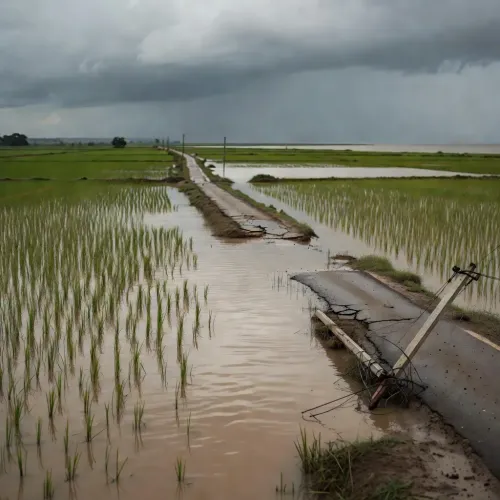
According to preliminary reports, crops belonging to 3.45 lakh farmers across 14 districts have been inundated or damaged. Paddy accounted for the bulk of the affected area at 2.09 lakh hectares, with the Godavari delta hit especially hard.
Approximately 82% of the paddy area in West Godavari, 75% in Dr B.R. Ambedkar Konaseema, and 48% in Kakinada district was reported as inundated. State Agriculture Minister K. Atchannaidu wrote to Union Agriculture Minister Shivraj Singh Chouhan apprising him of the damage and seeking central support.
Infrastructure Disruption
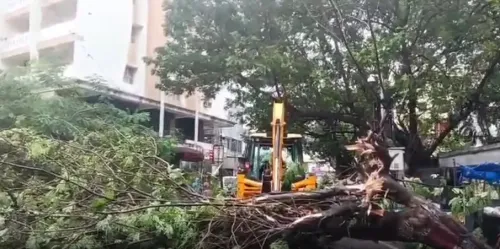
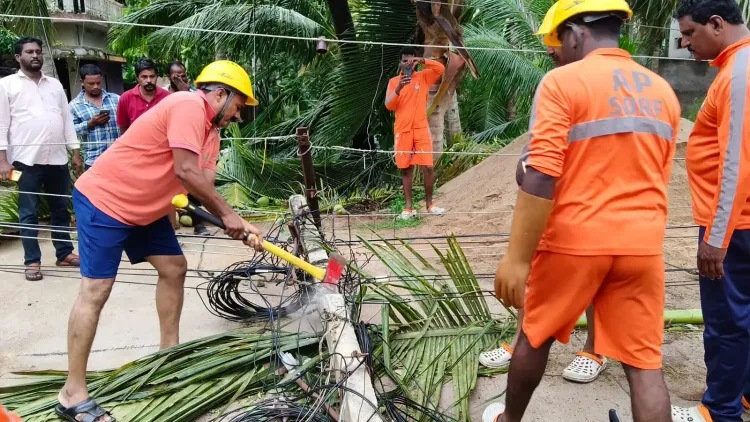
A total of 15,000 electricity poles collapsed due to gusty winds, disrupting power supply across multiple districts. Thousands of trees were also uprooted, blocking traffic on state highways and panchayat roads. Traffic restoration on those routes was expected by Wednesday night.
According to the India Meteorological Department (IMD), the cyclone crossed the coast with maximum sustained wind speeds of 125–135 kmph, gusting up to 150 kmph. Landfall began around 2 a.m. and was completed by 8 a.m. The system subsequently weakened into a severe cyclonic storm.
Relief Measures and CM's Response
Chief Minister Chandrababu Naidu confirmed on Wednesday evening that four people lost their lives — two in Visakhapatnam, struck by an electric pole and a falling tree respectively, and one each in Anakapalli and Bhimavaram. He announced ₹5 lakh compensation for each of the bereaved families.
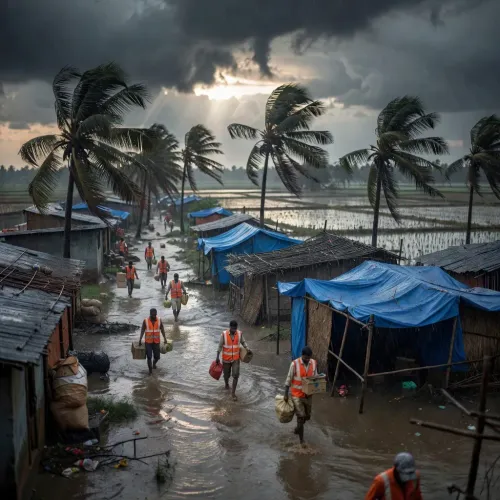
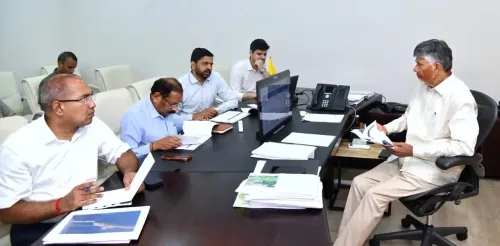
Power supply has been restored in all districts except parts of Konaseema and West Godavari, where ongoing rain and mud are hampering efforts, the Chief Minister said. A total of 34,000 personnel have been deployed for relief and restoration operations.
Naidu also announced immediate relief measures: 25 kg of rice for flood-affected households, and 50 kg of rice along with 1 kg each of onions, cooking oil, and red gram dal for weavers and fishermen. A financial assistance of ₹1,000 per person will be provided. A virtual Cabinet meeting is scheduled for Thursday to formalise relief decisions; financial assistance to affected people in the districts is set to begin from Thursday, excluding crop-related compensation which will follow a formal damage assessment.
Central Coordination and IMD Forecast
Chief Minister Naidu said he wrote to the Centre seeking disaster assistance and separately briefed Union Home Minister Amit Shah on the cyclone's intensity and impact. A preliminary damage assessment will be submitted to the Centre, followed by a comprehensive report.
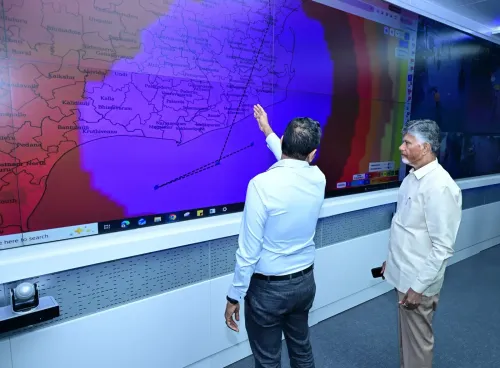
As of 2:30 p.m. on Wednesday, the IMD placed the cyclone's centre approximately 40 km north-northeast of Narsapur, 40 km west-northwest of Yanam (Puducherry UT), 50 km west-southwest of Kakinada, and 100 km northeast of Machilipatnam, moving at a slow pace of 7 kmph. It is expected to move north-northwestwards over the next 48 hours, weakening into a cyclonic storm by Wednesday evening and a deep depression by Wednesday night.
The Andhra Pradesh State Disaster Management Authority has urged residents to remain alert, citing the forecast of continued heavy rains in the region. Naidu noted that the cyclone-associated rains reduced the state's average rainfall deficit from 39% to 27%, and that proactive monitoring — including teleconferences with 30,000 field-level officials and drone readiness for emergency deliveries — helped ensure no tank breaches occurred anywhere in the state.
The Chief Minister is expected to visit cyclone-affected areas — likely Konaseema and West Godavari districts — on Thursday afternoon to personally assess the extent of the destruction.
Point of View
With paddy inundation rates exceeding 75–82% in two districts, has once again absorbed a disproportionate share of the damage. The claim that no tank breaches occurred — and that the rainfall deficit was actually reduced — reflects the government's instinct to frame disaster response as a governance success, a framing that will be tested by Thursday's ground visit. The deeper question is one of structural adaptation: with the Bay of Bengal generating increasingly intense cyclonic systems, the frequency of these ₹5-lakh-per-death moments underscores the urgency of investing in coastal resilience infrastructure before the next storm season, not after.
NationPress
28 Oct 2026
Frequently Asked Questions
How many people died in Cyclone Arnab in Andhra Pradesh?
Four people died in Cyclone Arnab as it crossed the Andhra Pradesh coast on 28 October 2026. Two fatalities occurred in Visakhapatnam — one from an electric pole and one from a falling tree — while one person each died in Anakapalli and Bhimavaram.
What is the scale of crop damage caused by Cyclone Arnab?
Preliminary reports indicate that agricultural and horticultural crops across 2.24 lakh hectares, belonging to 3.45 lakh farmers in 14 districts, have been inundated or damaged. Paddy accounted for 2.09 lakh hectares of the affected area, with the Godavari delta the worst-hit region.
What relief has the Andhra Pradesh government announced for cyclone victims?
Chief Minister Chandrababu Naidu announced ₹5 lakh compensation for families of the deceased. Flood-affected households will receive 25 kg of rice, while weavers and fishermen will get 50 kg of rice along with 1 kg each of onions, cooking oil, and red gram dal, plus ₹1,000 per person in financial assistance. A virtual Cabinet meeting on Thursday will formalise further relief decisions.
Where is Cyclone Arnab now and what is the forecast?
As of 2:30 p.m. on Wednesday, the IMD placed the cyclone about 40 km north-northeast of Narsapur, moving north-northwestwards at 7 kmph. It is expected to weaken into a cyclonic storm by Wednesday evening and further into a deep depression by Wednesday night.
Has power supply been restored in cyclone-affected areas of Andhra Pradesh?
Power has been largely restored across most districts, according to Chief Minister Naidu. However, parts of Konaseema and West Godavari districts remain without supply, with restoration efforts facing challenges due to ongoing rain and muddy terrain. A total of 34,000 personnel are engaged in relief and restoration work.