CM Bhupendra Patel: Vanbandhu scheme gives Dang farmer ₹1 lakh boost
Synopsis
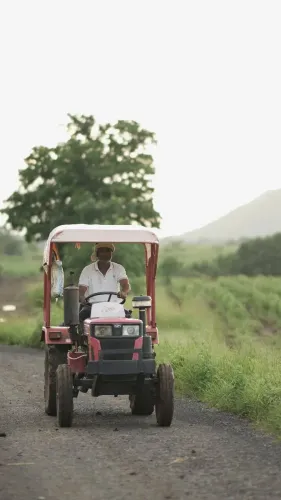
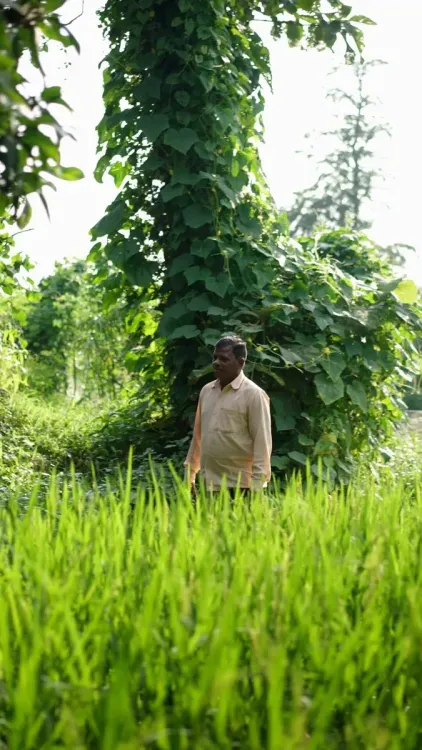
Gujarat CM Bhupendra Patel spotlighted Dang district farmer Bandubhai Chaudhary, who used a ₹1 lakh state subsidy under the Vanbandhu Krishi Yantrikarana Yojana to buy a power tiller, expanding his farm income — framed as proof of PM Modi's 25-year governance legacy.
Key Takeaways
Bandubhai Chaudhary , a farmer from Dang district , Gujarat, received a ₹1 lakh subsidy under the Mukhyamantri Vanbandhu Krishi Yantrikarana Yojana.
The subsidy enabled him to purchase a power tiller , directly increasing the scale and income of his farming operations.
Dang is one of Gujarat's most tribal and forested districts; the Vanbandhu scheme specifically targets such communities for livelihood support.
CM Bhupendra Patel shared the story under the #SevaSankapAbhiyaan campaign, marking 25 years of PM Narendra Modi's public service.
The post frames agricultural mechanisation for small and marginal farmers as the 'true fruition' of Modi's governance philosophy of atmanirbharta (self-reliance).
A power tiller, a government subsidy of ₹1 lakh, and a farmer's face lit with self-reliance — that is the story Gujarat Chief Minister Bhupendra Patel told on Monday, 5 October 2026, spotlighting Bandubhai Chaudhary, a smallholder from the tribal Dang district of south Gujarat.
In a post shared under the #SevaSankapAbhiyaan and #SevaKiKahani campaign, CM Patel described how Chaudhary received the subsidy under the 'Mukhyamantri Vanbandhu Krishi Yantrikarana Yojana' — the state's flagship agricultural mechanisation scheme for Vanbandhu (forest-dwelling, largely tribal) communities. The grant enabled him to buy a power tiller, a piece of equipment that directly expanded the scale and income of his farming operations. 'Earlier, the absence of a tractor or other equipment had kept his farming limited,' Patel wrote, 'but after receiving this assistance, both the scope of his cultivation and his income have grown.'
Dang district and the Vanbandhu focus
Dang is one of Gujarat's most heavily forested and predominantly tribal districts, home to communities that have historically had limited access to institutional credit and modern farm equipment. The Vanbandhu Kalyan Yojana framework — from which the agricultural mechanisation arm derives its name — was designed specifically to channel welfare and livelihood support to such communities. A power tiller, compact and suited to small and fragmented plots, is precisely the kind of intermediate technology the scheme targets: cheaper than a full tractor, but transformative for a farmer working only a few acres.
₹1 lakh subsidy and what it means on the ground
A ₹1 lakh direct subsidy effectively bridges the gap between a smallholder's savings and the cost of mechanised equipment, reducing dependence on seasonal labour and animal traction. For Chaudhary, the shift is measurable: more land brought under cultivation, more produce, more income. CM Patel's post frames this not merely as welfare but as atmanirbharta — the self-reliance that the Central government's broader economic philosophy champions. Chaudhary is quoted as expressing heartfelt gratitude to Prime Minister Narendra Modi, whom Patel credits as the guiding force behind 25 years of public service whose 'true fruit' is exactly this kind of grassroots economic empowerment.
Modi's 25-year service milestone as political backdrop
The timing of the post is deliberate. Patel explicitly frames Chaudhary's transformation as '25 varshana sevakaalni sachchi falshruti' — 'the true fruition of 25 years of service' — a reference to PM Modi's political career that stretches from his swearing-in as Gujarat Chief Minister in October 2001 to his current tenure as Prime Minister. The hashtag #SevaSankapAbhiyaan (roughly, 'Mission: Commitment to Service') signals a coordinated outreach effort timed to this anniversary, with BJP leaders across Gujarat amplifying individual beneficiary stories as proof-of-concept for the party's governance record.
For tribal farmers in districts like Dang, access to mechanisation is not an abstraction — it is the difference between subsistence and surplus. If Bandubhai Chaudhary's story is representative, the scheme's architects will argue the numbers speak for themselves.
Point of View
A measurable income gain — the BJP converts an abstract scheme into a shareable, human story. The deliberate anchoring to Modi's 25-year service milestone suggests a coordinated state-level rollout to reinforce the party's governance narrative ahead of potential electoral cycles. For tribal districts like Dang, which have historically been contested terrain for both the BJP and opposition parties, agricultural welfare stories carry disproportionate political weight. The 'SevaSankapAbhiyaan' framing also signals that this is not a one-off post but part of a sustained, curated campaign to document and amplify beneficiary testimonials across Gujarat.
NationPress
5 Oct 2026
Frequently Asked Questions
What is the Mukhyamantri Vanbandhu Krishi Yantrikarana Yojana?
It is a Gujarat government scheme under the Vanbandhu welfare framework that provides financial subsidies to tribal and small farmers to purchase modern agricultural equipment such as power tillers, reducing their dependence on manual labour and animal traction.
Who is Bandubhai Chaudhary and why is he in the news?
Bandubhai Chaudhary is a farmer from Dang district, Gujarat, who received a ₹1 lakh government subsidy under the Vanbandhu Krishi Yantrikarana Yojana to buy a power tiller, leading Gujarat CM Bhupendra Patel to feature his story as an example of successful rural mechanisation.
What is the #SevaSankapAbhiyaan campaign?
#SevaSankapAbhiyaan, meaning roughly 'Mission: Commitment to Service', is a BJP-led outreach campaign that shares stories of government scheme beneficiaries to mark PM Narendra Modi's 25 years in public office.
Why is Dang district significant in Gujarat's tribal welfare schemes?
Dang is Gujarat's most heavily forested and predominantly tribal district, with communities that have historically had limited access to credit and modern farm technology, making it a key focus area for schemes like the Vanbandhu Kalyan Yojana.
How does the ₹1 lakh subsidy help a small farmer buy a power tiller?
A power tiller costs significantly more than what most marginal farmers can save; the ₹1 lakh direct subsidy bridges that gap, allowing farmers like Bandubhai Chaudhary to mechanise without large loans, expanding the area they can cultivate and increasing income.